“I think that…” is not an argument
A teacher launches a controversial question in class. A few students raise their hand. What follows is predictable: “I think yes,” “I think no,” “I agree with her.” Nobody gives reasons. Nobody asks why. Nobody changes their mind. What seemed like a debate was really an oral poll — everyone said what they thought and the topic closed without anyone learning anything.
Classroom debate has enormous potential: it teaches students to think with evidence, to listen to opposing positions and to change their mind when the arguments justify it. But that potential only activates when the debate is structured. Without structure, it is a fight of opinions where the loudest voice wins.
The theory behind the practice
Kuhn (1991) researched how people argue and found that most people — including adults — confuse opinion with argument. An opinion is a position (“I believe X”); an argument is a position with reasons and evidence (“I believe X because Y, and this is demonstrated by Z”). The ability to argue does not develop spontaneously — it is taught.
Mercer (2000) distinguished three types of conversation in the classroom: disputational (each person defends their position without listening), cumulative (everyone piles on without questioning) and exploratory (reasons are presented, ideas are questioned and knowledge is built collectively). Only the third produces real learning, and it requires explicit rules.
Lipman (2003), founder of Philosophy for Children, demonstrated that children from age 6 can participate in philosophical dialogues if given structure, time and genuinely open questions. Debate is not an activity for “older students” — it is a skill built from early on.
Opinion vs. argument: the key difference
| Opinion | Argument | |
|---|---|---|
| Structure | “I believe that…” | “I hold that… because… and this is seen in…” |
| Evidence | Does not need it | Requires it |
| Refutation | “I disagree” | “I understand your point, but I think that… because…” |
| Change | Rarely changes | Can change if arguments justify it |
| What it exercises | Expressing preferences | Reasoning, analyzing, evaluating |
The goal of classroom debate is not for students to “say what they think” — it is for them to learn to think about what they say.
Four progressive debate formats
Format 1: Silent debate (without speaking)
Students receive a provocative statement and argue in writing using a Silent Debate. Each student writes their position, reads others’ and responds — all in silence. This format eliminates the two main barriers to oral debate: the pressure to improvise and the domination of the most extroverted students.
It is the best format to start with because it equalizes participation and gives time to think. It works from 4th grade onwards.
Format 2: Paired debate (two people)
The teacher poses a question and assigns positions using Debate Cards: one argues in favor, the other against. Each has 2 minutes to prepare their arguments using Connector Cards (“I maintain that… because…”, “Unlike what is commonly believed…”). Then 3 minutes of exchange following one rule: before responding, I must repeat the other person’s argument (“I understand you are saying that… but I think that…”).
This format teaches the hardest skill in debate: listening before responding.
Format 3: Group debate (two teams)
Two teams of 4 to 5 students debate in front of the rest, who act as jury. Each team prepares arguments for 10 minutes. The debate has structured rounds: opening argument (2 min per team), rebuttal (2 min), jury questions (3 min), closing (1 min per team).
The jury does not vote on who “won” — they evaluate with a rubric: Did they use evidence? Did they listen to the other team? Did they respond to the arguments or ignore them?
Format 4: Debate with position change (the most advanced)
Use an Opinion Thermometer or Agreement Scale before the debate for everyone to position themselves. Carry out the debate (in any of the previous formats). Afterwards, repeat the measurement. The key question is not “who won?” but “did anyone change their position? Why?”
This format teaches that changing your mind in the face of a good argument is not weakness — it is critical thinking in action.
How to choose good debate questions
Not every question works for debate. The best debate questions have three characteristics:
They do not have a "correct" answer that the teacher already knows. "Does water boil at 100°C?" is not debatable. "Should we prioritize space exploration over fighting poverty?" is.
Students should not all agree before starting. If the answer is obvious, there is no debate. The best questions divide the group.
Debate is not an intellectual recess — it is a learning tool. "Was the conquest of the Americas just?" connects history with ethics. "Should robots replace teachers?" connects technology with values.
Examples by level:
- Elementary: “Is it fair that everyone gets the same grade if not everyone worked equally?”
- Middle school: “Should cell phones be banned in schools?”
- High school: “Is it ethical to genetically modify human beings?”
Free tools for each phase of the debate
Debate Cards — for structuring positions
They assign positions (for/against) and provide structures for arguing. They are especially useful when students do not have a formed opinion: defending an assigned position teaches them to build arguments on any topic, not just the ones they are passionate about. They also prevent everyone from choosing the same side.
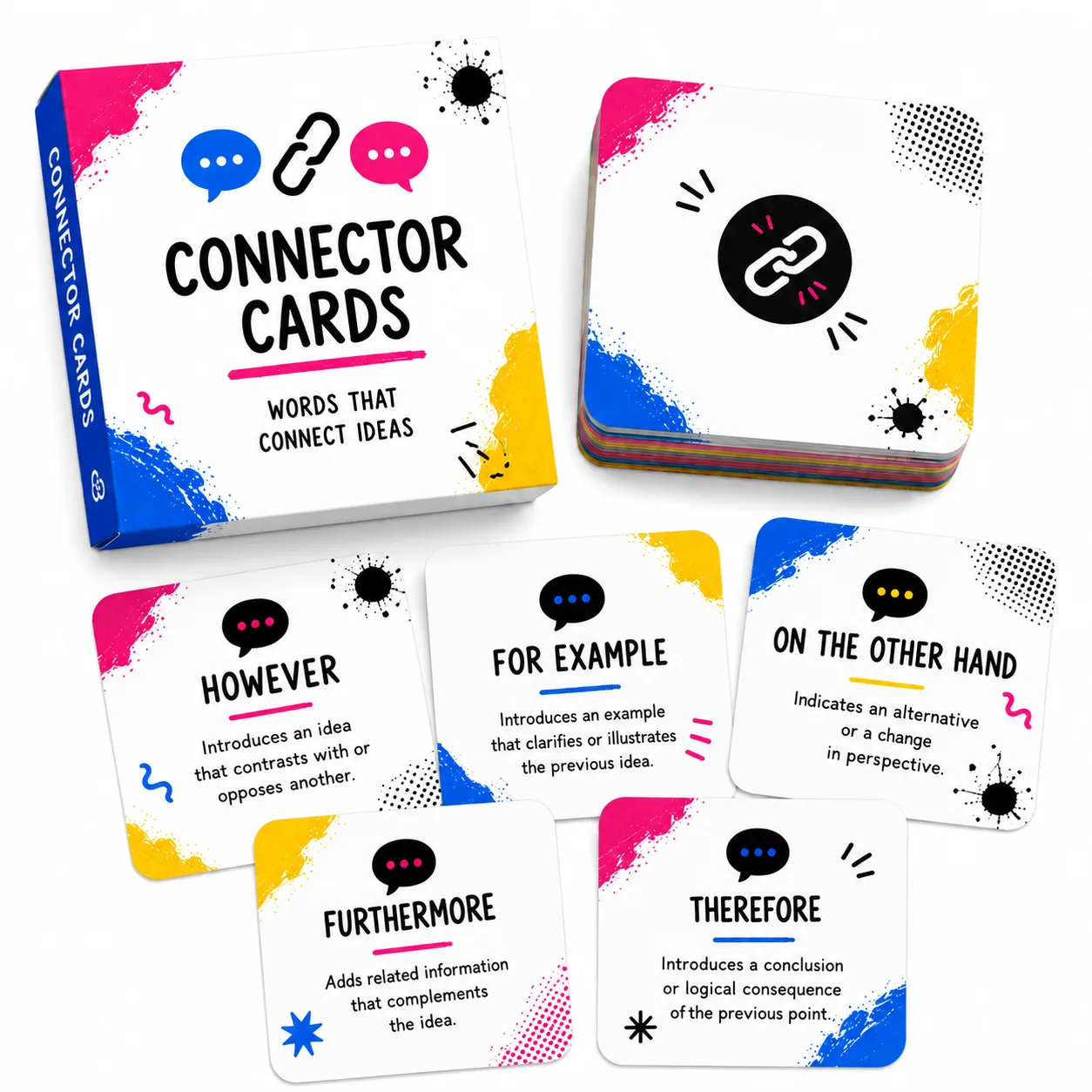
Connector Cards — for giving language to arguments
“Because,” “however,” “unlike,” “this relates to,” “while it is true that…”. Connectors transform loose opinions into articulated arguments. They are essential for students who know what they think but not how to say it with logical structure. They are used during preparation and during the debate itself.
Silent Debate — for arguing without the pressure of speaking
The entire debate happens in writing in a shared space. Students read others’ positions and respond with written arguments. It is the most inclusive format because it eliminates time pressure and the advantage of extroverts. It works especially well for sensitive topics where oral expression may inhibit honesty.
Agreement Scale — for measuring before and after
Before the debate: “How much do you agree with this statement?” (1 to 5). After the debate: the same question. The visual comparison shows whether the debate shifted positions. If nobody changed, the question is: were the arguments not convincing, or did nobody listen? That reflection is as valuable as the debate itself.
Opinion Thermometer — for seeing the nuances
Unlike binary questions (for/against), the thermometer shows that positions have intensity. A student “slightly in favor” and one “completely in favor” have different positions that deserve different arguments. Using the thermometer at the start of the debate shows the complexity of the issue and prevents oversimplification.
KWL Chart — for framing the debate as learning
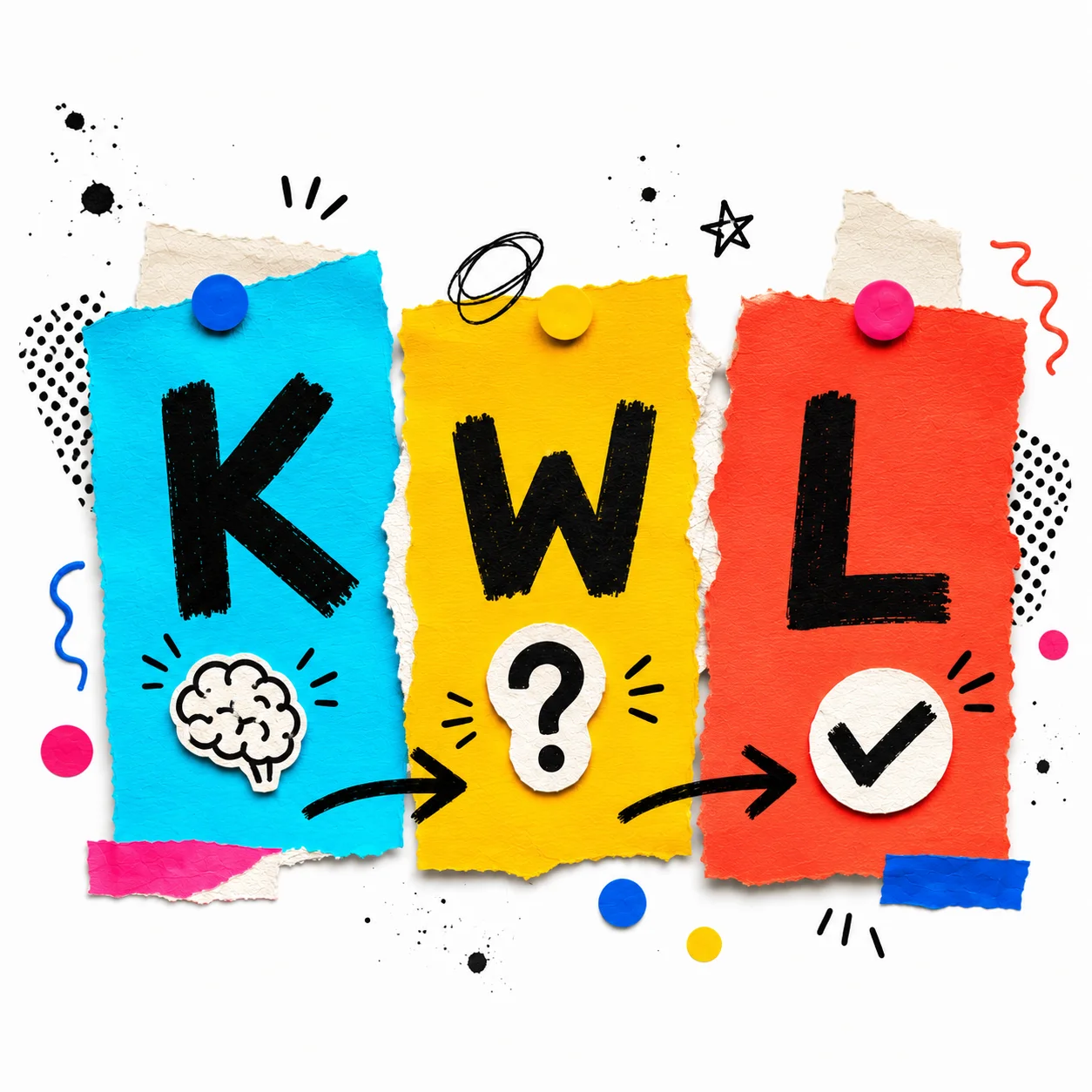
Before debating, each student completes: “What do I know about this topic?” and “What do I want to know?” After the debate: “What did I learn?” This framework transforms the debate from a competition into a collective inquiry. The goal is not to win — it is to leave knowing more than when you arrived.
Common mistakes when running debates in class
Launching the debate without preparation. “Debate about X” without giving time to research, prepare arguments or learn about opposing positions produces a superficial exchange of opinions. Preparation is half the learning.
Letting the same students dominate. Without structure, extroverts speak and introverts stay quiet. Formats with turns, assigned times and roles (moderator, recorder) distribute participation.
Confusing debate with a fight. If students attack people instead of ideas, the debate becomes toxic. Rules must be explicit from the start: “We question the idea, not the person. Before refuting, first repeat the other person’s argument.”
Looking for a winner. School debate is not a tournament. If the closing is “team A won,” the message is that debating means competing. If the closing is “who changed their mind and why?”, the message is that debating means thinking better.
Not doing anything with the debate afterwards. A debate without a reflective closing is entertainment. The follow-up reflection — which arguments were most solid, what evidence was missing, which position was strengthened — is where the deepest learning happens.
What competencies it develops
Well-structured debate activates competencies that few activities work on simultaneously:
- When a student builds an argument with reasons and evidence, they are exercising argumentation — the competency of holding a position with logic.
- When they analyze the other side’s arguments looking for weaknesses and strengths, they are practicing applied critical thinking.
- When they must repeat the opponent’s argument before refuting it, they are developing active listening — listening to understand, not to respond.
- When they present their ideas in front of the group with structure and clarity, they are building oral expression in an authentic context.
- When they discover that someone with an opposing position has legitimate reasons, they are practicing respect for diversity of thought.
How to start
Choose a provocative statement related to the class content. Students argue in writing for 15 minutes. At the close, read aloud the 3 most interesting arguments without saying who wrote them.
Use debate cards to assign positions and connector cards to structure arguments. Three minutes of preparation, three of exchange. Golden rule: before responding, repeat the other person's argument.
Use the opinion thermometer before and after. Two teams debate with structured rounds. The rest evaluate with a simple rubric (Did they use evidence? Did they listen to the other? Did they respond to the arguments?). Close with the question: did anyone change their position?
Debate is not a pedagogical luxury — it is the most direct way to teach students to think rigorously, speak with purpose and listen with openness.