The activity planning trap
The most common planning in classrooms works like this: the teacher thinks about what activities they will do, orders them within the available time and that is it. The problem is that activities are not the starting point — they are the consequence. If it is not clear what students must learn by the end of the class, any activity seems valid and none is clearly the best.
This is the central error of activity-based planning: the focus is on what the teacher is going to do, not on what students are going to learn. A well-planned class works in the reverse order.
Backward design: starting from the end
Wiggins and McTighe (2005) proposed “backward design” (Understanding by Design): first define what students should know or be able to do at the end of the unit, then decide how that will be assessed, and only then design the activities that lead there.
Applied to a single class:
What students will be able to do at the end of class that they could not do at the start. Not "they will learn about photosynthesis" — that describes the topic, not the learning. Yes: "they will be able to explain in their own words why plants need light and relate it to what they eat."
How you will know the objective was met. It can be an exit ticket, a written response, a product, an explanation to a peer. Designing the assessment before the activities forces clarity about exactly what level of understanding is expected.
Only now: what sequence of activities allows students to reach the objective and produce the evidence of learning.
The structure of a well-planned class
Not all classes need to have the same structure, but all need three moments with different purposes.
Opening: activate and connect (10–15% of time)
The first moment has two functions: activate what students already know about the topic and connect the new class with what they have seen before. It is not a review of the previous class — it is a gateway to thinking.
The best openings have these characteristics:
- They generate a question or cognitive dissonance (“what if…?”)
- They activate prior knowledge that will be useful during the class
- They are short and invite immediate participation
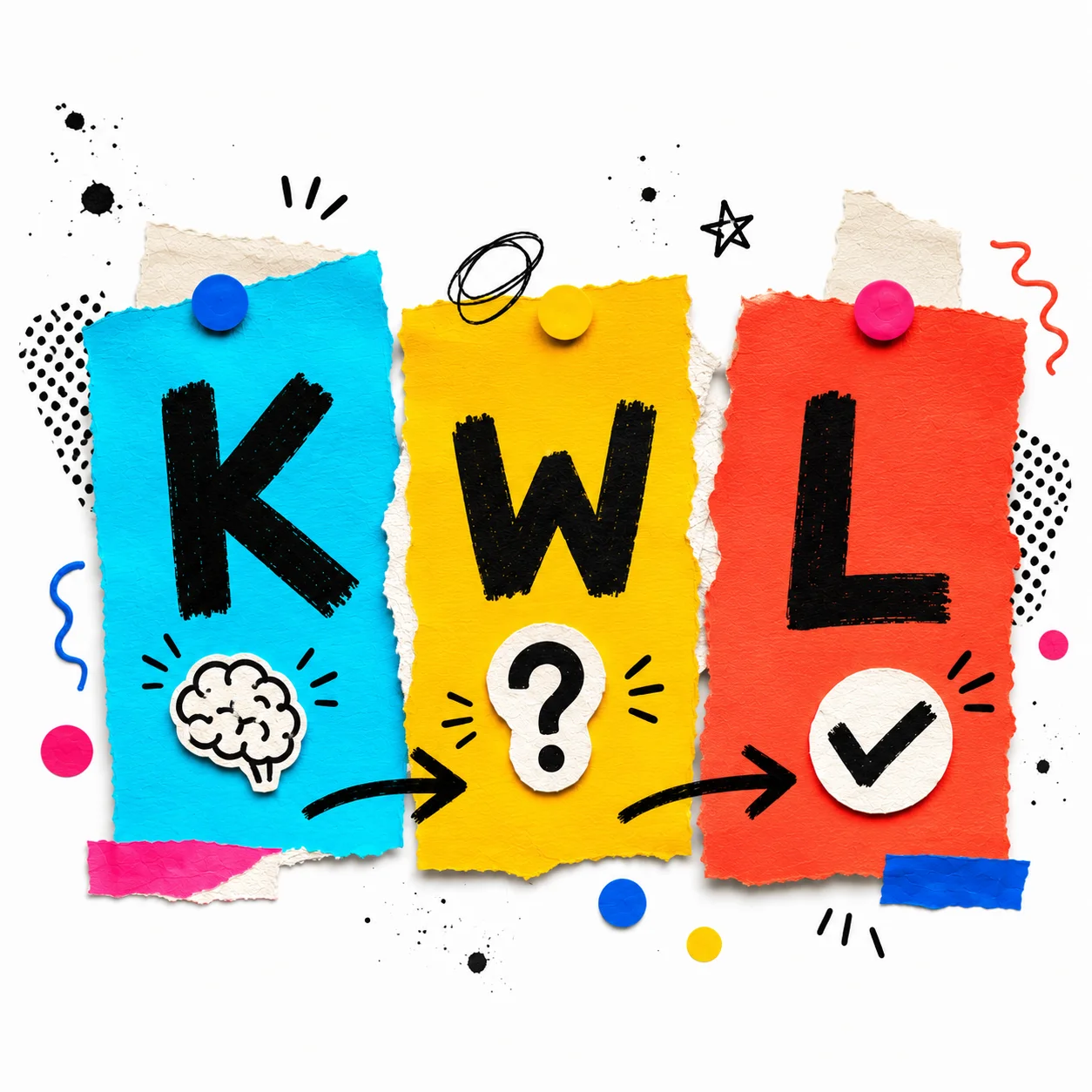
The KWL chart (What do I know? What do I want to know? What did I learn?) is a framework that works for almost any topic. Completing the first two columns at the start and the third at the close gives structure to the whole class with a single tool.
Development: build understanding (60–70% of time)
The core of the class. There are three types of development according to the objective:
Explanation + processing: the teacher explains in blocks of no more than 10 minutes, alternated with activities where students process what they heard. A comprehension stoplight after each block gives instant information to adjust the pace.
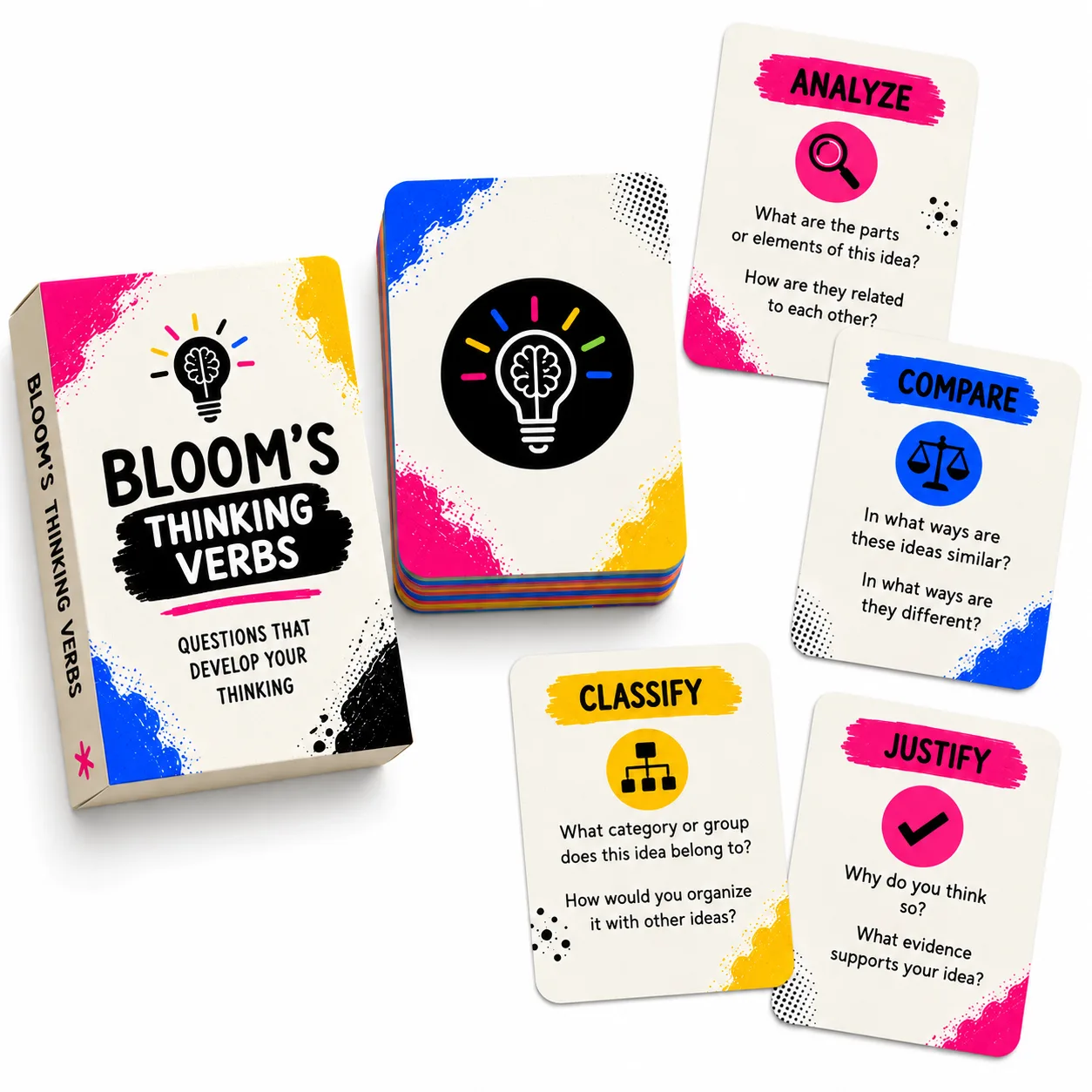
Inquiry: students build knowledge from a question, a problem or a case. The teacher facilitates instead of explains. Bloom cards are useful for designing the questions that guide the inquiry, from the most basic (what is it?) to the most complex (what would happen if?).
Application: students work with already-constructed knowledge to solve a problem, produce something or make a decision. This is the moment where learning becomes transferable.
Close: consolidate and evaluate (15–20% of time)
The close is the moment most frequently sacrificed when class runs long. It is also the most important for learning consolidation. Research on memory indicates that the way an experience ends has a disproportionate impact on what is retained.
A well-planned close does two things:
- Synthesizes the day’s learning (preferably in students’ own words, not the teacher’s)
- Generates comprehension evidence that the teacher can review before the next class
The exit ticket fulfills both functions: students synthesize and the teacher receives real data about what they understood and what they did not.
Time planning: the most common error
Most plans underestimate time. Each transition between activities (explaining the instructions, forming groups, waiting for them to finish, regaining attention) consumes 2 to 5 minutes. In a 40-minute class with three activities, that can be 15 minutes that were not in the plan.
A practical rule: plan for 70% of the available time. The remaining 30% is occupied by the unexpected, the question that opens a productive detour, the student who did not understand and needs it repeated.
Another rule: if the plan has more than three distinct elements (opening, development, close are three), there is too much. A focused class does one thing well instead of five things superficially.
What to include in a plan and what not to
A plan does not need to be a five-page document. It needs to answer four questions:
The concrete objective.
The evidence of learning.
The development with timing.
Materials, tools, instructions.
What a daily class plan does not need: extensive bibliographic references, theoretical frameworks, objectives written in third-level competency format. That makes sense in curricular designs, not in daily planning.
Planning for difference
A class planned for the average student leaves out those who already know and those who have not yet arrived. Differentiated instruction does not require preparing three different classes — it requires designing in layers.
A layered activity has:
- A core that everyone should be able to do
- An extension for those who finish early or want to deepen
- An alternative entry point for those who need more scaffolding
Bloom cards help design these layers: low-level questions (remember, understand) as an accessible base and high-level questions (analyze, evaluate, create) as extension.
Planning as a hypothesis
A good plan is not a script that is followed exactly — it is a hypothesis that is tested in the classroom. What the teacher planned is their best prediction about how the group will learn. What happens in class is the evidence of whether that prediction was correct.
The exit ticket at the end of each class is the simplest way to compare the hypothesis against the evidence. If the majority marked red (“I did not understand”), the planning for the next class starts there.
Planning well is not a guarantee that the class will go well. It is a guarantee that the teacher knows what they wanted to happen — and can learn from the difference between what they planned and what occurred.
Free tools for planning better
KWL Chart — as the structure of the whole class
The KWL chart (What do I know? What do I want to know? What did I learn?) is the simplest framework for designing a class with coherent opening, development and close. Planning the class around these three columns forces clarity about the students’ starting point, the learning objective and how to evaluate it — all in a single tool.
Bloom Cards — for designing questions with intention
Bloom cards generate questions at all six cognitive levels for any topic. They are a planning tool: by choosing which question level to use at each moment in the class, the expected depth is defined. Low-level questions (remember, understand) are the accessible entry point; high-level questions (analyze, evaluate, create) are the extension for those who want to go deeper.
Rubric Generator — for clarifying expectations before planning activities
The rubric generator creates assessment criteria in minutes. Designing the rubric before the class — not after — forces clarity about exactly what is expected of students. That exercise improves the design of activities: if the rubric asks students to argue, the class needs time and space for arguing, not just for listening.
Exit Ticket — for planning the close before planning the activities
The exit ticket fulfills two functions in planning: as a closing tool and as a clarity criterion. If you cannot draft the ticket before the class — if it is not clear what question you would ask the student at the end — it is a sign that the class objective is not yet sufficiently defined. Planning the ticket first clarifies the objective; using it at the end provides evidence of whether it was met.
Learning Stations Organizer — for managing the complexity of classes with multiple activities
The learning stations organizer manages groups, timing and rotations in classes with simultaneous activities. For teachers who work with learning stations, activity centers or differentiated classes, planning the logistics in advance — who does what, in what order, with what materials — is the difference between a fluid class and one where half the time is lost in transitions.
Comprehension Stoplight — for integrating formative assessment into the design
The comprehension stoplight allows quick comprehension checks during class. Planning it at specific moments in the design — after each key concept — guarantees that formative assessment is not left to chance. A class with planned stoplights has real decision points: if the group is in red, there is a plan; if they are in green, advance.
What competencies it develops
The practice of planning with intention — defining clear objectives, designing evidence of learning and organizing time with criteria — is not only a teaching skill. When students participate in well-planned classes, they also develop competencies they can transfer to their own learning:
- Seeing in the class a clear structure with beginning, development and close helps students develop goal planning: learning to organize their own work with purpose and to anticipate the steps needed to reach a result.
- Integrated formative assessment — stoplights, tickets, KWL — trains metacognition: the capacity to monitor one’s own comprehension process and name what is missing instead of assuming it was understood.
- Classes with defined timing and clear transitions model time management: students learn to work within real limits, to prioritize what is important within the available time and to close cycles instead of leaving everything open.