Learning Communities
Transforming the classroom into a community where everyone learns from everyone, including families.
What is it?
Learning communities are a social and cultural transformation project for schools based on dialogic learning. The central idea is that learning depends on all the interactions a student has, not just those that occur with the teacher. That is why the classroom doors are opened to families, volunteers, and the community.
The model was developed by Ramón Flecha and CREA (Research Center on Theories and Practices for Overcoming Inequalities) at the University of Barcelona. It is based on the theories of Freire (dialogic learning), Vygotsky (social zone of proximal development), and Habermas (communicative action).
The successful educational actions are the model's core practices: interactive groups (heterogeneous groups, each with one adult volunteer), dialogic literary circles (reading universal classics with equal dialogue), dialogic model of conflict prevention, and educational community participation in decision-making.
No one educates anyone, no one educates themselves, people educate each other mediated by the world.
— Paulo FreireWhat does it look like in class?
Interactive groups: the class is divided into 4-5 heterogeneous groups. Each group has a volunteer (a family member, a university student, a neighbor). Groups rotate every 15-20 minutes through different activities. The volunteer does not teach — they facilitate interaction among students.
Dialogic literary circle: each week students (from 1st grade) read a fragment of a universal classic (adapted Odyssey, Don Quixote, Platero y Yo). In class, sitting in a circle, they share the paragraph they liked most and why. There is no correct interpretation — there is equal dialogue.
A carpenter father comes as a volunteer to the interactive math groups. He does not need to know advanced math: his role is to encourage students to explain concepts to each other and make sure everyone participates. Students teach him as much as he motivates them.
The community assembly meets monthly: teachers, families, and students jointly decide on aspects of the educational project. Families are not invited to listen — they are invited to decide.
Signs it works
- Volunteers come regularly — families feel their presence in the classroom is valuable and necessary
- Students explain concepts to their peers naturally — teaching is learning twice
- Academic results AND coexistence improve simultaneously — not one at the expense of the other
- Students from different levels work together without segregation — the heterogeneous group is a strength
- Families participate in real educational decisions, not just bake sales or informational meetings
Common mistakes
Doing interactive groups without volunteers — without the facilitating adult, it is traditional group work
Selecting 'easy' texts for literary circles instead of universal classics — children can handle profound texts if there is dialogue
Inviting families as labor rather than as participants with voice and vote
Implementing only one action (e.g., literary circles) without transforming the school's participation culture
Key thinkers
Professor at the University of Barcelona and creator of the Learning Communities model. His research at CREA has demonstrated the impact of dialogic learning.
Brazilian educator whose Pedagogy of the Oppressed inspires the model's equal dialogue. His idea that everyone is capable of transforming reality is central.
CREA researcher and co-author of Dialogic Learning in the Information Society. Has promoted learning communities in Latin America.
CREA Barcelona researcher and coordinator of the INCLUD-ED project (European Union). Has documented the impact of interactive groups in schools in Latin America, especially in Brazil and Chile.
Dive deeper
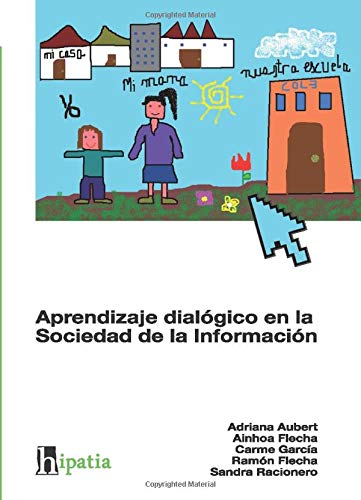 BookDialogic Learning in the Information Society — Aubert et al.
The Spanish-language reference book on the theoretical framework of learning communities. Connects Freire, Vygotsky, and Habermas with school practice.
 WebsiteVygotsky's Sociocultural Theory — DEXPA
The theoretical foundation of learning communities explained in depth: zone of proximal development, scaffolding, and why we learn better with others.
ESWebsiteLearning Communities — CREAOfficial project site with implementation guides, training, and scientific evidence. Everything in Spanish.
WebsiteINCLUD-ED: Educational Strategies for InclusionEU-funded research that validated successful educational actions in hundreds of schools in different countries.
ESPDFDialogic Literary Circles — Practical GuideStep-by-step guide to implementing literary circles from first grade. Includes list of age-adapted universal classics and equal dialogue protocol.
ESVideoLearning Communities — Ramón FlechaFlecha explains the successful educational actions and the learning communities model based on dialogic learning.
 ToolDebate Cards
 ToolGroup Generator
 ToolVisual Timer
 ToolLive Word Cloud