“Everything’s good” is not feedback
A teacher asks students to review a classmate’s work. What comes back is predictable: “It’s fine,” “I liked it,” “I wouldn’t change anything.” Sometimes, with luck, a “It could use a bit more development” without explaining what or where.
This is not a problem of attitude or laziness. Students do not give good feedback because nobody taught them how. They do not know what to look at, they lack vocabulary to describe what they observe and they do not want to look bad in front of a classmate. The result is an empty ritual that the teacher ends up abandoning because “it doesn’t work.”
Peer feedback does work — but only when structured.
The theory behind the practice
The evidence on peer feedback is solid. Topping (1998) conducted a meta-analysis with more than 60 studies and found that peer assessment produces significant improvements both in the person who receives the feedback and in the person who gives it. The act of assessing another’s work forces applying criteria, comparing with standards and articulating observations — all high-level cognitive operations.
Hattie and Timperley (2007) demonstrated that the most effective feedback answers three questions: where am I going? (clear objectives), how am I doing? (evidence of progress) and what is next? (next steps). Most peer feedback fails because it only tries to answer the second question, and answers it with vague impressions rather than specific observations.
Sadler (2010) added a key piece: to give good feedback, the student needs access to the same criteria the teacher would use. Without shared criteria, feedback is based on personal taste — and that does not serve.
Why it fails and how to avoid it
| Peer feedback fails when… | It works when… |
|---|---|
| There are no clear criteria | Students know exactly what to observe |
| “Free opinion” is requested | It is structured with questions or protocols |
| The student fears offending | The format is anonymous or has courtesy rules |
| It is done only once | It is practiced regularly until it becomes culture |
| Feedback does not generate action | The student must record what they will change |
| Everyone comments on everything | Each reviewer has an assigned focus |
Three levels of peer feedback
Level 1: Feedback with scale (the simplest)
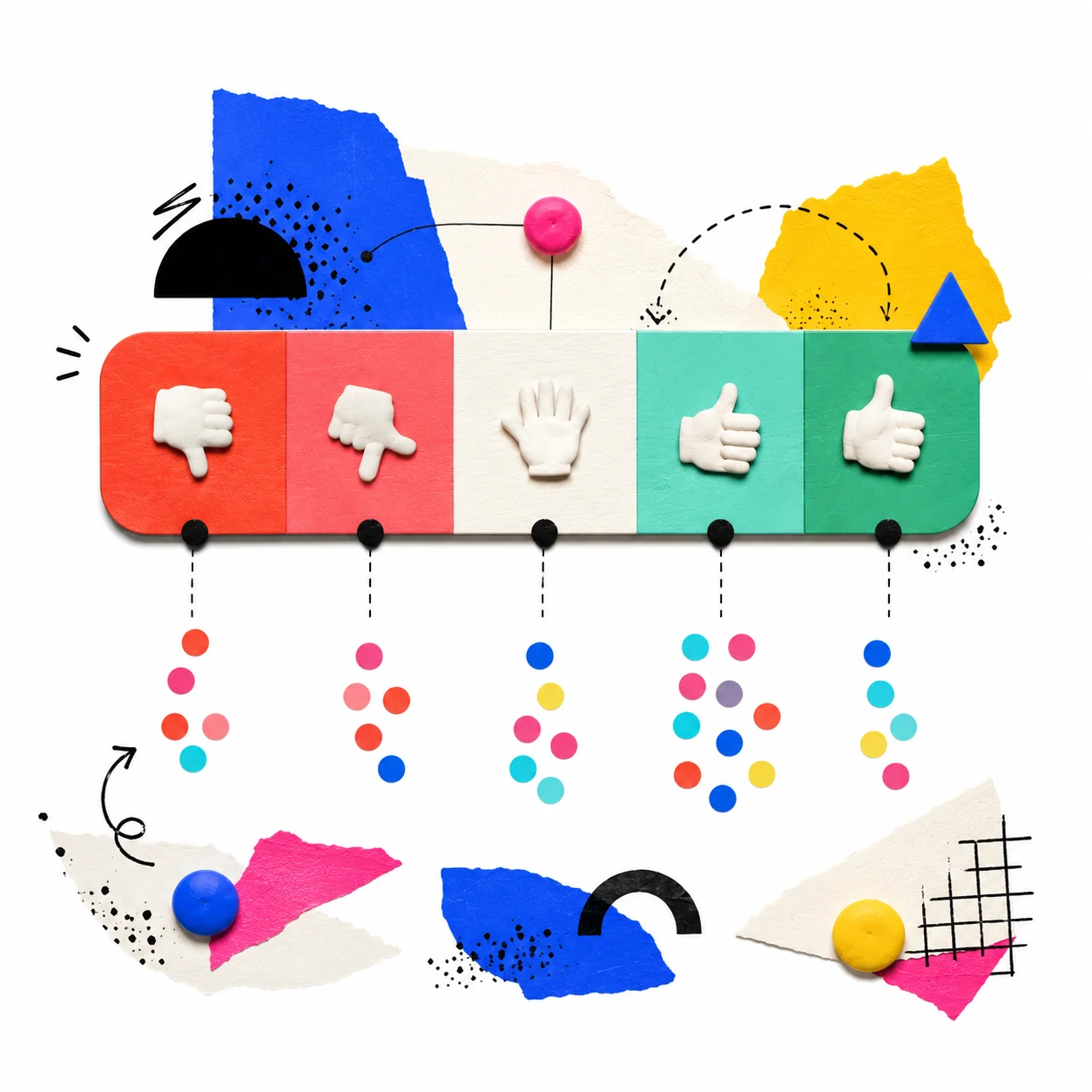
The teacher presents specific criteria and students rate a classmate’s work on a scale. For example, using an agreement scale: “The main idea is clear” (1 to 5), “The arguments have evidence” (1 to 5), “The conclusion connects with the introduction” (1 to 5).
This format works from primary school because it does not require writing — just positioning. And by using explicit criteria, the student learns to look at work with analytical eyes.
Level 2: Feedback with protocol (structured)
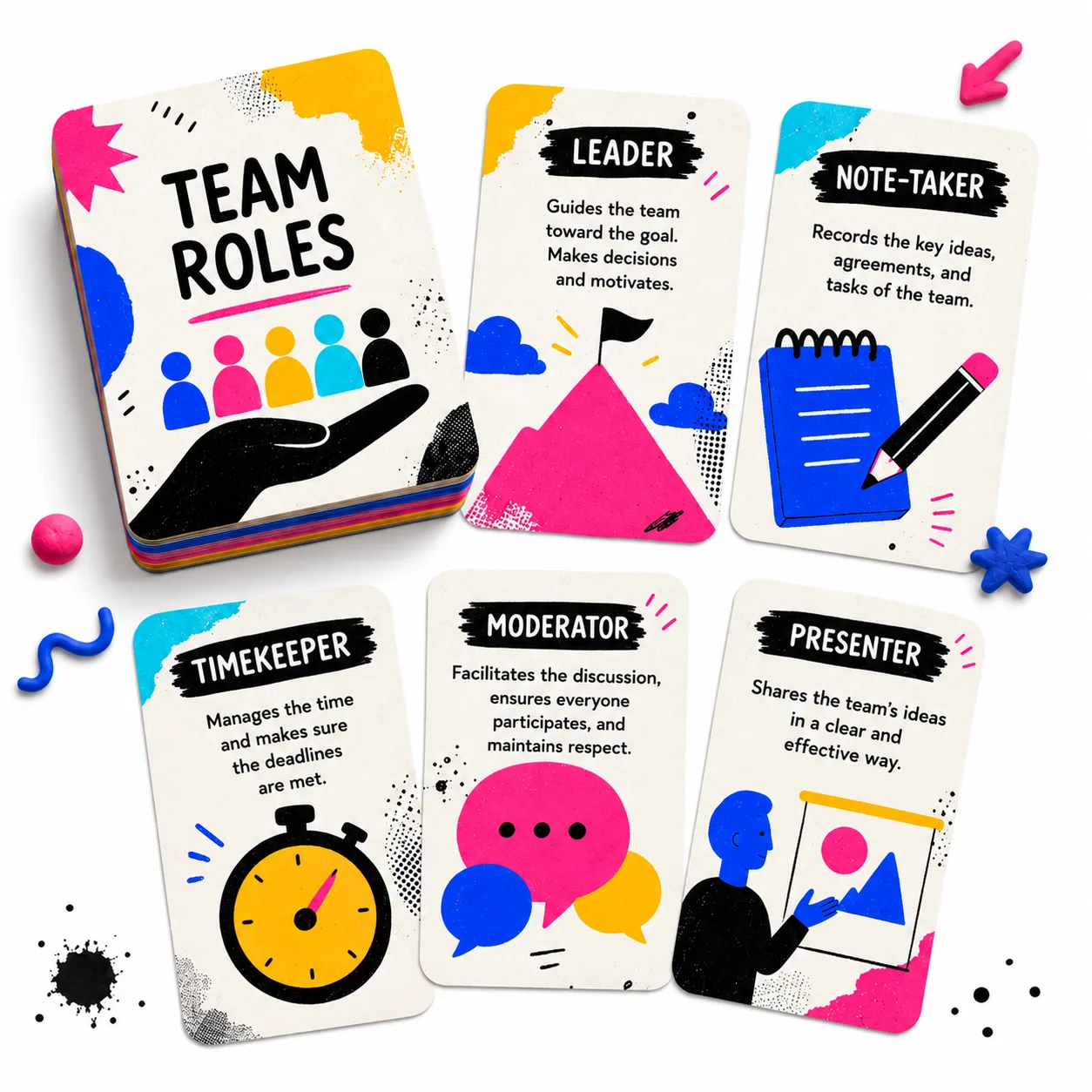
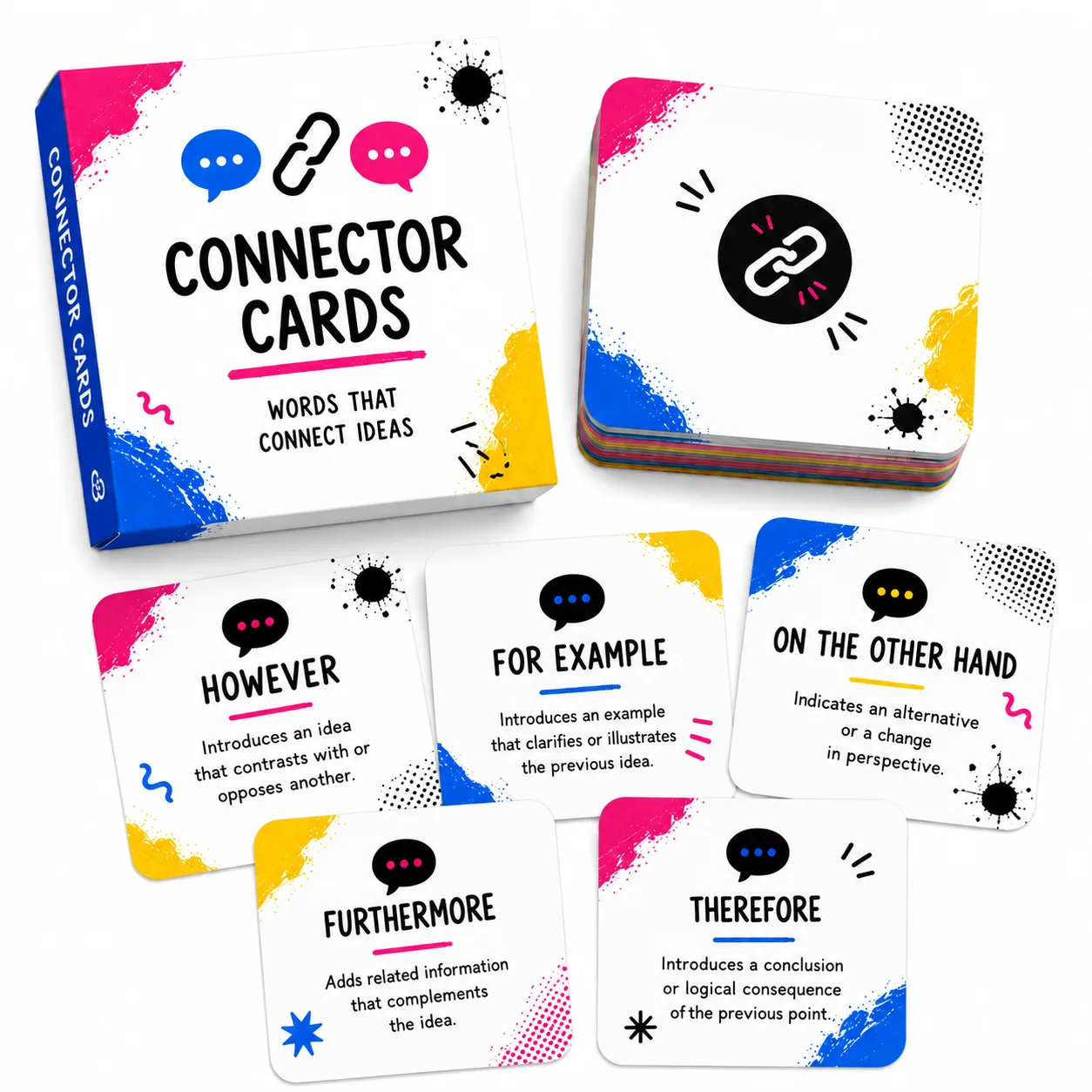
The teacher assigns specific roles using role cards: one reviews clarity, another structure, another evidence. Each reviewer has a focus and uses connector cards to formulate their comments: “What works well is… because…”, “A suggestion would be… since…”, “I was left wondering… when you say that…”.
This level requires more practice but produces high-quality feedback. The roles prevent everyone from saying the same thing and the connectors give language for comments that they would otherwise not know how to express.
Level 3: Gallery with public feedback
Teams exhibit their work in a work gallery and the rest browse, observe and leave written comments — on paper, sticky notes or a collaborative ideas wall. Each visitor has an assigned criterion to observe.
At the end, each team reads the comments received and completes an exit ticket: “The feedback I found most useful was… and what I am going to change is…”. This close is fundamental: without subsequent action, feedback is just opinion.
Free tools for each level
Work Gallery — for public and natural feedback
Each group exhibits their work and the rest browse the gallery leaving observations. The key is that visitors do not go just to “look” — they go with an assigned criterion and leave written comments. The gallery turns feedback into a collective event, not an individual formality.
Agreement Scale — for valuing with clear criteria
Students rate a classmate’s work by positioning themselves on a scale from 1 to 5 for each criterion. Gives structure without requiring writing. It is the most accessible format to start with: students learn to apply criteria before learning to formulate comments.
Collaborative Ideas Wall — for anonymous feedback
A space where students post observations without it being known who wrote them. Reduces the social pressure of giving feedback face to face — especially useful when students do not yet have the confidence to point out aspects to improve in front of the author.
Role Cards — for distributing focus
Each reviewer receives a role: one observes clarity, another structure, another evidence. This prevents everyone from commenting on the same thing (“I liked the drawing”) and ignoring important aspects. The roles make feedback more complete and less redundant.
Exit Ticket — for closing the cycle
At the end of the feedback session, each student writes which comment was most useful and what concrete action they will take. Without this step, feedback just floats. The exit ticket converts feedback into commitment.
Connector Cards — for giving language
They offer linguistic structures for formulating feedback: “What works well is… because…”, “A suggestion would be… since…”. They are especially useful when students know what they want to say but not how to say it without sounding aggressive or vague.
Common mistakes when implementing peer feedback
Launching it without modeling first. Before asking students to give feedback, the teacher should show what good and bad comments look like. Comparing “It’s fine” with “The introduction is clear because it presents the problem in the first sentence, but the conclusion repeats the introduction instead of synthesizing” teaches more than any verbal instruction.
Not giving criteria or giving vague ones. “Evaluate whether it’s good” is not a criterion. “Evaluate whether the main idea is understood on first reading” is. The specificity of the criterion determines the quality of the feedback.
Using peer feedback for grading. The moment peer feedback becomes a grade, students stop being honest. They either inflate ratings to avoid harming a classmate, or lower them due to personal conflicts. Peer feedback works best as a formative tool, separate from grading.
Not closing the cycle. Giving feedback without requiring subsequent action is like diagnosing without treating. The student needs to record what they will change, and the teacher needs to verify that the change occurred.
What competencies it develops
Peer feedback activates competencies that few activities work on simultaneously:
- Whoever gives feedback exercises critical thinking: they need to analyze a piece of work, identify strengths and weaknesses, and justify their observation.
- Whoever formulates a constructive comment without offending is practicing empathy: they put themselves in the other’s place before speaking.
- Whoever articulates specific observations with logical connectors is developing argumentation and oral expression.
- Whoever listens to feedback about their own work without becoming defensive is exercising active listening.
These competencies are not taught in the abstract — they are practiced each time a student reviews another’s work with clear criteria and a guiding protocol.
How to start
The teacher gives 3 clear criteria and students rate a classmate's work from 1 to 5 on each criterion. No written comments yet — just positioning.
In addition to the scale, each student writes one observation using a connector: "What works well is... because..." and "A suggestion would be... since...".
Assign review roles, run a work gallery and close with an exit ticket. By this point, students already have vocabulary and practice.
The key is that peer feedback is not an activity launched once — it is a culture built with sustained practice.