Intellectual Curiosity
The genuine desire to know more, ask questions, and explore the unknown.
I have no special talents. I am only passionately curious.
— Albert EinsteinMastery progression
Only interested in what they already know. Does not ask spontaneous questions. Needs external motivation to explore.
Asks questions occasionally. Shows interest when a topic hooks them. Starts looking up information independently.
Formulates deep questions. Investigates topics out of genuine interest. Connects what they learn with other areas.
Actively seeks out what they don't know. Sustains personal research projects. Spreads curiosity to others.
- Ask questions about a topic that interests them
- Look up basic information about something that catches their attention
- Express surprise or interest when encountering a new piece of data
- Formulate questions that have no single or easy answer
- Sustain an investigation across more than one session
- Connect a classroom topic with something outside the curriculum
- Tolerate not finding the answer immediately
- Design their own research projects from scratch
- Keep a question journal and review it regularly
- Actively seek out perspectives that challenge what they already know
Questions that activate it
Tap a card to see the coaching guide
What would you like to know that you still don't know?
Tap to flipOpens the space for the desire to learn. Many students never ask themselves this question. It's the starting point of any research.
Tap to returnWhat surprised you about what we learned today?
Tap to flipSurprise is the emotion of curiosity. Identifying what was unexpected trains attention to wonder.
Tap to returnWhy do you think this works this way?
Tap to flipMoves from accepting a fact to seeking the mechanism. The 'what' isn't enough — the 'why' is where deep curiosity lives.
Tap to returnWhat question would you ask if you could talk to an expert?
Tap to flipRaises the level of questioning. When imagining an expert interlocutor, students tend to formulate more ambitious questions.
Tap to returnWhere could you look for the answer to that?
Tap to flipDon't give the answer — point toward the path. Teaches that curiosity is satisfied through action: reading, searching, asking, experimenting.
Tap to returnWhat connection does this have with something you already knew?
Tap to flipTrains associative thinking. When a student connects new information with the familiar, curiosity deepens.
Tap to returnWhat happens if we follow that question a little further?
Tap to flipTeaches that good questions lead to more questions. Sustaining a chain of questions is a habit of great thinkers.
Tap to returnIs there something here that seems strange or doesn't make sense to you?
Tap to flipThe 'strange' is a signal of suppressed curiosity. Giving permission to express strangeness opens the door to genuine questions.
Tap to returnChildren ask an average of 300 questions per day at age 4. By age 14, the number drops dramatically. The educational system can reverse this if spaces are designed where asking questions is more valuable than answering them.
Berger, 2014 — A More Beautiful QuestionIdeas for developing it
- Question wall: each student posts a question that intrigues them and at the end of the week they answer each other's
- Mystery hour: present a phenomenon without explanation and let them investigate
- Passion project: each student investigates a topic that fascinates them for a trimester
- Mini-TED: present their personal research in a short talk format
- Crazy fact of the day: start each class with a surprising piece of information
- Mystery box: an unknown object to investigate
- Read the first paragraph of 5 different articles and choose which one to keep reading
- Book club where each student recommends something they discovered
- Run an experiment without telling students what result to expect — let them observe and ask
- Question lab: design an experiment to answer their own question
- Observation walk: note everything that catches their attention and ask questions
- Draw something from the schoolyard and try to explain why it is the way it is
- Explore a public dataset and look for interesting patterns
- Investigate how a technology they use every day actually works
- Investigate how an everyday problem is solved in another country
- Explore the music, art, or traditions of an unfamiliar culture
- Keep a question journal: write at least one new question per day
- Review it once a month and choose one question to investigate in depth
Resources and tools
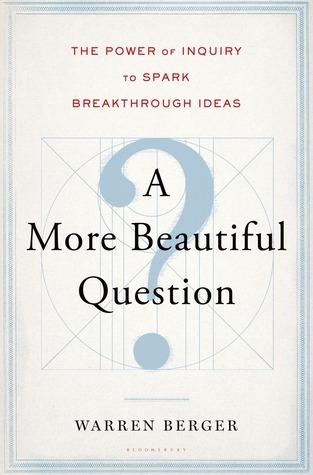 BookA More Beautiful Question — Warren Berger
Why questions matter more than answers. Full of examples of how curiosity drives innovation.
Question DiceESVideoThe Power of Curiosity — TED-EdAnimated video on how curiosity transforms learning.
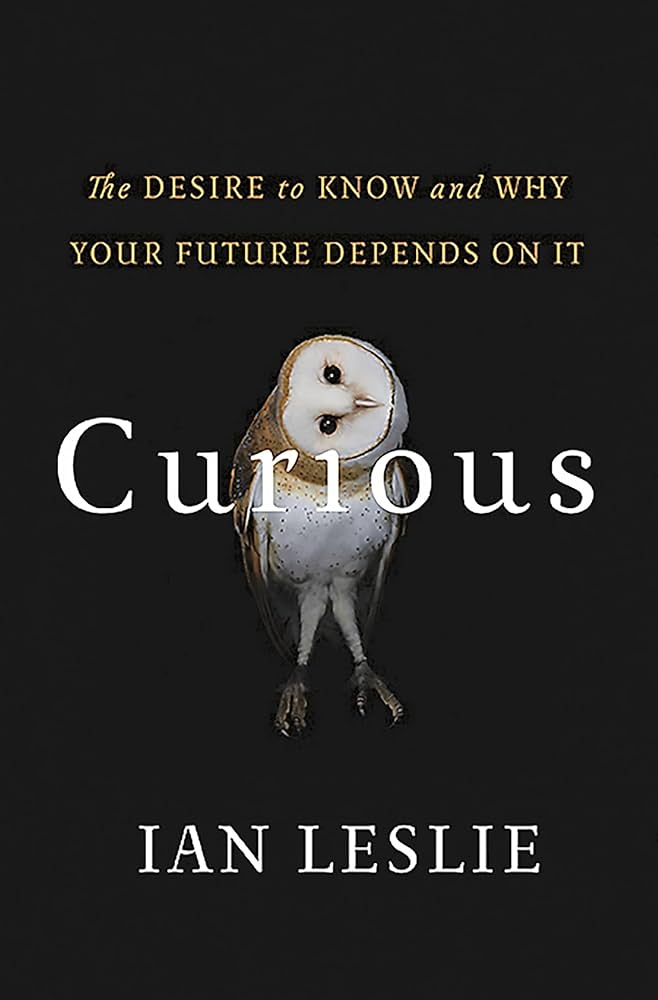 BookCurious — Ian Leslie
An exploration of curiosity as a vital force. Distinguishes between superficial and deep curiosity.
KWL OrganizerWebsiteInquiry-Based Learning — EdutopiaCollection of resources on inquiry-based learning. Examples and practical guides.
Collaborative Idea WallBloom CardsLive Word CloudWork GalleryIcebreaker Cards