Shouting works — until it stops working
Every teacher knows the scene: the group loses control, the noise rises, someone stands up, another throws something. The teacher shouts. Silence falls. The group calms down for a few minutes. Then it starts again.
Shouting works as an emergency tool. The problem is it loses effectiveness with each use. What in the first week produces immediate silence, by the third week generates a 30-second pause. By the second month, students do not even flinch. And the teacher finds themselves shouting louder and louder to get less and less result.
This is not a problem of the teacher’s authority or lack of respect from students. It is the predictable result of using a punitive tool as the main strategy. Positive discipline offers an alternative that is not softer — it is smarter.
The theory behind the practice
Jane Nelsen developed the positive discipline model based on Alfred Adler and Rudolf Dreikurs’s individual psychology. The fundamental principle: effective discipline is firm and kind at the same time. Firm because it maintains clear limits. Kind because it respects the student’s dignity.
Dreikurs (1964) argued that all disruptive behavior has a purpose: seeking attention, exercising power, taking revenge or demonstrating inability. When the teacher identifies the purpose behind the behavior, they can respond effectively instead of just reacting to the symptom.
A meta-analysis by Durlak et al. (2011) with more than 270,000 students found that programs integrating social-emotional skills in school produce improvements of 11% in academic performance, significant reduction of behavioral problems and improvement in interpersonal relationships. Positive discipline is not a pedagogical luxury — it directly impacts learning.
Punishment vs. logical consequence
| Punishment | Logical consequence |
|---|---|
| Has no relation to the behavior | Is directly related |
| Aims for the student to suffer | Aims for the student to learn |
| The teacher decides alone | Is agreed upon in advance |
| Generates resentment | Generates responsibility |
| “You lose recess” (for talking in class) | “You will complete the activity you could not do while talking” |
| “I am going to tell your parents” | “What do you think you could do differently next time?” |
| The student behaves out of fear | The student behaves because they understand why |
The key difference: punishment controls behavior from the outside. The logical consequence develops self-control from within.
Four pillars of positive discipline in the classroom
A student who feels seen, known and respected accepts limits more easily than one who feels the teacher is against them. Icebreaker cards at the start of the year and connection routines during the year build a relationship that is the foundation of all effective discipline.
This does not mean being the students' friend. It means that before correcting a behavior, the student needs to feel that the teacher knows them as a person — not just as a source of problems.
Rules the teacher posts on the wall the first day of class rarely generate commitment. Agreements built together do. A collaborative ideas wall allows students to propose, discuss and prioritize coexistence norms. The opinion thermometer measures the degree of agreement with each proposal.
When a student violates an agreement they helped build, the conversation is different: "We agreed on this together. What happened?" instead of "You broke my rule."
Most conflicts escalate because emotions are not named in time. A frustrated student who has no words to describe what they feel acts: hits, shouts, shuts down. The emotions deck allows identifying and naming emotions: "Which card represents you right now?" Naming the emotion does not eliminate it — but it takes it out of the body and puts it somewhere it can be worked on.
The comprehension stoplight adapted to emotional climate — green (I am fine), yellow (I need a moment), red (I need help) — gives the teacher real-time information without anyone having to expose themselves verbally.
When something breaks — an object, a relationship, an agreement — positive discipline proposes repairing instead of punishing. Repair is more demanding than punishment: it requires the student to understand what happened, how it affected the other and what they can do to make amends.
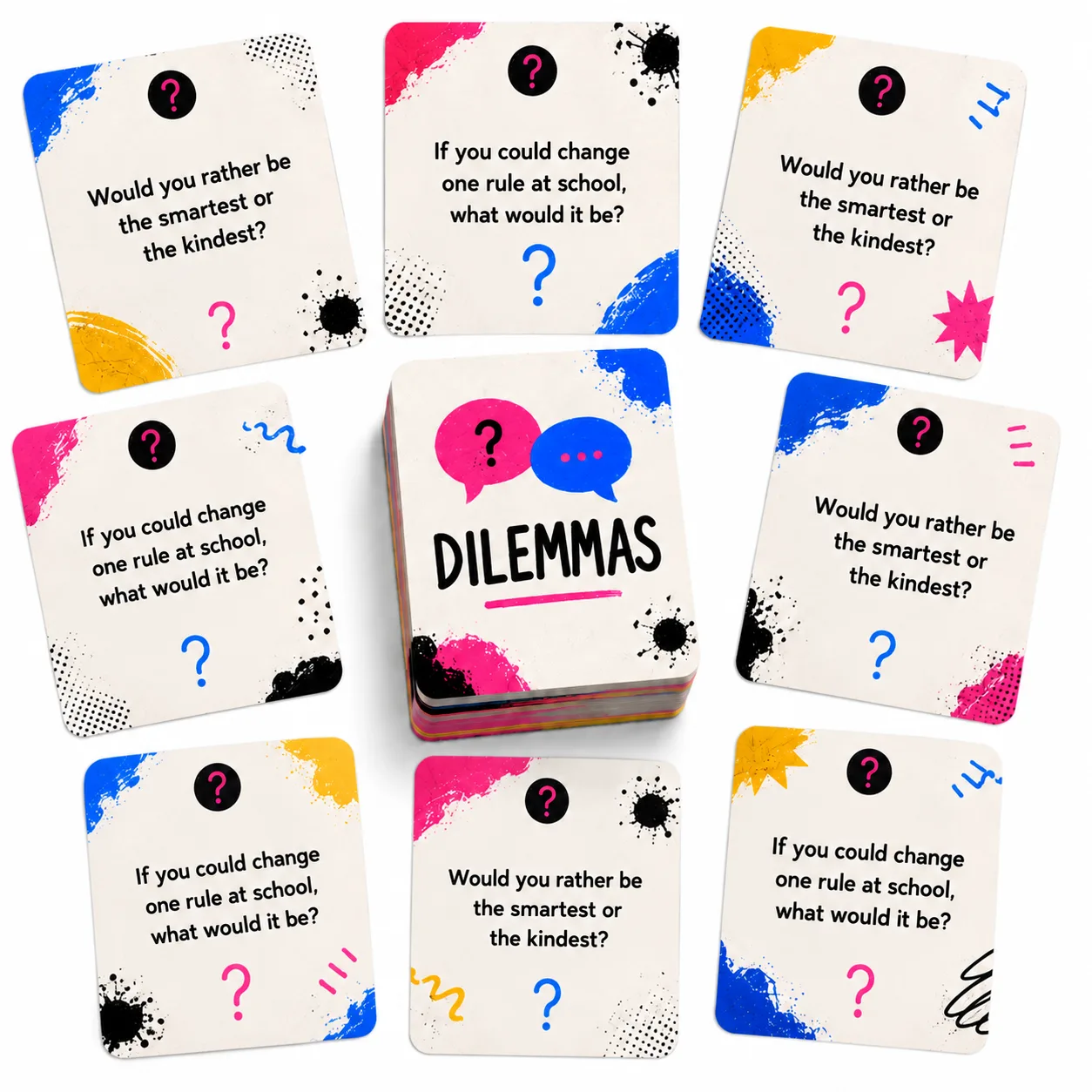
Dilemma cards allow practicing this logic in the abstract before a real conflict occurs: "You broke something accidentally and nobody saw you. Do you confess?" Discussing these dilemmas builds the ethical muscle that later activates when the situation is real.
Free tools for each pillar
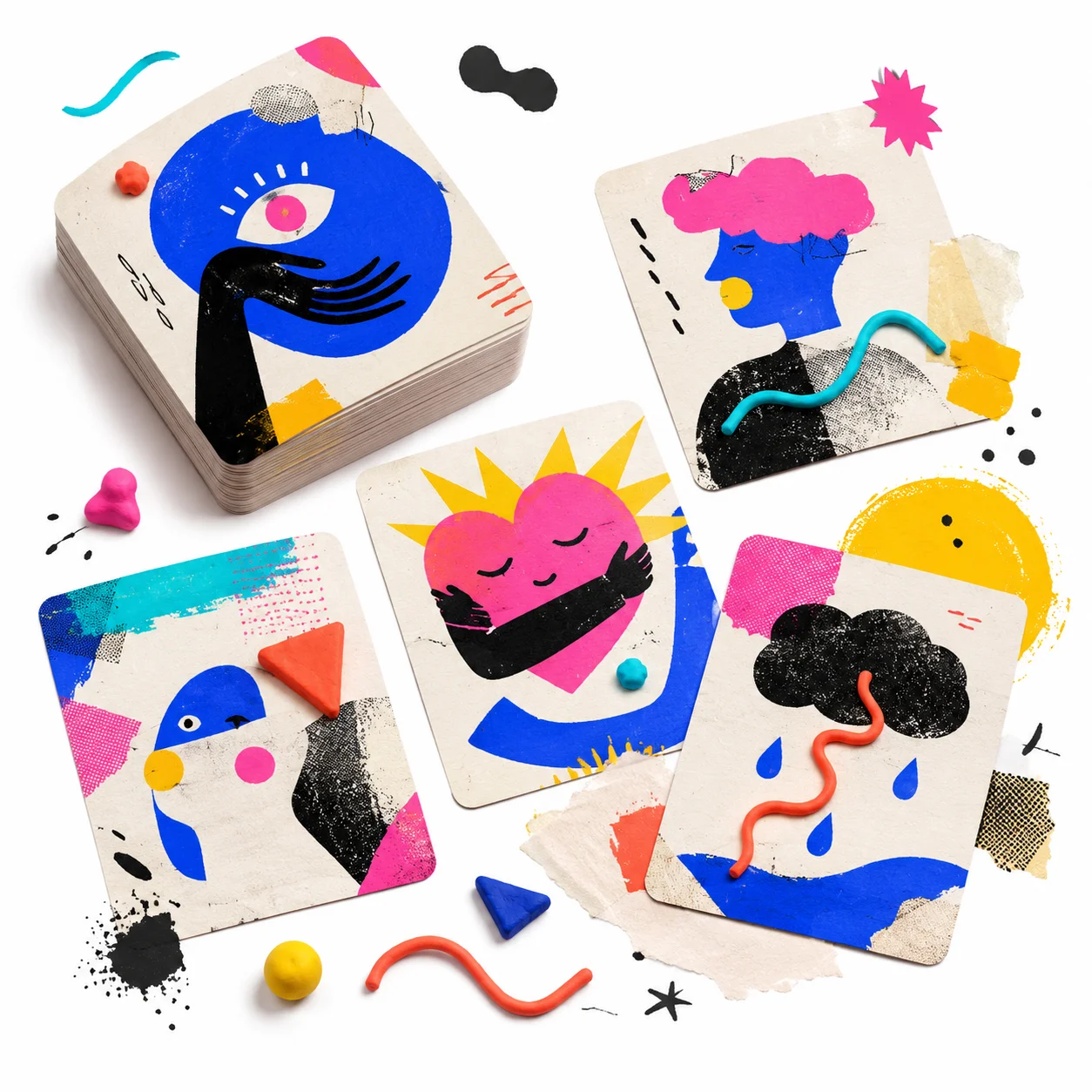
Emotions Deck — for naming what is felt
Each card illustrates an emotion with an image and a name. Students choose the card that represents them at that moment. It is especially useful at the start of the day (“How did you arrive today?”), after a conflict (“What are you feeling now?”) or as a weekly routine. Naming the emotion is the first step to regulating it.
Dilemma Cards — for practicing ethical decisions
They present coexistence situations without a correct answer. “If you see something bad and say nothing, does that make you part of the problem?” They allow discussing discipline and coexistence topics in the third person, without it being personal. Students practice the ethical reasoning that they later apply to their own situations.
Collaborative Ideas Wall — for building agreements
A space where everyone can propose ideas anonymously. For coexistence agreements, each student posts what they believe the group needs to function well. The teacher groups them, the group discusses and the final agreements are prioritized. The construction process generates more commitment than any imposed list of rules.
Comprehension Stoplight — for taking the emotional pulse
Adapted to classroom climate: students indicate green (I am fine), yellow (something is bothering me) or red (I need help). Gives the teacher an emotional diagnosis of the group in 30 seconds without anyone having to speak. Allows intervening before a problem escalates.
Opinion Thermometer — for measuring group agreement
Makes visible how much the group agrees with coexistence statements: “The consequences for breaking an agreement should be the same for everyone,” “Sometimes it is necessary to raise your voice to be heard.” The responses reveal beliefs worth discussing before they become conflicts.
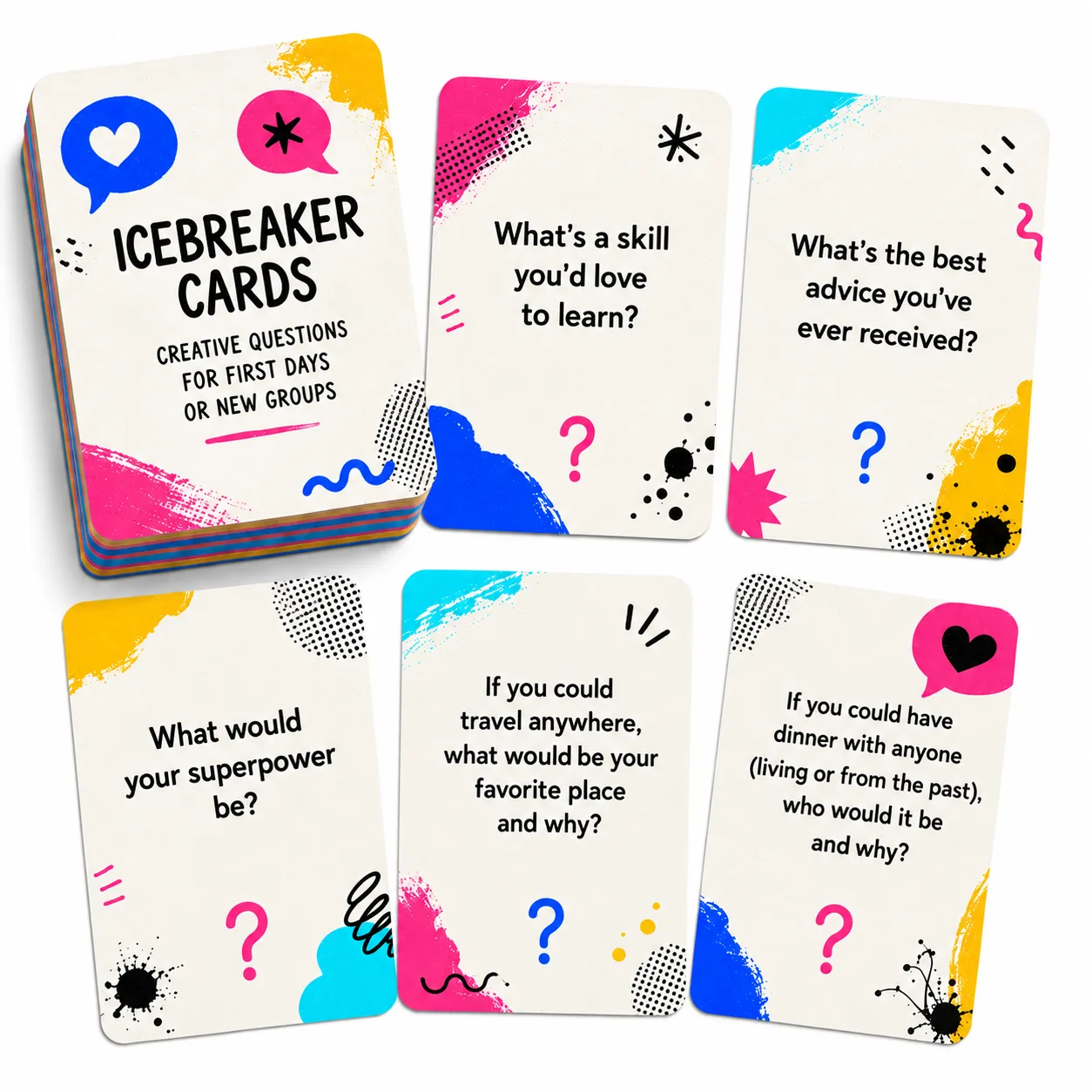
Icebreaker Cards — for building the relationship
Questions that generate real conversation: “What was the best advice you were ever given?” “What is something people do not know about you?” Positive discipline rests on the relationship, and the relationship is built through getting to know each other. These cards are the starting point.
Common mistakes when implementing positive discipline
Confusing kindness with permissiveness. Positive discipline is not letting students do whatever they want. It is maintaining clear limits with respect. “I understand you are angry and it is not okay to throw things” is firm and kind at the same time. “It doesn’t matter, never mind” is permissive.
Abandoning it when it does not work immediately. Students accustomed to the punitive model test limits when the teacher changes approach. This is expected and does not mean positive discipline does not work — it means students are checking whether the change is real. Consistency is key: results appear in weeks, not days.
Applying it only with the “easy” ones. Positive discipline is most necessary precisely with the most difficult students — those who have already built an identity around confrontation. With them, connection before correction is not a luxury — it is the only path.
Eliminating all consequences. Positive discipline does not mean the absence of consequences — it means consequences are logical, agreed upon and oriented toward learning. “There are no consequences for anything” generates chaos and teaches nothing.
What competencies it develops
Positive discipline not only improves classroom climate — it develops competencies students carry beyond school:
- When a student identifies and names what they feel before acting, they are exercising emotional regulation.
- When they put themselves in another’s place to understand why a behavior affected them, they are practicing empathy.
- When they reflect on their own behavior and its motives, they are developing self-awareness.
- When they participate in resolving a conflict without adult intervention, they are exercising negotiation and mediation.
- When they feel they belong to a group with norms they helped build, they are developing sense of belonging.
These competencies are exactly those the evidence identifies as predictors of wellbeing and long-term success — more than academic grades.
How to start
Use icebreaker cards or the emotions deck as a start-of-class routine. Dedicate 5 minutes daily to getting to know the group as people, not just students. Do not try to change discipline yet — just build the relationship.
Build coexistence agreements with the group using a collaborative ideas wall. Let students propose, discuss and prioritize. Post the agreements somewhere visible and refer to them when necessary.
When the first conflict occurs (and it will), respond with the sequence: name the emotion, recall the agreement, seek the repair. "It seems you are frustrated. We agreed that when we are angry we ask for a moment before reacting. What do you think you could do now?"
Positive discipline is not a program implemented in a single day — it is a shift in approach sustained through daily practice. The first days are the hardest. Afterward, students begin regulating each other.