Dynamic does not mean entertaining
An engaging class is not a class with many activities, background music and games every ten minutes. It is a class where students are cognitively active: thinking, producing, responding, discussing. The energy that matters is not physical — it is mental.
The confusion between dynamic and entertaining leads to classes with lots of movement and little learning, or to teachers who refuse to make engaging classes because they fear losing control. Neither extreme works.
A well-designed engaging class has varied rhythm, frequent participation and moments of surprise — all in service of the content, not as decoration.
Why passivity in the classroom is a design problem
When students are passive in class — staring at the ceiling, using their phone, waiting for time to pass — it is generally not because they are lazy or unmotivated. It is because the class design gives them nothing to do with what they are watching.
Passivity is the rational response to an environment that does not require participation. If the teacher explains and expects students to listen without interruption for 40 minutes, students do exactly that: they listen (or pretend to listen) without interruption for 40 minutes.
Engagement is designed, not expected. You have to create the moments where participation is required, where surprise activates attention and where movement (physical or cognitive) breaks inertia.
Four techniques for breaking passivity
Start class with a question students did not expect and that requires an immediate response. Not "does anyone remember the last class?" — that produces silence. Instead: "You have 60 seconds to write the most important concept from the last class. The timer starts now."
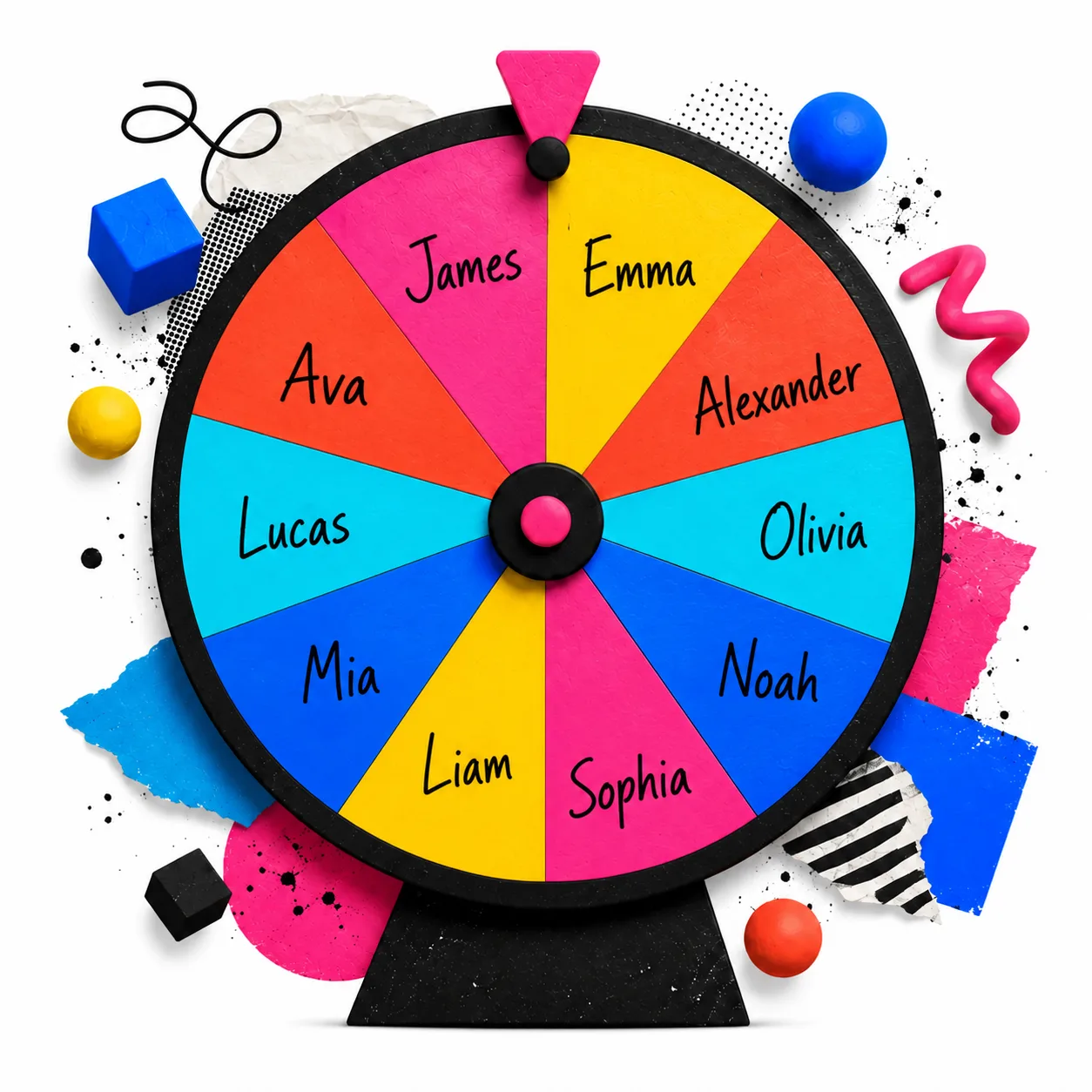
The time limit and the certainty that everyone will share activates attention from the first minute. The Name Spinner after the writing minute makes participation inevitable.
The enemy of engagement is monotony of format. If the entire class is "the teacher explains and students listen," everything becomes predictable and attention fades.
A 60-minute class can have three different formats:
- Explanation + questions to the group (first block)
- Small group work with a task (central block)
- Sharing and synthesis (closing)
Each format change acts as an attention reset. The different formats do not have to be completely distinct activities — it is enough to change the configuration: from individual to group, from listening to producing, from silence to exchange.
Surprise is one of the most powerful attention activators. The brain prioritizes the unexpected because the unexpected might be important.
In the classroom, surprise can be:
- A question nobody expected ("what does what I just explained have to do with what you ate this morning?")
- A group change in the middle of class using the group generator
- The question dice falling on someone who was not expecting to be next
- A provocative statement that divides the group before the explanation begins
The surprise does not need to be big. It just needs to break the pattern.
Traditional participation is sequential: the teacher asks, one student answers, the teacher comments, another student answers. In a class of 30 students, if each exchange takes 30 seconds, in 20 minutes only half the group has spoken.
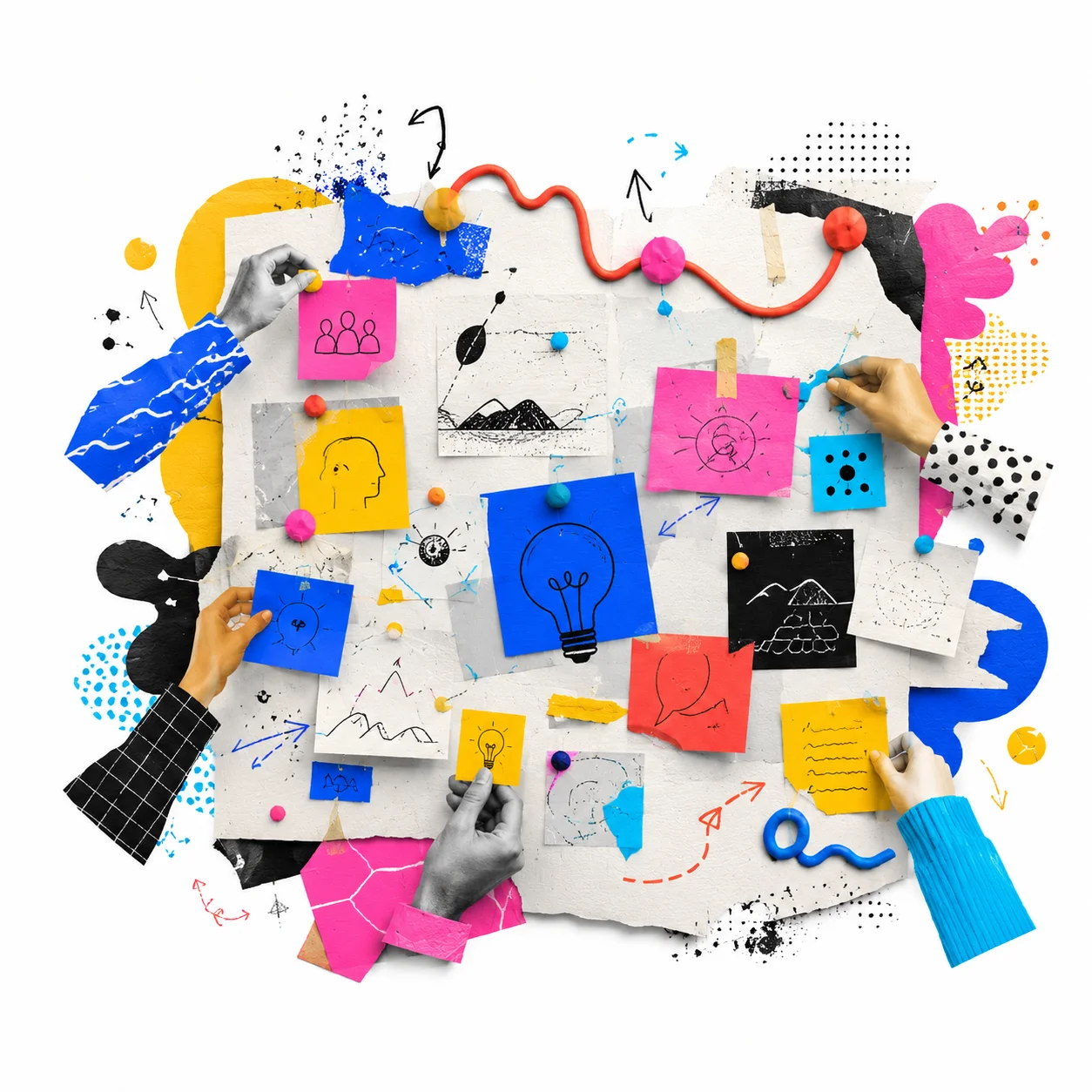
Simultaneous participation changes that: everyone responds at the same time. The Collaborative Ideas Wall lets all 30 students post their response simultaneously. The wall fills in 90 seconds and there is real material to work with.
This technique is especially useful for moments of the class where the whole group's energy and presence is needed: the opening, transitions between blocks, the closing.
How to use movement without creating chaos
Physical movement activates attention and breaks prolonged sitting. But movement without structure generates dispersion.
Movement techniques with structure:
Students leave their productions on tables or walls and browse others', leaving written comments. There is movement and feedback simultaneously.
The teacher poses a question with four possible answers and each corner of the room represents one option. Students move to the corner they choose. The groups formed discuss their choice.
Groups share one member with the neighboring group to give or receive feedback. There is controlled movement, with purpose and defined time.
The rule for movement in class: always with a clear task, a defined time and a concrete product to bring back.
Rhythm: the most overlooked variable
The rhythm of a class is the speed at which intensity, format and type of participation change. A class with good rhythm has peaks and valleys: moments of high activity followed by moments of quiet processing.
A class that tries to maintain high energy the entire time ends up exhausting the group (and the teacher). A class with flat energy throughout puts everyone to sleep. Good rhythm alternates deliberately.
A pattern that works:
- High-energy opening (2-3 min): surprise, question, activation
- Sustained concentration development (10-12 min): explanation or deep individual work
- High-participation activity (5-8 min): group, simultaneous, visible
- Quiet processing moment (3-5 min): individual writing, reflection
- Active closing (3-5 min): synthesis with the group’s voices
The trap of “this group just does not participate”
Every teacher has a group about which they say “this group does not talk” or “this group does not participate.” It is rarely true that the group cannot participate — it is that the participation format being offered does not work for that group.
Groups “that do not participate” generally have in common:
- Fear of individual exposure in front of the whole class
- Prior history of mockery or dismissal when they did participate
- Established habit of passivity that nobody questioned before
The solution is not to insist with the same format (“does nobody want to comment on anything?”). It is to change the format:
- Anonymous written participation before oral
- Pairs before whole group: discuss with the person next to you, then share “we think that…”
- Role cards that assign specific and not generic responsibilities
With these techniques, groups “that do not participate” participate. Because the obstacle was not willingness — it was the design.
Where to start
One single change for the next class: choose a moment where you would normally ask “does anyone want to comment on something?” and replace it with simultaneous participation.
Launch a question, give 60 seconds for each student to write an individual response (on paper or on the collaborative wall), and then share. Do not wait for volunteers. Read aloud the most interesting responses.
That one change alone turns a passive class into one where everyone thinks and everyone produces.
Free tools for making class more engaging
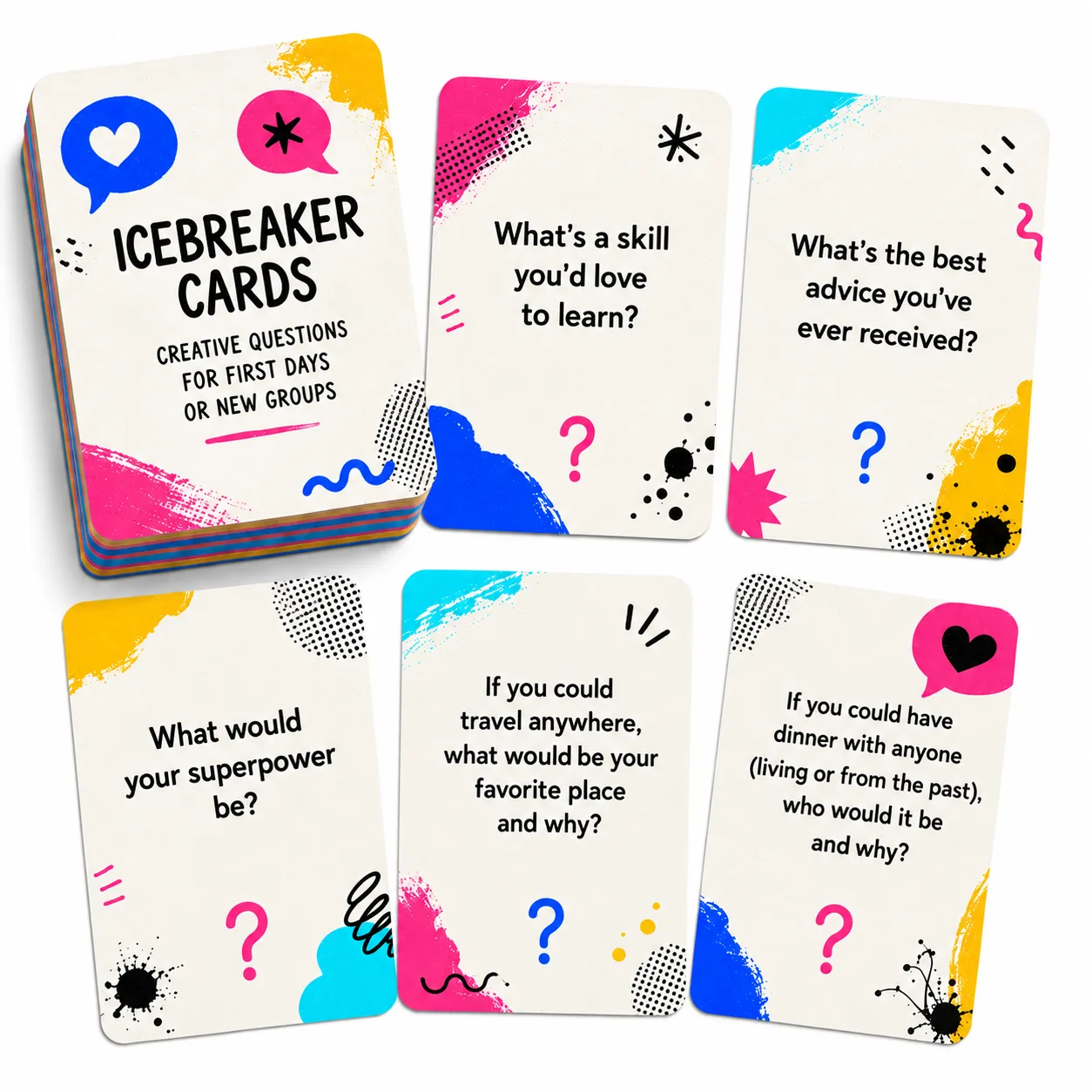
Icebreaker Cards — at the start, to change the atmosphere
Icebreaker Cards are light questions that activate the group before entering the content. They do not require prior knowledge of the topic, generate spontaneous conversation and change the emotional state of the classroom in under 3 minutes. They work especially well for groups that arrive cold or with low energy, or as a transition after an extended explanation.
Group Generator — for breaking the routine of the same teams
The Group Generator forms teams at random quickly and transparently. Changing the composition each class generates new dynamics and prevents the same students from always working together. Ideal for activating a format change: from individual to group, from explanation to production.
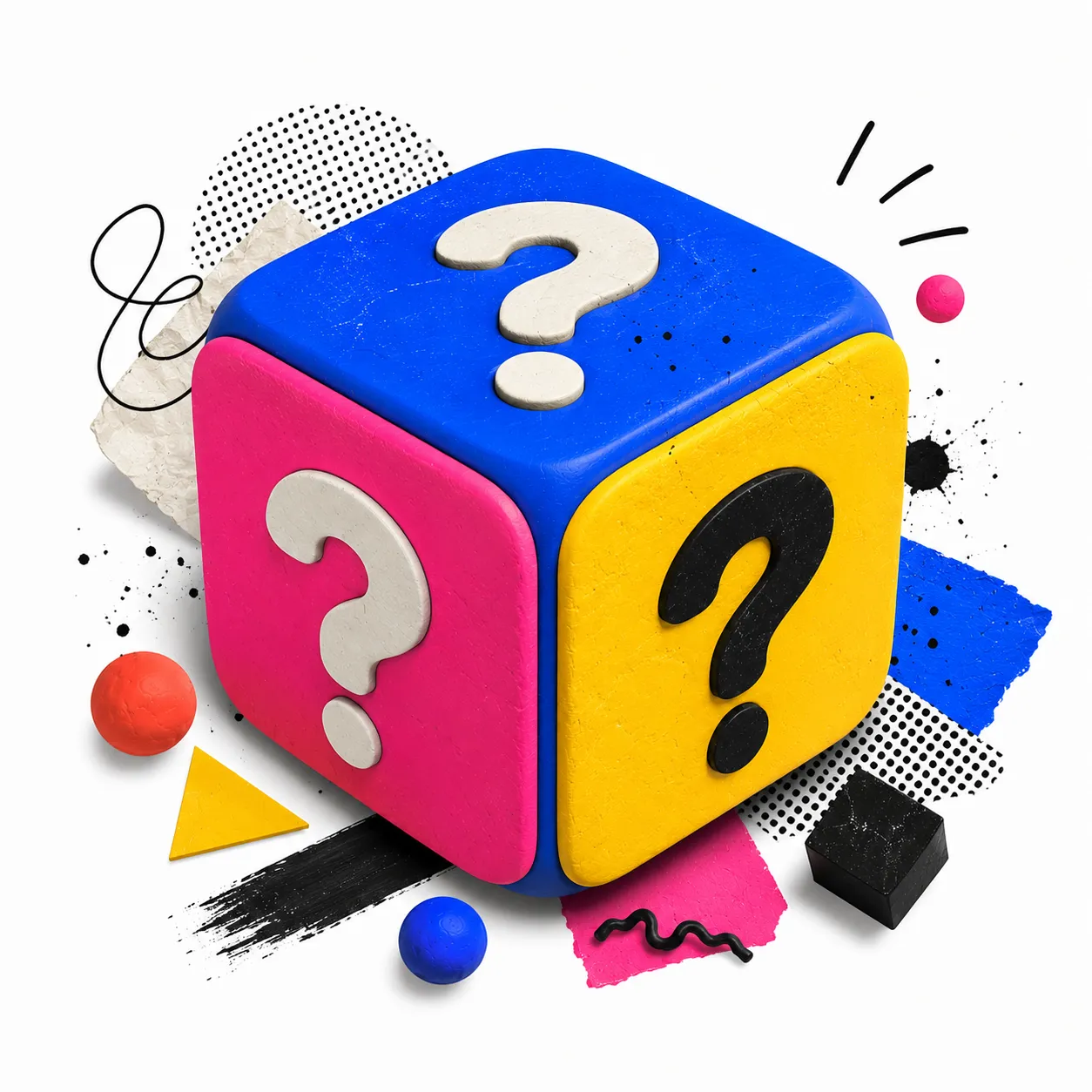
Question Dice — for introducing the element of surprise
The Question Dice launches random questions on any topic. It introduces the surprise that activates attention: nobody knows what will be asked or who will be next. It can be used at the start to diagnose prior knowledge, in the middle to change the pace, or at the close to review what was learned in a playful way.
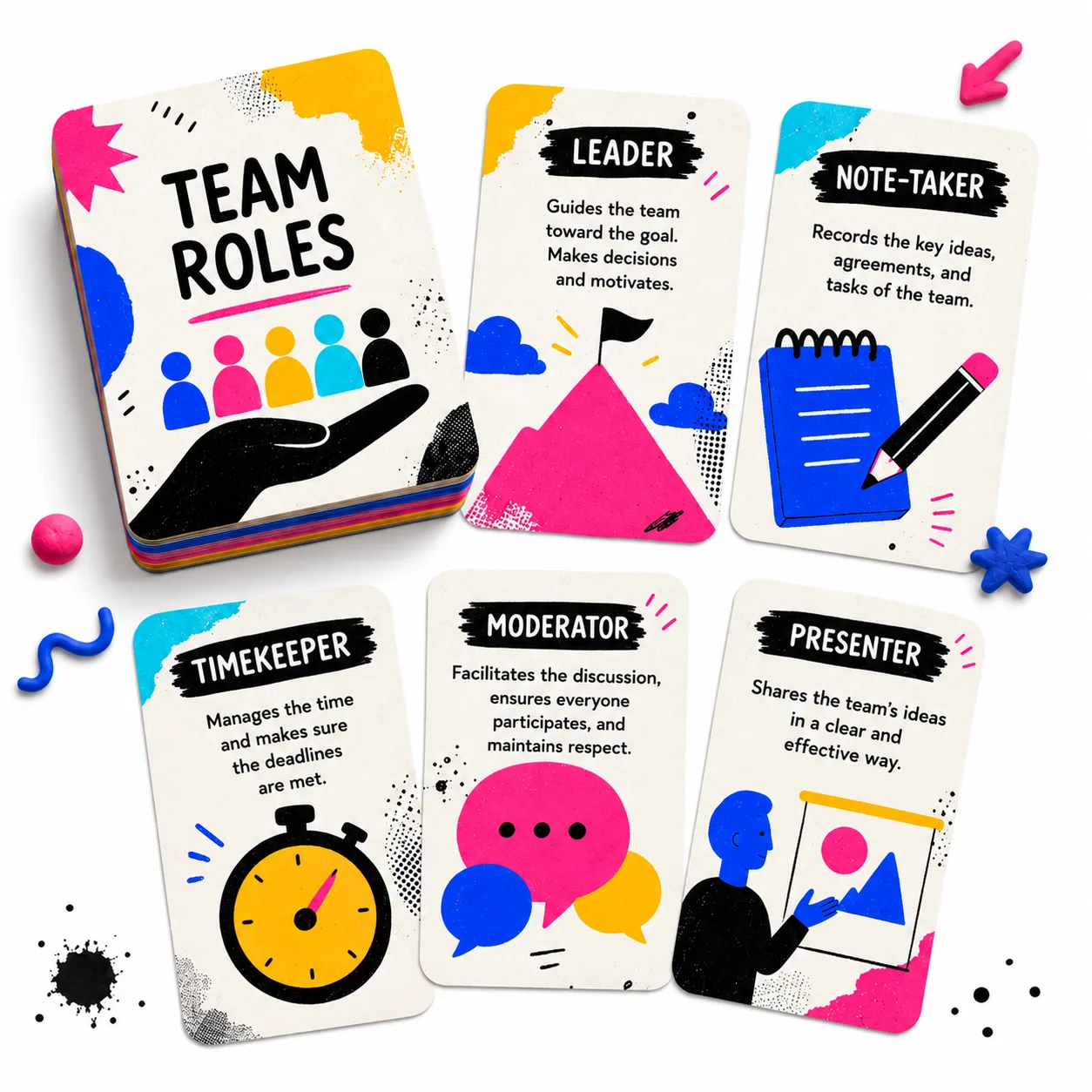
Role Cards — for distributing responsibility
Role Cards assign specific functions within teams: leader, recorder, timekeeper, devil’s advocate. They distribute responsibility equitably and activate the most passive students, who would otherwise rely on those who always lead. They work best when roles rotate between classes.
Name Spinner — for inevitable participation
The Name Spinner randomly selects students to answer or participate. The uncertainty of not knowing who will be next keeps attention active throughout the class. It is especially effective combined with a prior minute of individual writing: first everyone thinks, then the spinner chooses who shares. No volunteers, no always the same students.
Collaborative Ideas Wall — for simultaneous participation
The Collaborative Ideas Wall lets everyone post answers, ideas or reflections at the same time. Nobody waits their turn and nobody is more exposed than anyone else. The wall fills in 90 seconds and there is concrete material to discuss, compare and build on. It is the most efficient resource for turning a passive class into one where everyone produces.
What competencies it develops
An engaging class does not only activate attention — it also trains transversal competencies naturally:
- By posting simultaneously, working in rotating groups and taking on different roles, students exercise collaboration: building with others without depending on the same bonds as always.
- The surprise of the dice, random groups and unexpected tasks train adaptability: responding with one’s own resources when the context changes without warning.
- When students must propose, take initiative within their role or move forward without detailed instructions, they are developing initiative and proactivity.
- Facing open tasks or unexpected combinations of ideas, students activate creative thinking: the ability to generate responses that were not predetermined.