The problem: information without a story is forgotten
The teacher explains the French Revolution. Dates, structural causes, political factions, consequences. Students take notes. Friday there is a test; Monday nobody remembers anything.
The same teacher starts this way: “Imagine a city where bread costs three times more than last month. It is five in the morning and there is a line of two hundred people. At the end of the line there is a woman with three children who has been waiting for two hours. When her turn comes, there is no bread left.” Students do not move their pencils. They are listening.
The difference is not the content — it is the format. The human brain is not designed to retain data; it is designed to follow stories.
Why stories anchor content
Neuroscience calls it “neural coupling”: when someone tells a story, the listener’s brain synchronizes its activity with the narrator’s. Not only do language comprehension areas activate — motor, sensory and emotional areas activate as well. The listener does not process information, they live it.
Jerome Bruner identified two modes of thought: the logical-scientific (data, categories, proofs) and the narrative (characters, conflict, resolution). Both produce knowledge, but only the narrative produces understanding with emotional weight — and emotion is what decides what is remembered.
Uri Hasson (Princeton) demonstrated with brain imaging that when someone listens to a story, their brain “mirrors” the narrator’s with delays of tenths of a second. Information transmitted in narrative format activates more brain regions and produces greater retention than the same information in expository format.
Four formats for use in the classroom
Instead of starting with the topic, start with the story that makes the topic matter. Not "today we look at the circulatory system" but "in 1628, an English physician named William Harvey claimed something nobody believed possible: that blood circulates." The story creates the problem before giving the answer.
The opening story does not have to be long — three sentences are enough to install character, context and conflict. What it must achieve is that the student wants to know what happens next.
Abstract concepts are hard to remember because they have no face. Assigning a character to a concept turns it into something concrete. "Photosynthesis is the story of a cell that learned to eat light." "The free market is a system where nobody is in charge but everyone obeys price signals."
The character does not have to be historical or real: it can be an imaginary being, a personified metaphor or a situation the student builds. What matters is that the concept has an agent who wants something and faces obstacles.
Stories of failures, obstacles and errors activate more attention than stories of success. Telling how a scientist arrived at the wrong answer, how a society made a catastrophic decision or how a design failed repeatedly before working produces more understanding than telling the final result.
The error in the story serves the same function as conflict in fiction: without an obstacle there is no story. When students see that current knowledge cost failed attempts, they also learn something about the learning process itself.
Teacher storytelling is powerful. Student storytelling is even more powerful. Asking students to explain a concept in narrative format — as a story, as a letter from a historical character, as a scene from an imaginary situation — activates deeper understanding than any summary.
To tell something, one must understand it. For the story to work, one must know how to connect the parts. The narrative format forces a synthesis that an informational summary does not require.
The three elements every classroom story needs
There is no need to be a writer to use storytelling. Only three elements are needed:
| Element | Key question | Example |
|---|---|---|
| Character | Who wants something? | A physicist who needs to prove something nobody believes |
| Conflict | What prevents them? | The instruments of the 17th century are not precise enough |
| Transformation | What changes at the end? | Designs a new method and changes the history of science |
A classroom story does not need to be long or literary. It needs these three elements for the brain to process it as narrative rather than as data.
Common mistakes when using storytelling in the classroom
Confusing anecdote with story. An anecdote has a character and an event; a story has conflict and transformation. “Einstein failed math” is an anecdote. “Einstein spent seven years trying to solve a problem everyone said was impossible, and the day he solved it in tears he wrote to his best friend to share the news” is a story.
Using narrative as decoration. Storytelling does not work as a curious introduction before the “real class.” It works when the content is inside the story, not before or after it.
Always telling the success story. The hero’s success arc activates less attention than the story of the obstacle. Narratives of failure, doubt and error produce greater identification and better retention.
Not letting students tell. The teacher who uses storytelling to teach takes one step. The teacher who asks students to tell what they learned in narrative format multiplies that step.
Free tools to get started
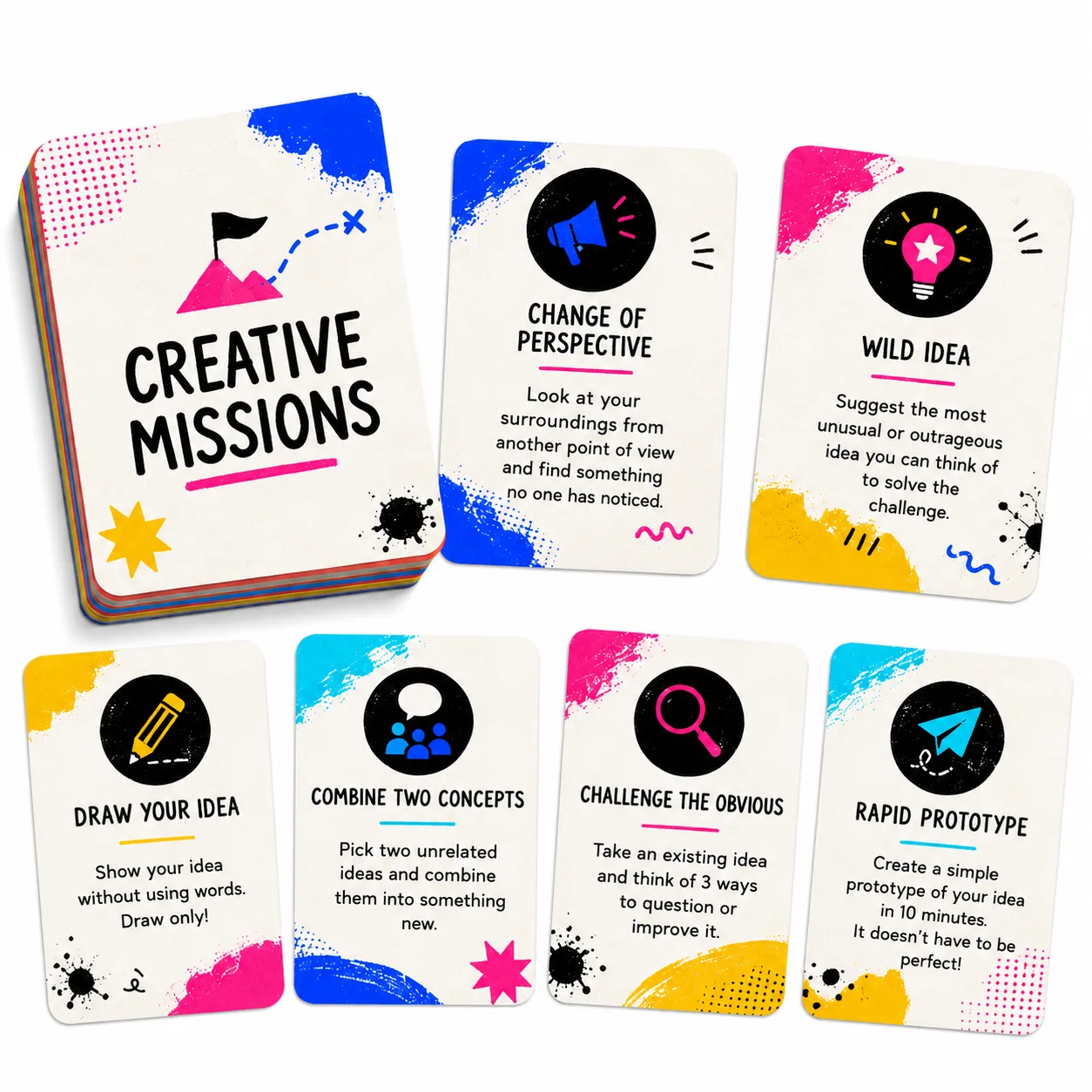
Creative Mission Cards — for structuring the student’s story
They propose short narrative challenges: “explain this concept as if it were a thriller,” “create a character who faces this problem.” They give structure without limiting creativity — the student knows what to tell, not how to tell it.
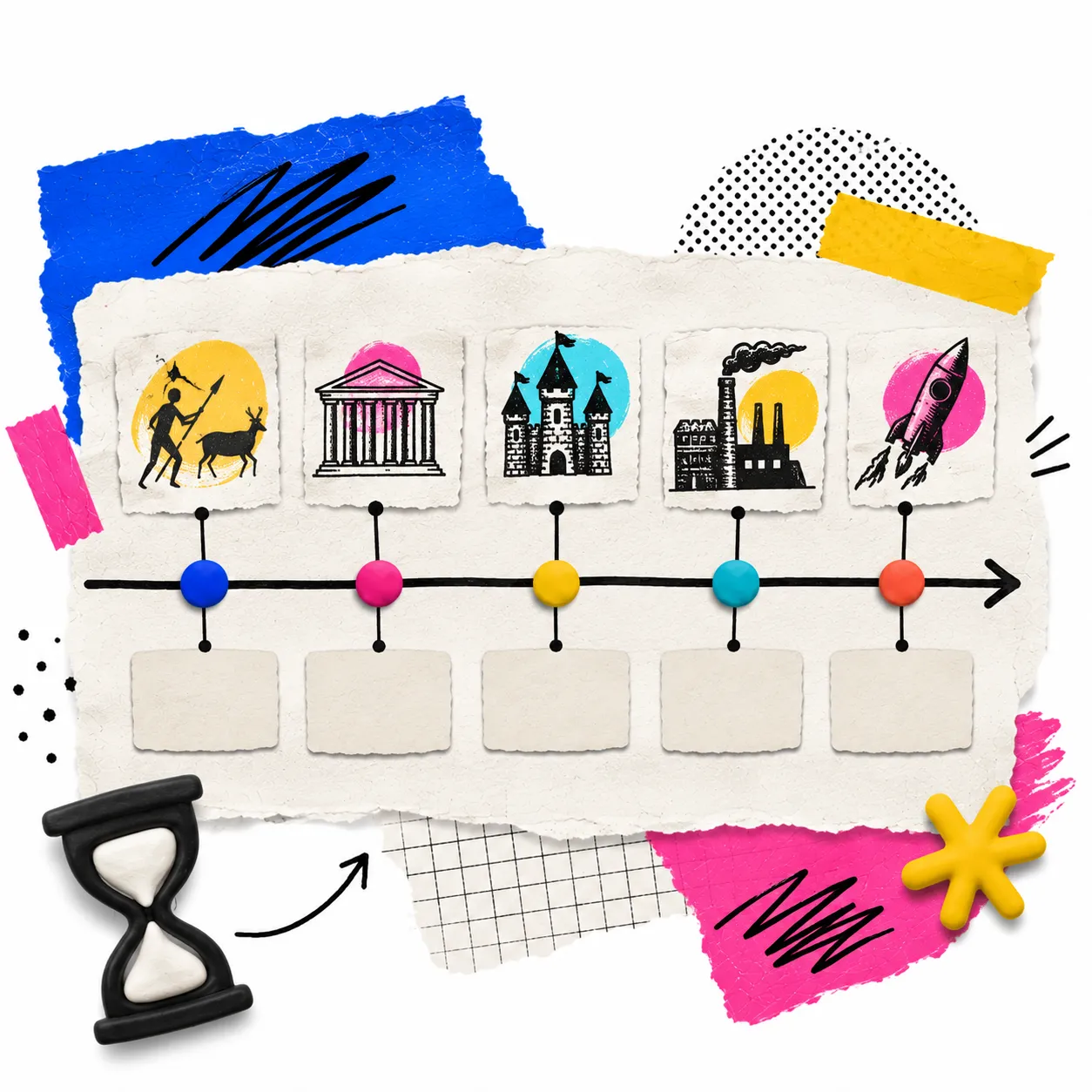
Timeline — for building the narrative arc
Turns any sequence of events into a visual narrative. Useful for students to build the story arc: context, conflict, resolution. Works in history, biology, literature and any topic with temporal development.
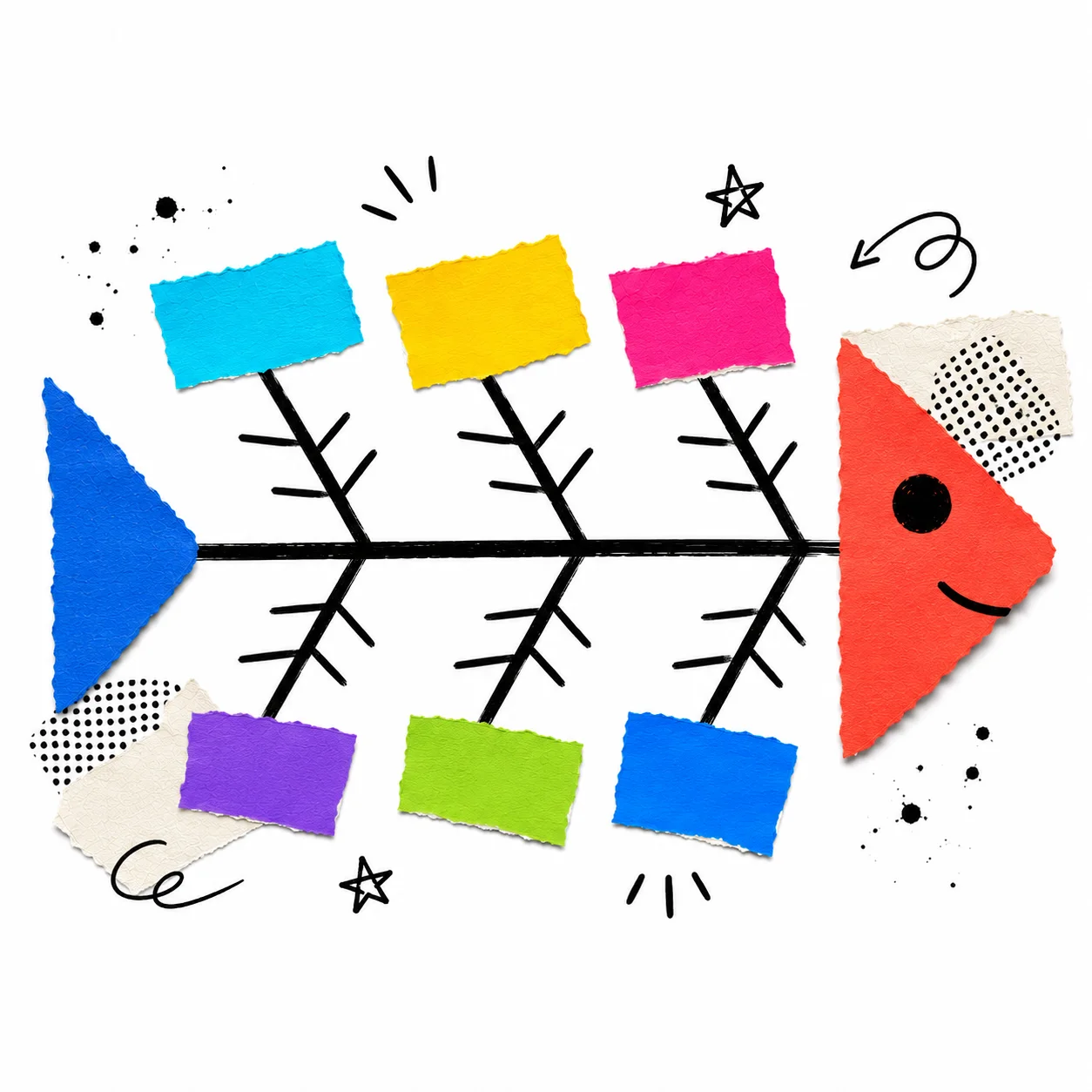
Cause and Effect — for mapping the logic of the story
The cause→effect structure is the basic structure of any story. Using it to map why something happens connects causal thinking with the narrative logic of “and then…, and so…”.
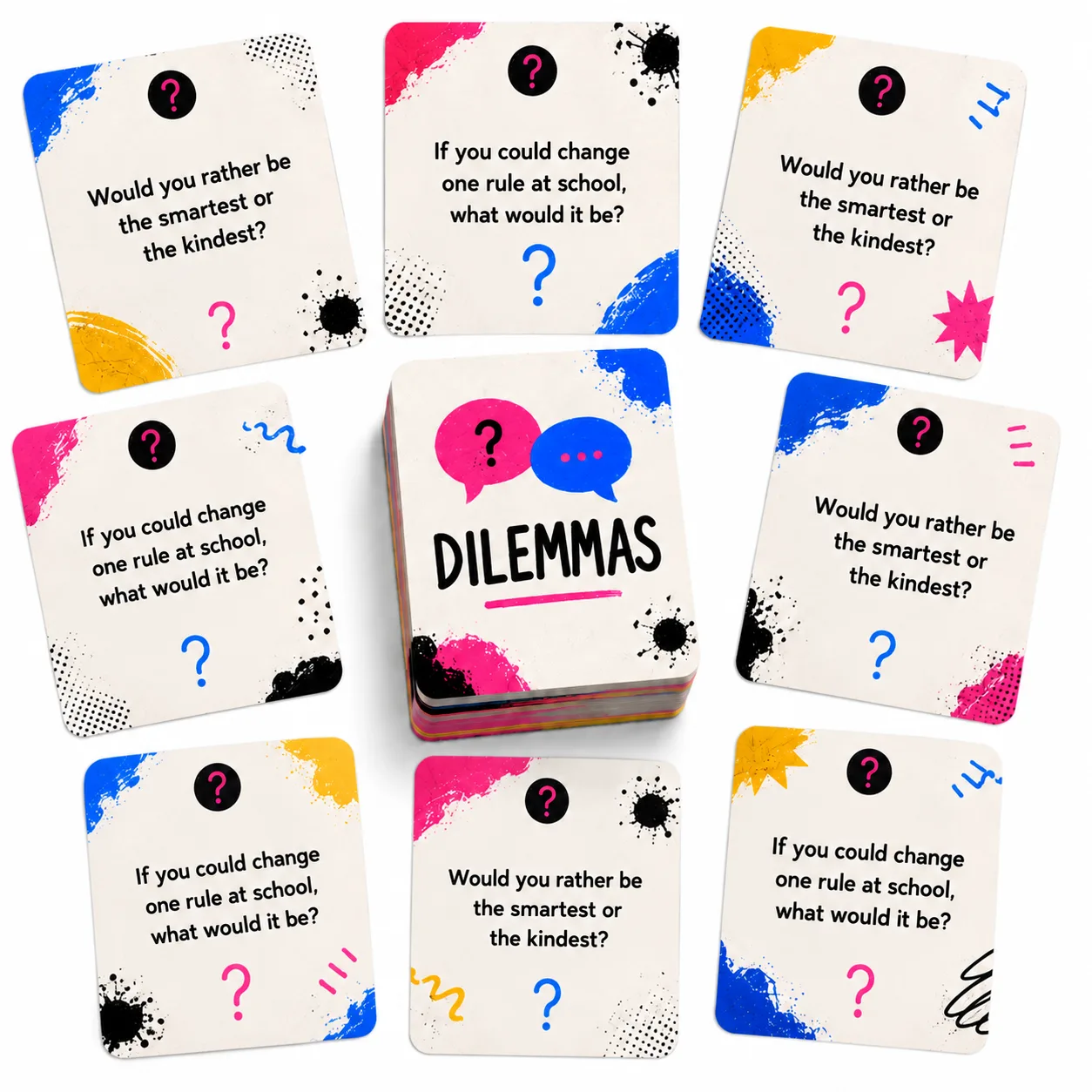
Dilemma Cards — for generating the central conflict
The best stories revolve around difficult decisions. Using a dilemma as a narrative starting point forces students to build context, justify choices and anticipate consequences. A well-chosen dilemma is the conflict that every story needs.
I Used to Think, Now I Think — for the arc of transformation
Records who the student was before the topic and who they are after. It is the most honest narrative a student can produce: it does not describe an external character, it describes their own change. Transformation is the heart of any story worth telling.
Work Gallery — for giving stories an audience
Every story needs to be told to someone. When students produce a narrative, the gallery allows browsing others’ work as in an exhibition and leaving feedback with sticky notes. The step that turns the exercise into real communication.
What competencies it develops
Storytelling in the classroom simultaneously works on several competencies:
- Whoever builds a narrative about a concept is exercising storytelling as a specific competency and creative thinking as a transversal competency.
- Whoever tells something in front of others is developing oral expression and the ability to adapt the message to the listener.
- Whoever uses the personal story of change — “I used to think X, now I think Y” — is practicing metacognition.
- Whoever listens to another’s story to build upon it is exercising active listening and collaboration.
- Whoever adapts their story to context and audience is exercising assertive communication: the ability to express oneself clearly and purposefully so the message is not lost.
Storytelling is one of the few activities where curricular content and emotional development happen at the same time.
How to start
Choose a topic from the next class and design a three-sentence opening story: character, context and conflict. Do not explain the topic yet — let the story install the question and see if students ask what happens next.
Take the most abstract concept from the unit and assign it a character: it can be historical, imaginary or metaphorical. Formulate: "Photosynthesis is the story of a cell that learned to..." and continue from there.
Ask them to explain what they learned in narrative format: as a story, as a letter from a character, as a scene from a situation. Compare the quality of those productions with the usual summaries — the difference is visible.