What makes a class remembered
Students do not remember the classes where they learned the most content. They remember the classes where something changed their way of seeing things, where they had to think for real, where the class had a moment that surprised them or where the close left them with a question they could not stop asking themselves.
A model class is not the perfectly executed class according to a manual. It is the class where real learning occurred — where students ended up thinking differently or able to do something they could not do before. And that has structure; it is not accidental.
The five elements of a model class
The objective of a model class is not "to cover topic X." It is a skill or understanding that students will be able to demonstrate at the end.
The difference is enormous. "Covering the French Revolution" does not tell any student what they are coming to class for. "By the end of class you will be able to explain why a revolution that began with ideals of liberty ended in the Terror" is an objective that generates curiosity and gives direction.
The rule for writing useful objectives: if the student can use it as a criterion for evaluating whether they learned or not, it is a good objective. If it only describes the topic, it is not.
The best classes start with something students do not know how to resolve with what they already know. A case, an image, a contradiction, a question that divides the group. Something that installs the feeling that the class will give answers to something worth asking.
The simplest tool for this: the live word cloud with a question about the topic. The resulting cloud shows instantly what the group knows, what they think they know and the concepts that are absent. That 90-second diagnosis is real information for calibrating the pace of the class.
The other option is the I Used to Think / Now I Think routine: students record their initial position on the topic before the explanation begins. At the end of class, they complete the second part. The contrast between the two is the most direct evidence of the learning that occurred.
A model class does not have activities of the same difficulty level from start to finish. It scales deliberately: starting from the accessible (remember, understand) and advancing toward the complex (analyze, evaluate, create).
Bloom's Taxonomy offers this escalation map:
What is it? How does it work? The base everyone needs to be able to continue.
Using the concept in a concrete case. This is where real learning begins.
Decompose, compare, find patterns. The level where superficial understanding is distinguished from deep understanding.
Take a position, design, produce something new. The level where knowledge becomes one's own.
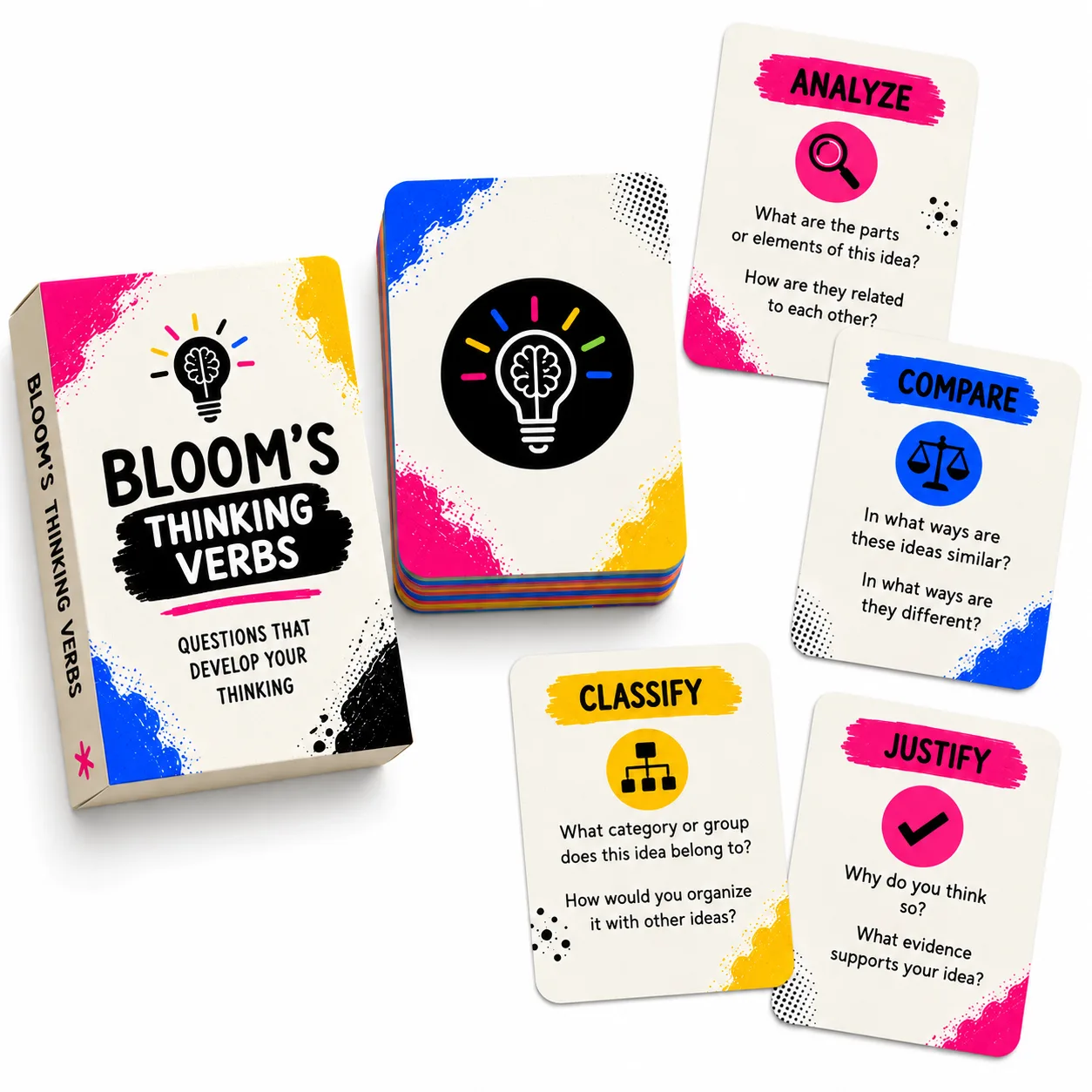
Bloom cards allow designing questions for each level on any topic, and using them in the order that takes the group from where they are to where they need to be.
In a model class, assessment does not wait until the end. It occurs during the class, at specific moments, and the results modify what happens afterward.
This is what distinguishes formative assessment from summative assessment: it is not for grading — it is for adjusting. If half the group marked "I did not understand" on the comprehension stoplight after the first block, the model class does not move forward. It reviews, reformulates, looks for another entry to the concept.
Three moments where formative assessment has the most impact:
- After the opening: check if the prior knowledge needed is present
- At mid-development: verify that the base is solid before escalating in complexity
- Before the close: confirm the class objective was met before synthesizing
The comprehension stoplight at those three moments gives a real picture of learning in real time. The difference between teaching while looking at the stoplight results and teaching without them is the difference between navigating with a map and navigating blind.
The close of a model class does two things simultaneously: consolidates learning in students' memory and generates evidence the teacher can review.
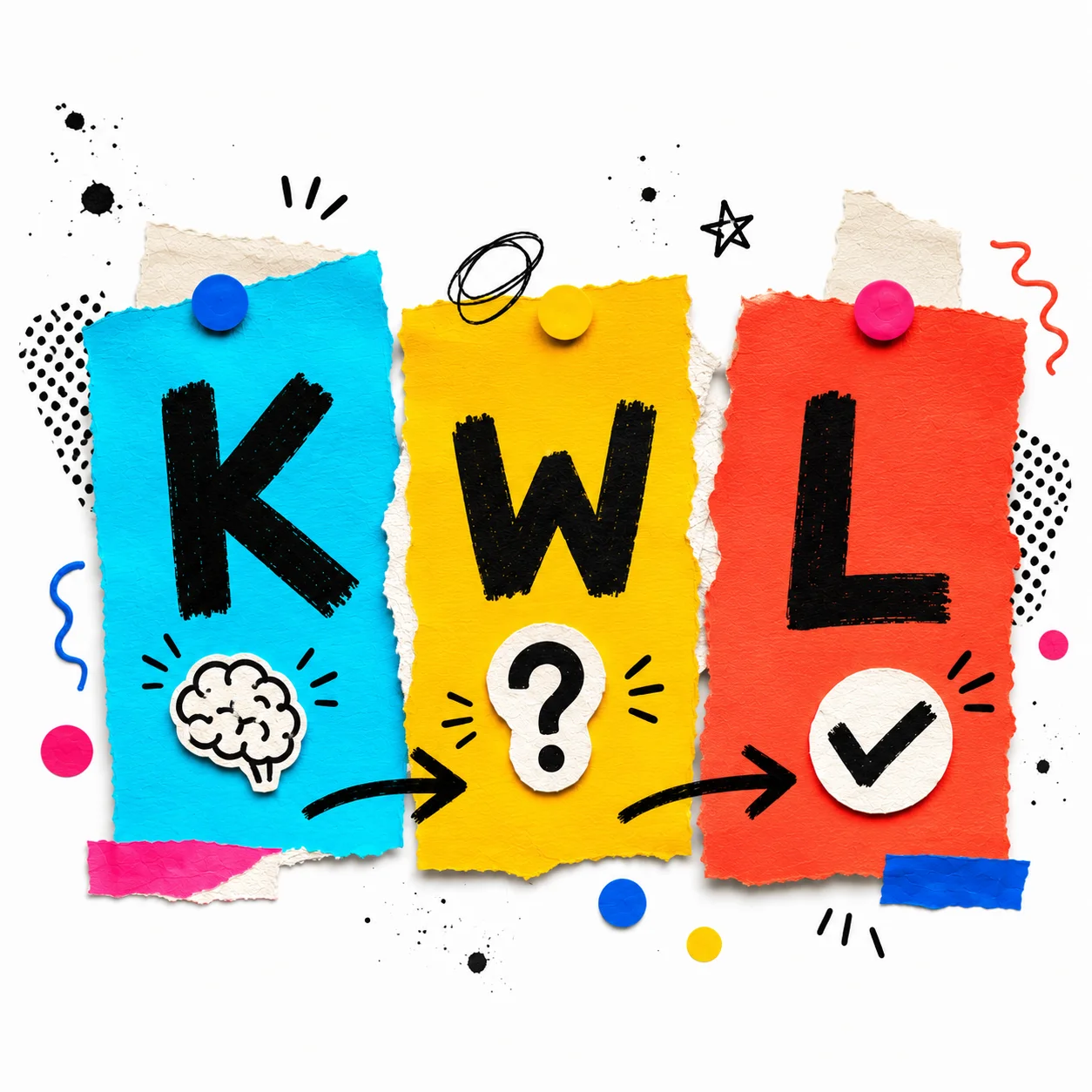
Synthesis: what was the most important thing from class? Ideally, the synthesis is produced by students, not the teacher. A word cloud, an ideas wall with one sentence per student, or the third column of the KWL are formats where students produce the collective synthesis.
Reflection: what did you learn that you did not know before? What do you still not understand? What question are you taking with you? The exit ticket with these three questions gives the teacher real information before the next class begins.
If the synthesis is done by the teacher ("what we saw today was...") and there is no space for students to articulate what they learned in their own words, the close consolidates the teacher's learning, not the students'.
The anatomy of time in a 60-minute class
| Moment | Duration | What happens |
|---|---|---|
| Opening | 8–10 min | Activation, diagnosis, generative question |
| Development 1 | 12–15 min | First concept, basic-comprehension level |
| Check | 2–3 min | Comprehension stoplight, adjustment if needed |
| Development 2 | 12–15 min | Deepening, application, analysis |
| Central activity | 8–10 min | Group or individual production with the knowledge |
| Close | 8–10 min | Collective synthesis + exit ticket |
This distribution is a guide, not a regulation. What cannot be compressed without consequences is the close: without the final 8–10 minutes of consolidation, the class remains incomplete even if the content was excellent.
What distinguishes a notable class from a correct class
A correct class fulfills the curriculum, has adequate activities and students do not disengage. A notable class does all that and also:
The clearest sign that real learning occurred is not that students can repeat what the teacher said — it is that they left with more curiosity than they arrived with.
If the class went exactly as planned, the teacher probably was not watching the group. A notable class has at least one moment where the teacher read the room and changed something: reviewed a concept, moved faster through what they already knew, went deeper where there was genuine interest.
The most demanding test of comprehension is transfer: being able to use what was learned in a context different from the class. If students can only repeat what the teacher said, they learned on the surface. If they can explain it in their own words to someone who was not there, they learned in depth.
How to start
Take the next class and ask these three questions before planning it:
- What will a student be able to do at the end that they could not do at the beginning? (concrete objective)
- How will I know during the class if they are understanding? (formative assessment)
- How will I close the class so that the learning remains in their words, not mine? (close with evidence)
Those three questions are the skeleton of any model class. Everything else — the tools, the formats, the activities — are decisions made better when the skeleton is clear.
Free tools for structuring the class
I Used to Think, Now I Think — for making the change in thinking visible
I Used to Think / Now I Think invites students to record their position on the topic before the explanation and return to it when it ends. The contrast between the two responses makes the change in thinking visible and closes the class with concrete evidence of what was learned — not in the teacher’s words, but in each student’s words.
KWL Chart — as the framework of the whole class
The KWL chart structures the class from start to finish with three columns: what do I know?, what do I want to know?, what did I learn? Completing the first two columns at the start activates prior knowledge and generates expectation. The third column at close consolidates learning and makes it explicit. It is the simplest framework for students to be aware of their own process.
Comprehension Stoplight — during class, for adjusting the pace
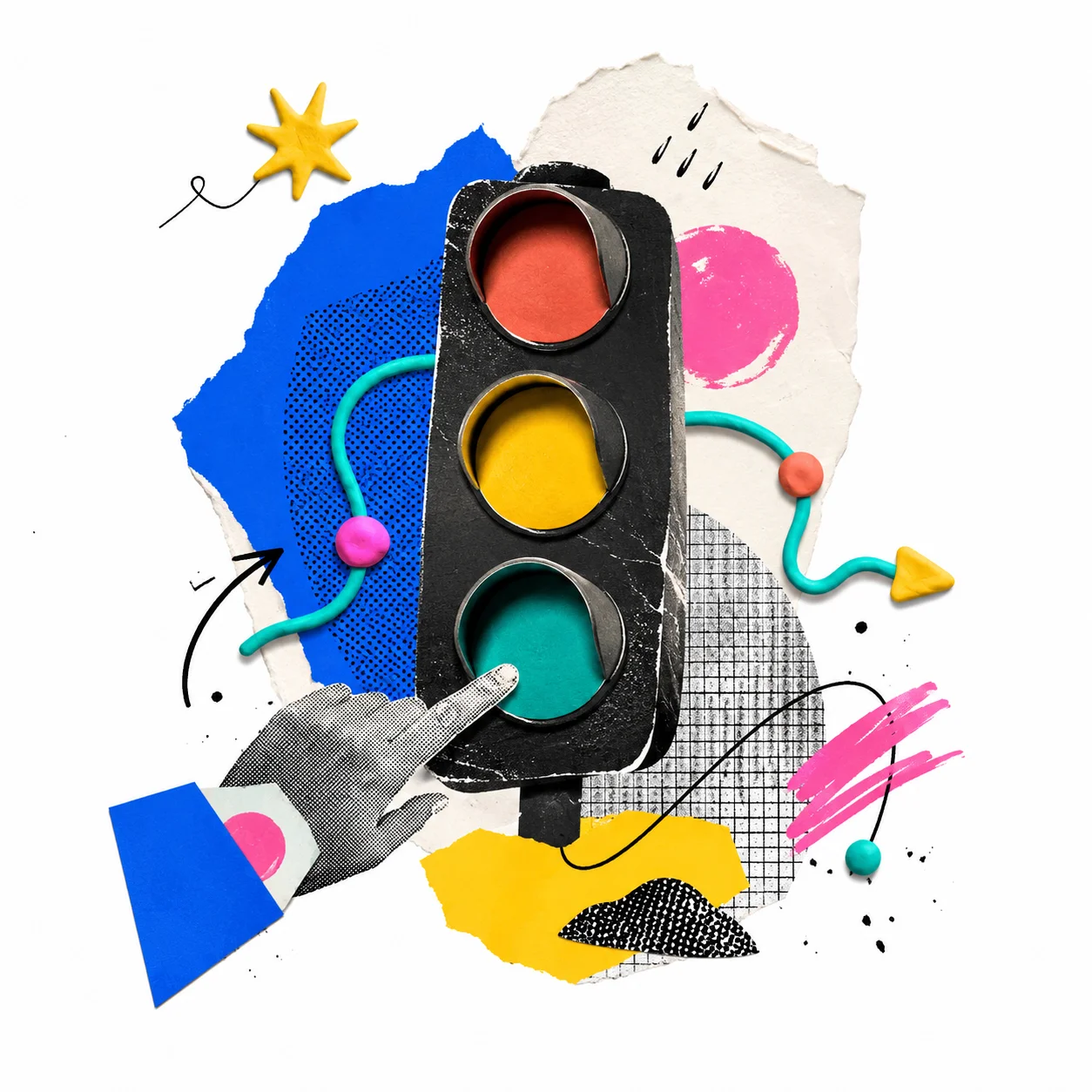
The comprehension stoplight allows students to indicate their comprehension level in real time: green (I understood), yellow (I have doubts), red (I did not understand). In a model class, it is used at specific moments — after the first block, at mid-development, before the close — to make real decisions: continue, re-explain or deepen. The difference between teaching while looking at these results and teaching without them is the difference between navigating with a map and navigating blind.
Bloom Cards — for escalating the cognitive level
Bloom cards generate questions at six cognitive levels on any topic. In a model class, questions scale progressively: starting from basic comprehension (what is it?, how does it work?) and advancing toward analysis and evaluation (why?, what would happen if?). This deliberate escalation distinguishes a class of superficial understanding from one of deep understanding.
Exit Ticket — at the close, as evidence of learning
The exit ticket is the definitive close of a model class: a question of application or reflection in the final minutes. Not of repetition (“what did we see today?”) but of transfer (“explain in your own words why…”, “what question are you left with?”). The teacher reviews the responses before the next class and obtains real information about what the group understood and where to return.
Live Word Cloud — at the start, to activate prior knowledge
The live word cloud allows all students to respond simultaneously to an opening question. The most frequent words appear larger, generating a visual diagnosis of the group’s starting point in 90 seconds. Using it also at the close, the difference between the first cloud and the second visually shows what changed — the most direct evidence of the learning that occurred.
What competencies it develops
A well-structured class with opening, integrated formative assessment and evidence-based close activates transversal competencies systematically:
- When students complete the KWL, record their initial ideas in “I Used to Think” or synthesize what they learned in the exit ticket, they are exercising metacognition: thinking about their own learning process and becoming aware of what they know and what they do not.
- By scaling from basic questions to analysis and evaluation with Bloom cards, students develop critical thinking: examining ideas, questioning claims and building grounded arguments.
- The routine of recording what is already known, what they want to learn and what they learned progressively builds the competency of learning to learn: becoming a student who monitors and directs their own process.
- Openings that install genuine questions and developments that scale in depth feed intellectual curiosity: the interest in understanding beyond what is asked.