Game-Based Learning
Games specifically designed to teach curricular content in an active way.
What is it?
Game-Based Learning (GBL) is the use of complete games — with rules, objectives, interaction, and outcomes — specifically designed so that students learn curricular content while playing. It is not gamification (adding game elements to something that is not a game). It is a real game where learning is the condition for winning.
James Paul Gee, a linguist and reference in the field, identified 36 learning principles that good video games naturally apply: situated learning (you learn by doing in context), cycle of expertise (practice, mastery, new challenge), just-in-time information (theory arrives when you need it, not before), and projected identity (you take on a role that motivates you to act).
GBL can be digital (educational video games, simulations) or analog (board games, card games, role-playing games). What matters is not the technology but the design: the game must generate meaningful decisions, immediate feedback, and a level of challenge in the student's zone of proximal development — not so easy it bores, not so hard it frustrates.
What makes a game powerful is not the fun. It is that it forces you to make decisions, face consequences, and learn from them.
— James Paul GeeWhat does it look like in class?
In 5th grade science, students play a board game where each team manages an ecosystem. They make decisions about resources (water, space, food) and face random events (drought, invasive species). If the ecosystem collapses, they lose. To win they need to understand food chains, ecological balance, and biodiversity.
A math teacher uses a card game where each card has a fraction. Students must form equivalent pairs, sort from least to greatest, or add to reach a target number. The rules change depending on the unit: the same deck works for different content.
In history, students participate in a role-playing game: each group represents a civilization with limited resources. They must negotiate, trade, and make political decisions. The consequences of their decisions are revealed in the next round. They learn about economics, diplomacy, and conflict — by living them.
A language teacher creates an escape room where students solve linguistic puzzles to 'escape': decipher a text with spelling errors, complete analogies, identify rhetorical figures. Each correct clue opens the next lock. Time is running — urgency motivates.
Signs it works
- Students ask to play again — intrinsic motivation is evident
- During the game, students discuss academic content without realizing they are 'studying'
- Students who usually disconnect get actively involved because the game requires their participation
- The teacher observes and takes notes during the game — the game works as live formative assessment
- After the game, students can explain concepts they did not understand before playing
Common mistakes
Using games as a prize ('if you finish your work, we play') instead of as a learning tool
Choosing fun games but without curricular content — if they don't learn, it is recess, not GBL
Not making the connection explicit after the game — the debrief is where learning is consolidated
Creating overly complicated games where the rules obscure the content — mechanics should be simple, content deep
Key thinkers
Linguist and author of What Video Games Have to Teach Us About Learning and Literacy. Identified 36 learning principles in good video games.
Game designer and co-founder of Quest to Learn, a public school in New York where the entire curriculum is taught through games and game design.
Author of Digital Game-Based Learning. Pioneer in arguing that digital games can be as valid learning tools as textbooks.
Dive deeper
Study evaluating the impact of GBL on multiple intelligences in primary school.
ESPDFFrom Games to Gamification — RedalycArticle connecting GBL and gamification. Useful as a conceptual bridge between both approaches.
 ToolQuestion Dice
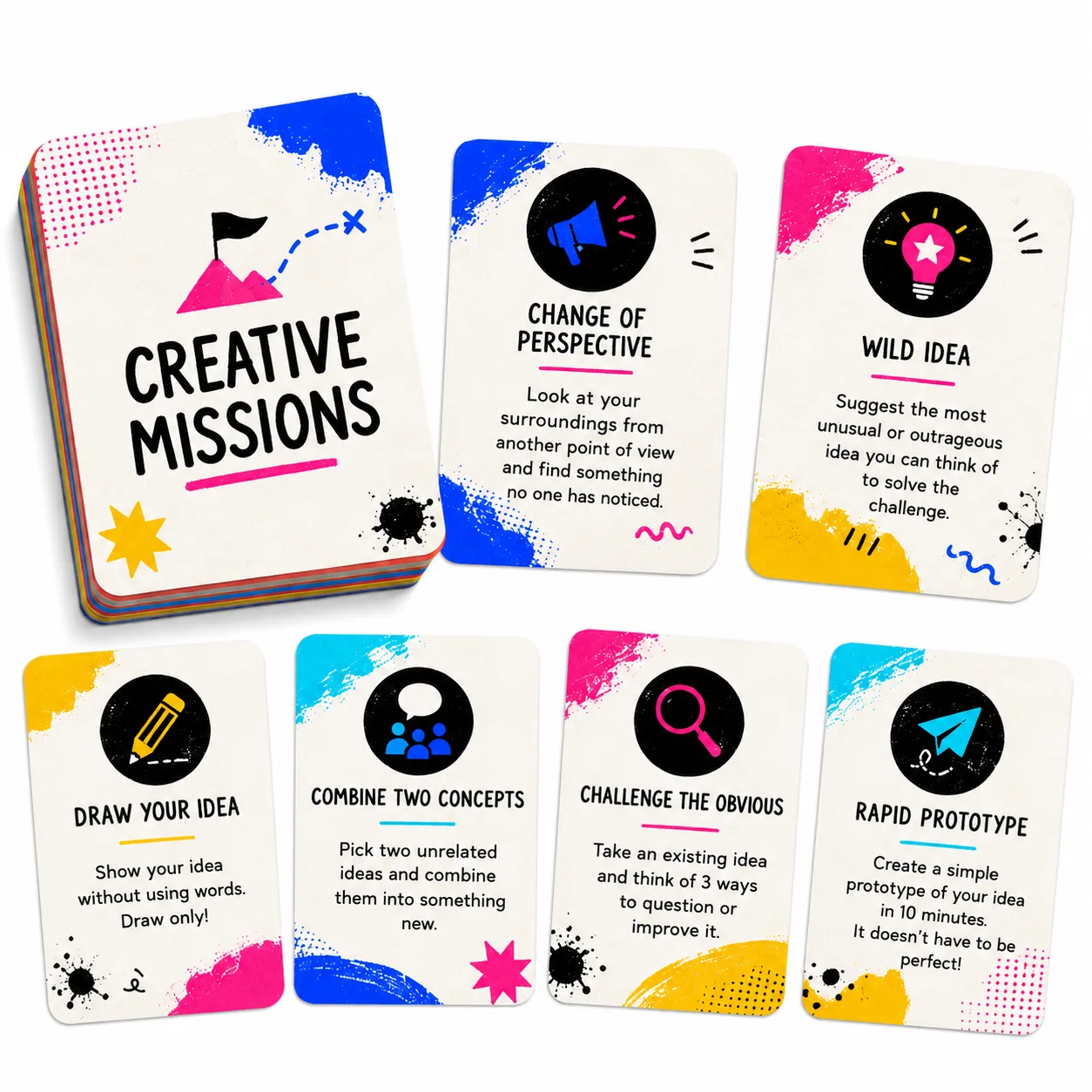 ToolCreative Mission Cards
 ToolGroup Generator
 ToolVisual Timer