Competency-Based Assessment
Evaluate what students can do with knowledge, not just what they remember.
What is it?
Competency-based assessment evaluates students' capacity to mobilize knowledge, skills, and attitudes to resolve real, complex situations — not their capacity to reproduce information on a test. The shift is fundamental: from 'what do you know?' to 'what can you do with what you know?'
Philippe Perrenoud, the leading theorist of competency-based education, defines competence as 'the capacity to mobilize various cognitive resources to face a type of situation.' The word 'mobilize' is key: not to know, but to know how to use. This requires tasks that present students with situations that are novel, complex, and meaningful — not isolated exercises that reproduce learned procedures.
Competency-based assessment requires three components that traditional assessment usually lacks: complex and real tasks (not isolated exercises), holistic rubrics (that describe levels of performance in an integrated way, not item by item), and multiple evidence (one task cannot represent the full range of a competence — diverse contexts are needed).
Competence is not knowing — it is being able to do something with what you know in a situation that requires it.
— Philippe PerrenoudWhat does it look like in class?
In a communication competency assessment, instead of a grammar test, students must write a formal letter to the city council explaining a community problem and proposing a solution. The rubric evaluates: clarity of argument, appropriateness of register, coherence of structure, and use of relevant evidence.
To evaluate the 'scientific inquiry' competency, students design and execute a small experiment of their choice, document the process, analyze the results, and present their conclusions to the class. The evaluation is not the final result — it is the quality of the process and reasoning.
In a citizenship competency assessment, students analyze a real local news story, identify the stakeholders involved, represent different perspectives, and propose two solutions with anticipated consequences. The rubric evaluates the depth of analysis and quality of argumentation — not who got the 'right' answer.
The teacher uses a 'holistic portfolio' with diverse evidence of each competence: a written text, an oral presentation, a collaborative work, and a self-assessment. No single task determines the grade for the competence — the totality of evidence is considered.
Signs it works
- Tasks present real situations, not simple reproductions of class content
- The rubric describes levels of performance in terms of what the student can do, not what they know
- Multiple tasks across different contexts provide evidence for each competence
- Students understand why what they are learning matters — they can connect the competence with real situations
- Assessment includes metacognitive evidence: students reflect on how they solved the task
Common mistakes
Calling any activity 'competency-based' without verifying whether it requires genuine mobilization of knowledge in a complex context
Creating analytical rubrics that evaluate isolated sub-skills instead of integrated performance
Assessing a competence with a single task — one data point is not enough to evaluate a complex competence
Confusing competency-based assessment with project-based assessment — competencies can be evaluated through many types of tasks, not only projects
Key thinkers
Swiss sociologist and leading theorist of competency-based education and assessment. Defined competence as the mobilization of cognitive resources for complex situations.
Spanish researcher at the University of Barcelona and leading reference for competency-based assessment in Spain and Latin America. Developed practical tools for designing rubrics and competency tasks.
Colombian researcher and creator of socioformative education. His model of competency-based assessment from a socioformative perspective is widely used in Mexico, Colombia, and the rest of Latin America.
The OECD's Definition and Selection of Competencies project defined the key competencies for the 21st century that anchor many national competency-based curriculum frameworks.
Dive deeper
 BookBuilding Skills with Students — Philippe Perrenoud
Perrenoud's most accessible book on competency-based curriculum and assessment. Available in Spanish. Practical and foundational.
ESBookCompetency-Based Assessment — Elena Cano GarcíaSpanish reference for designing competency-based assessment. Covers rubrics, tasks, and portfolios with examples from primary through university.
WebsiteOECD — Education 2030The OECD's updated framework for key competencies for 2030. Defines agency, transformative competencies, and the learning compass. Freely available.
ESBookSocioformative Assessment — Sergio TobónTobón's framework for competency-based assessment from socioformation. Widely used in Mexico, Colombia, and Latin America. Practical rubric model.
ESWebsiteCompetency-Based Assessment — Educ.arResources from Argentina's Ministry of Education on curriculum design and competency-based assessment. Free, adapted to the Argentine context.
ESVideoRubric Design for Competency Assessment — Rebeca AnijovichAnijovich explains how to design holistic rubrics that evaluate integrated performance rather than isolated sub-skills. Practical and applicable to all subjects.
 ToolExit Ticket
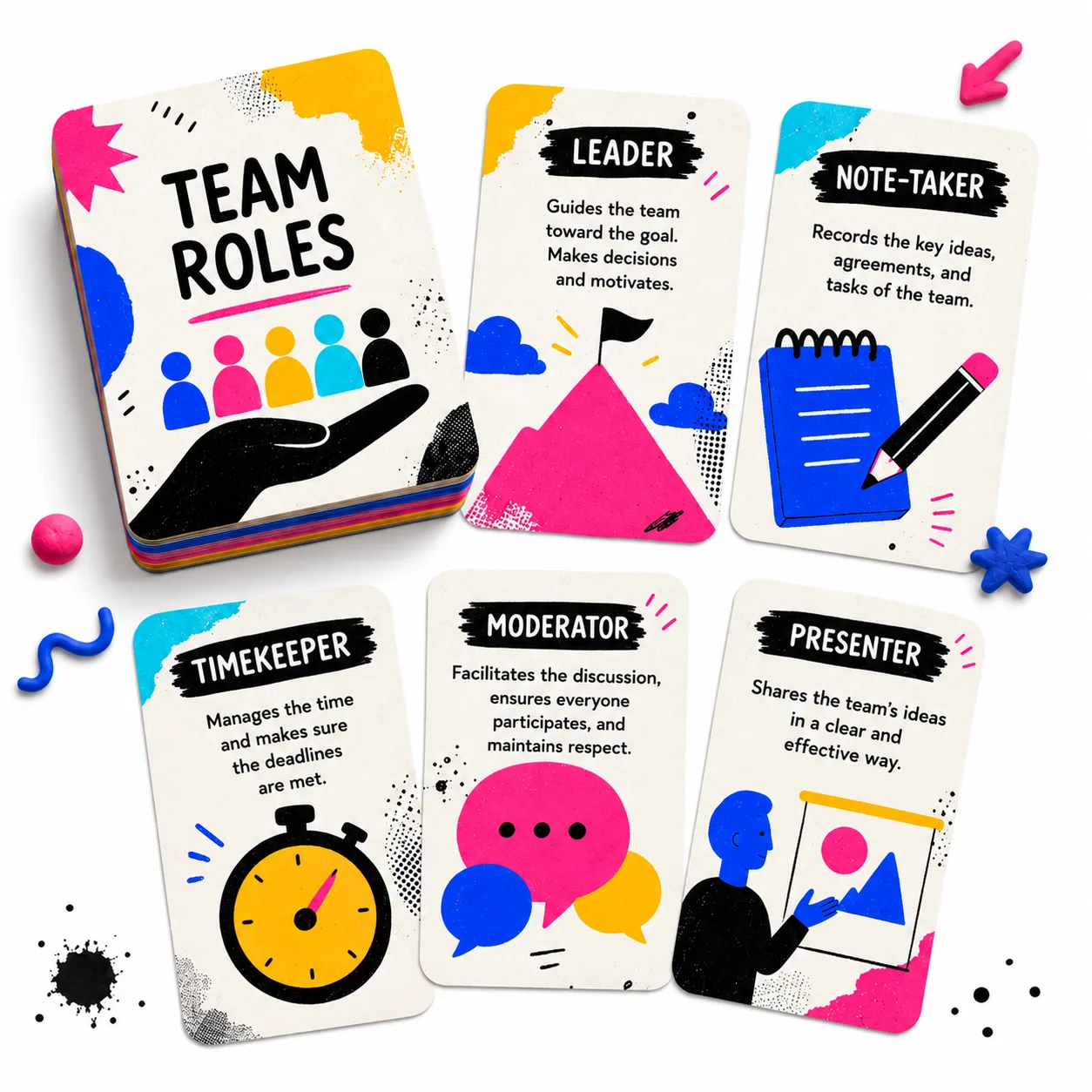 ToolRole Cards
 ToolWork Gallery
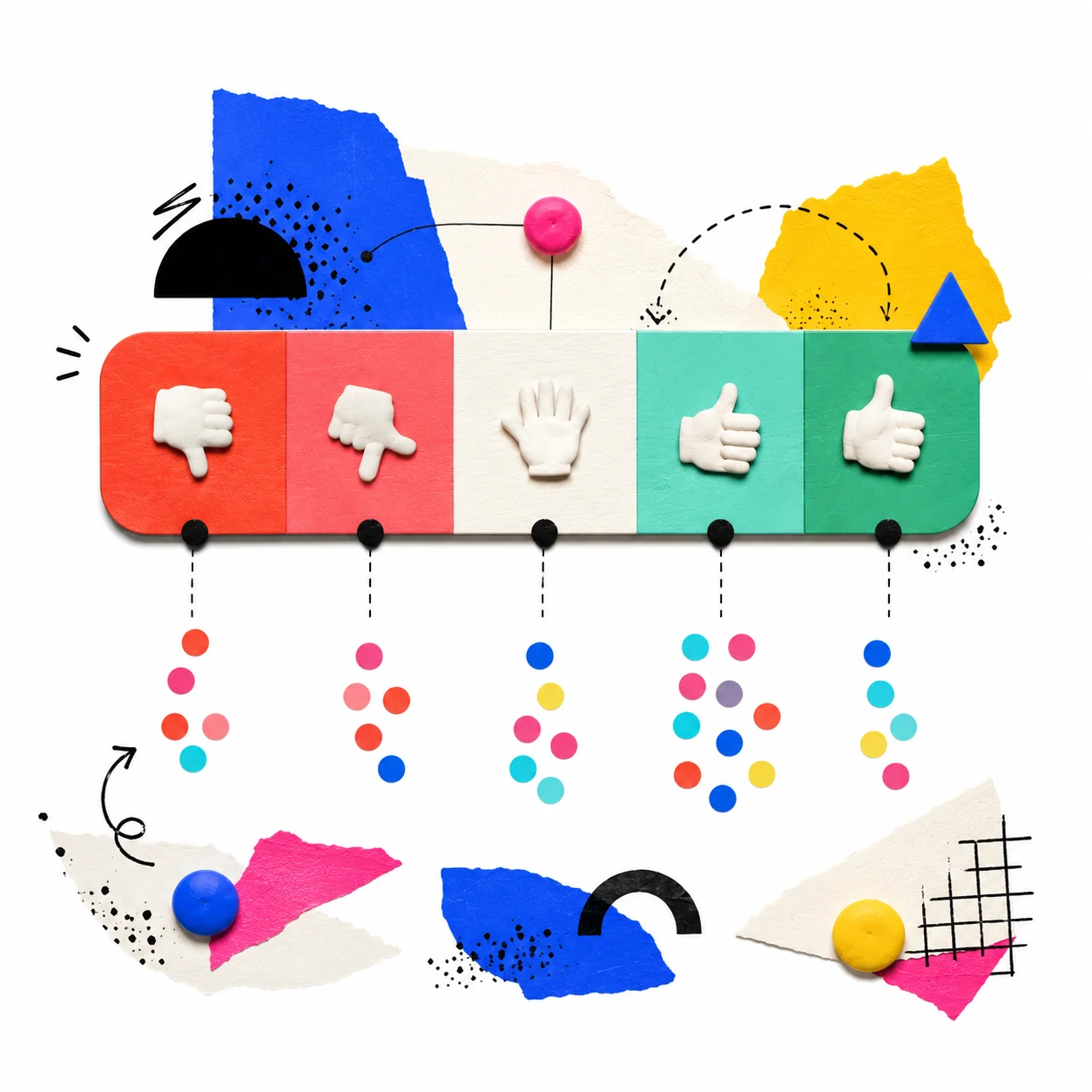 ToolAgreement Scale