The problem of starting with the answer
The most common structure of a class is this: the teacher explains the topic, students listen, then they work with exercises or activities. Knowledge travels from teacher to student — first the answers, then the questions.
The problem with this sequence is that when the teacher starts explaining, students still have no question that needs an answer. There is no cognitive tension. No gap to fill. Information that arrives in a brain that was not looking for it has a much lower probability of being retained and even less chance of being deeply understood.
A provocation inverts this sequence: first the disequilibrium, then the search, then the explanation. The student arrives at the content with their own question — not the question the teacher gave them, but one that arose from having faced something that did not fit what they knew.
The theory behind the practice
Jean Piaget described learning as a cycle of assimilation and accommodation: when a new experience fits with existing schemas, it is assimilated. When it does not fit, it produces cognitive disequilibrium — a tension the brain seeks to resolve by reorganizing its schemas. Disequilibrium, in Piagetian theory, is not a problem — it is the engine of learning.
A well-designed provocation produces disequilibrium intentionally. It presents something that contradicts what students believe they know, poses a paradox they cannot resolve with their current resources, or generates a question whose answer they do not have but feel they need.
George Loewenstein (1994) described curiosity as a state of information gap: we feel curious when we perceive that we are missing information we should have. Curiosity is not a passive emotion — it is an active motivation to seek the missing information. A provocation that activates this gap produces students who want to learn the topic, not students who receive it because the teacher teaches it.
What a provocation is and is not
A provocation is not a motivating introduction or an “engagement activity.” The difference lies in the cognitive function it serves:
| Motivating introduction | Provocation | |
|---|---|---|
| Objective | Capture attention | Generate cognitive disequilibrium |
| What it produces in the student | Momentary interest | Their own question that needs an answer |
| Relationship with content | Announces it | Makes it necessary |
| What is done with the result | Move on to the topic | Used as the starting point of learning |
| Example | “Today we are going to learn about the solar system” | A photo of Pluto with the question: is it a planet or not? Who decides that and by what criteria? |
An effective provocation produces genuine questions in the group. If after the provocation students have questions they want to answer, it worked. If they just paid attention for a moment and then waited for the teacher’s explanation, it was an introduction, not a provocation.
Types of provocation
A photograph, a graph or a text excerpt is presented without context and students are asked to observe, describe and wonder. What do you see? What catches your attention? What do you not understand? The absence of explanation is deliberate: the brain works more actively when it has to construct meaning by itself. Works well with historical photographs without captions, graphs without titles or unnamed objects.
A statement that seems false or surprising is presented and turns out to be true, or vice versa. The disequilibrium is immediate: the student cannot accept or dismiss it without investigating. "The richest countries have the lowest wellbeing rates." "Oxygen can be toxic." For it to work, the statement must be genuinely counterintuitive — not obvious, not so strange it seems absurd.
A situation is posed where any option has consequences and there is no obviously correct answer. Ethical, historical or scientific dilemmas work especially well because they force students to use what they already know and identify what they are missing to decide better. What would you do if you were the doctor in this case? Does the state have the right to do this?
A question is formulated that students can answer with what they already know, but where different answers are equally plausible. The goal is not for them to reach the correct answer — it is to make their current thinking visible and discover that others think differently. Why do you think the dinosaurs disappeared? What caused World War I? The diversity of responses becomes the starting point.
How to design a good provocation
The provocation must point to the core of the upcoming learning, not peripheral details. If the unit is about evolution, the provocation should generate questions about mechanisms of change, not taxonomy.
The best provocations leverage the group's prior conceptions. The clearer the gap between what students believe and what they are going to learn, the greater the disequilibrium — and the greater the need to learn.
A good provocation leaves students with more questions than they had before. If the provocation can be "solved" in 30 seconds, it does not generate enough cognitive tension.
A provocation without a pedagogical closing loses effectiveness. The questions students generated must become the guiding thread of the unit: return to them at the start of each class, use them to organize the content, answer them explicitly when the right moment comes.
Free tools for working with provocations
Question Dice — for exploring from multiple angles
The Question Dice generates open questions on any content. Applied to the provocation, it allows exploring different dimensions: What would cause this? What consequences would it have? Who would disagree? What would happen if one variable changed? This multidimensional exploration amplifies the initial disequilibrium and generates more questions than the group had at the start.
I Used to Think, Now I Think — for documenting the change
This tool captures the student’s understanding at two moments: before instruction and after. The comparison between both records makes learning visible as change — which is exactly what the provocation seeks to generate. It also allows the teacher to verify whether the questions that emerged were effectively answered throughout the unit.
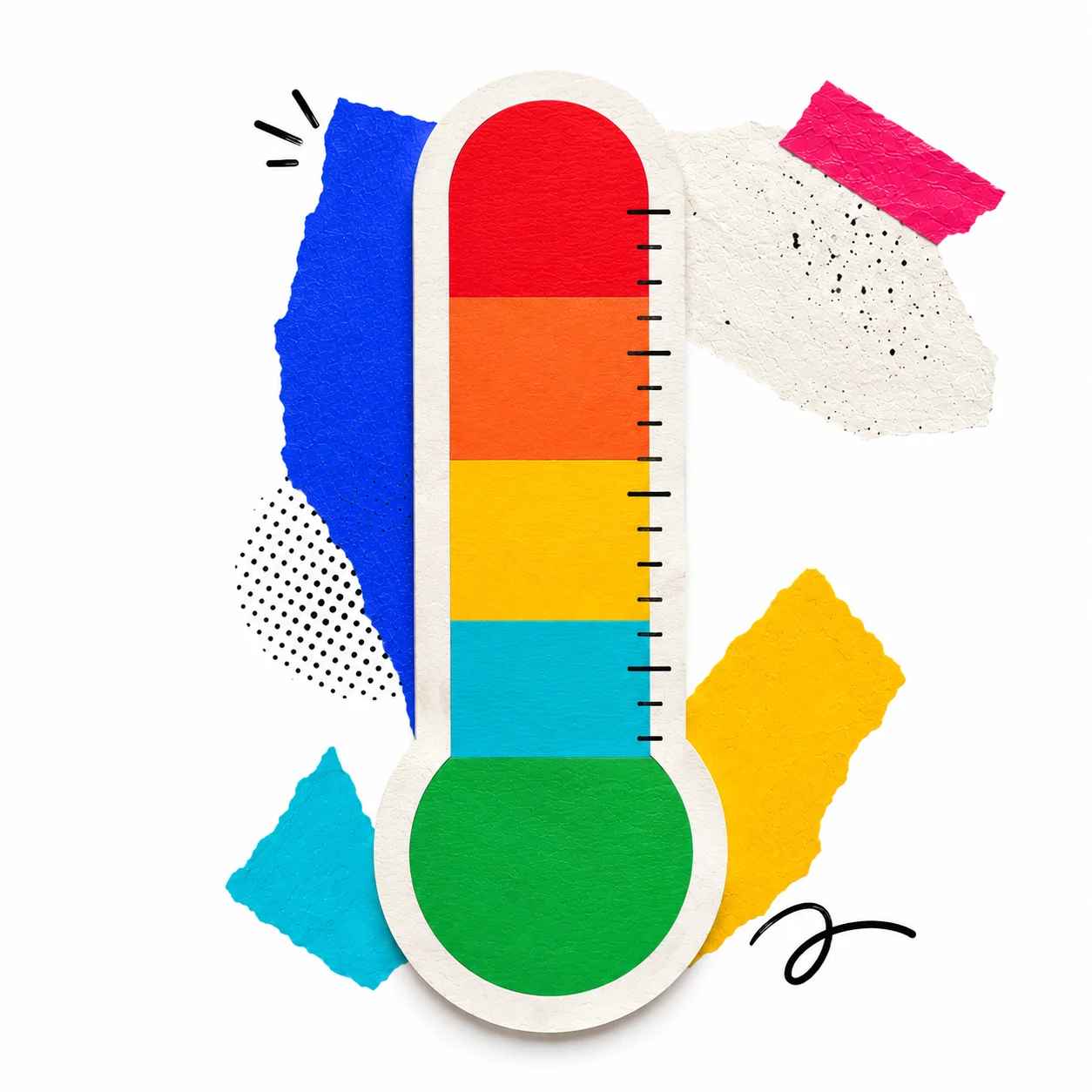
Opinion Thermometer — for provocations with a dilemma
When the provocation is a controversial statement or a dilemma, the Opinion Thermometer allows students to position themselves on a continuum before studying the topic. Seeing the distribution of initial positions generates curiosity about where they will end up after learning: did they change position? Why? This structure turns the provocation into a before-and-after that the student can observe for themselves.
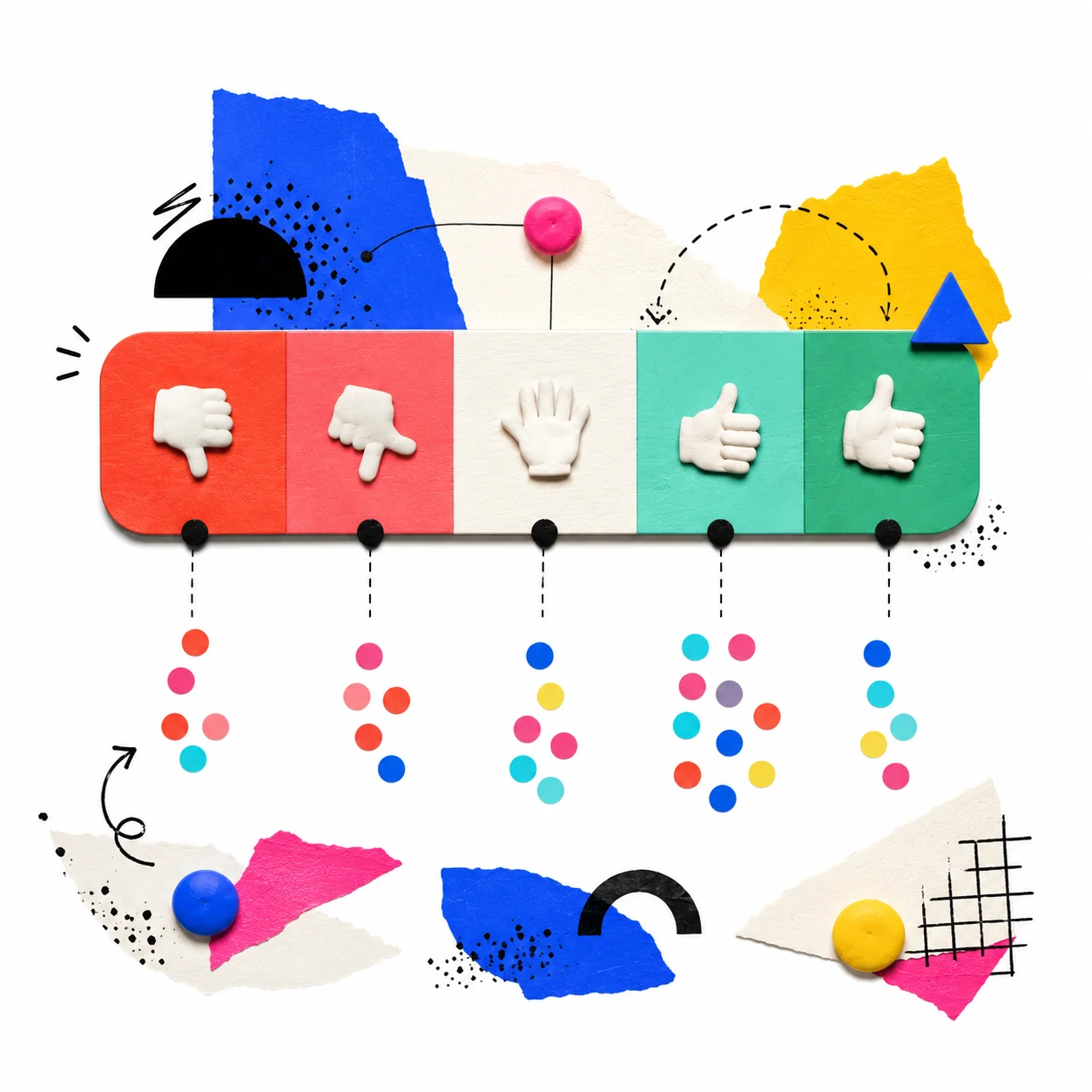
Agreement Scale — for counterintuitive statements
When the provocation is a statement that seems false or surprising, the Agreement Scale allows students to position themselves from 1 to 5. The distribution makes visible how many accept it, how many reject it and how many are in doubt — a real-time map of prior conceptions that tells the teacher exactly where to start.
Collaborative Ideas Wall — for mapping the group’s starting point
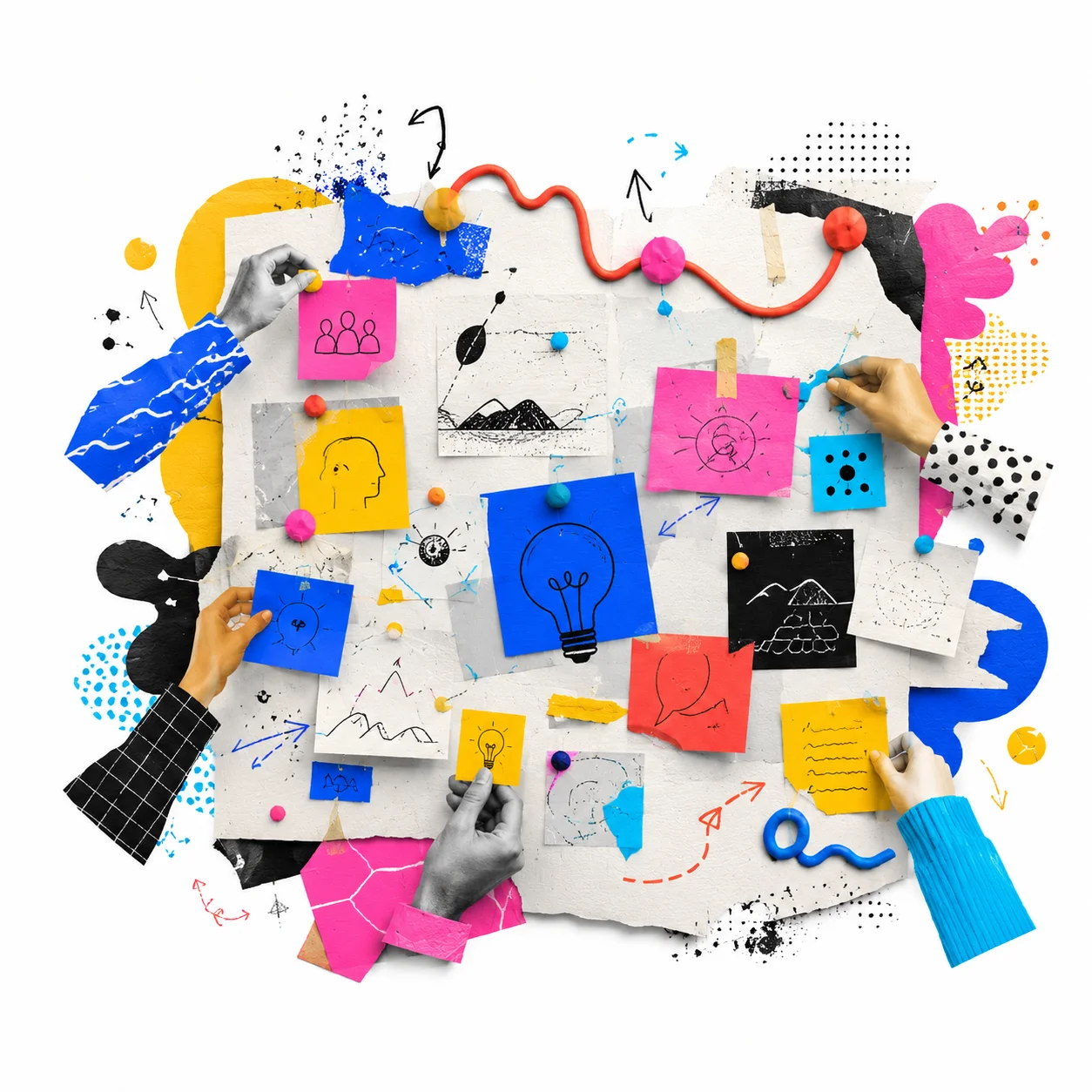
After presenting the provocation, students post their first reaction: what they observe, what generates questions, what they do not understand. In five minutes, the teacher has access to the thinking of the whole group — not just those who raise their hand. This map of initial ideas is valuable information for deciding which aspects of the content need more development.
Live Word Cloud — for activating in 60 seconds
Students send a word they associate with the image, statement or dilemma presented. The most frequent words appear larger. This quick overview shows what frames of reference the group brings: what words and concepts they associate with the topic before studying it. It is a real-time prior knowledge diagnostic, without needing to ask one by one.
Common mistakes
Resolving the provocation too quickly. Cognitive disequilibrium needs time to do its work. If the teacher presents the provocation and gives the answer in two minutes, there was no time for students to generate genuine questions. An effective provocation is sustained — it is worked on for several minutes before the teacher begins to guide toward the content.
Choosing a provocation students can resolve with what they already know. If the provocation can be answered easily with the group’s prior knowledge, it does not generate disequilibrium — it confirms what they already know. A good provocation requires new knowledge to resolve. The design criterion is: with what they know now, can they answer this well? If yes, the provocation is not provocative enough.
Not returning to the questions the provocation generated. The questions that emerge in the moment of the provocation need some kind of closure in the unit. If the teacher uses the provocation to capture attention and then moves forward on their own thread without addressing the group’s questions, students learn that their questions do not matter. The provocation must be the beginning of a thread that the instruction gradually resolves.
Always using the same type of provocation. An ethical dilemma works very well for social sciences but can feel forced in mathematics. An unexplained image works for history but may be confusing in physics if the group does not yet have enough context to know what to ask. Varying the type of provocation according to the content and the group produces better results than applying the same format every time.
What competencies it develops
- When students face something that does not fit what they know and feel the impulse to understand it, they are exercising intellectual curiosity: the active disposition to seek understanding in the face of the unknown.
- When they evaluate a paradoxical statement, look for evidence to support or refute it and adjust their position based on what they find, they are developing critical thinking: the ability to evaluate information with criteria, not intuition.
- When they defend their position about the provocation and justify it with reasons, they are practicing argumentation: building positions with foundations, not just expressing opinions.
- When they analyze a complex situation, identify what they know and what they are missing, and reason about the possible options, they are exercising logical reasoning: the ability to think consistently and draw justified conclusions.
How to start
Identify the central concept to be understood and design a counterintuitive statement or a related dilemma. Present it at the start of the unit without context and ask students to post their first reaction on the collaborative wall. Use those reactions to decide where to begin instruction.
At the start, before explaining, present an image, a piece of data or a text excerpt and ask students to note in the I Used to Think, Now I Think organizer what they believe explains what they see. At the close of class, complete the "now I think" section. The distance between both is visible learning.
Use the initial provocation as the guiding thread of the entire unit. At the start of each class, return to one of the questions the provocation generated and verify whether today's class can answer it. At the end of the unit, return to the original provocation and resolve it with the constructed knowledge. The closing has more impact when the group remembers the moment when they could not answer what they now can.