Emotions are not left at the classroom door
There is no door at the entrance to the classroom where students leave their emotions. They enter with anxiety about the exam next period, with the fight they had during break, with the fatigue of not having slept, with excitement about something that happened before they arrived. All of that is present in the classroom — visible or not — and directly affects the capacity to learn.
Neuroscience confirms it: the emotional brain (limbic system) has direct connections with the prefrontal cortex, the region responsible for attention, working memory and decision-making. When the emotional state is one of threat, stress or disconnection, access to those cognitive functions is reduced. When the emotional state is one of safety, curiosity or belonging, it expands.
Working on emotional intelligence in the classroom is not “wasted time” from the subject. It is creating the cognitive conditions for learning to be possible.
What emotional intelligence is: the four-skill model
The concept of emotional intelligence was developed by psychologists Peter Salovey and John Mayer in 1990, and later popularized by Daniel Goleman in 1995. The original Salovey and Mayer model describes four specific skills that develop progressively:
Identifying one's own and others' emotions accurately, including non-verbal signals.
Leveraging emotional states to facilitate thinking: curiosity activates attention; sustained enthusiasm facilitates creativity.
Knowing how emotions evolve, combine and respond to situations.
Managing one's own emotional states and those of others effectively.
The four skills are learnable. They are not fixed personality traits — they are competencies that develop with deliberate practice, like any other skill.
Why emotional vocabulary is the first step
One of the most robust findings of emotional psychology research is that naming an emotion regulates it. The process of labeling what one feels — “this is frustration,” “this is performance anxiety” — activates the prefrontal cortex and reduces amygdala activation. Literally, putting a name to an emotion makes it less intense and more manageable.
The problem is that many students (and adults) have a very limited emotional vocabulary. “Good” and “bad” are the most frequent categories. This lexical poverty is not neutral — someone who does not have words to distinguish between frustration, disappointment, sadness and resignation has less capacity to handle each of those experiences in a differentiated way.
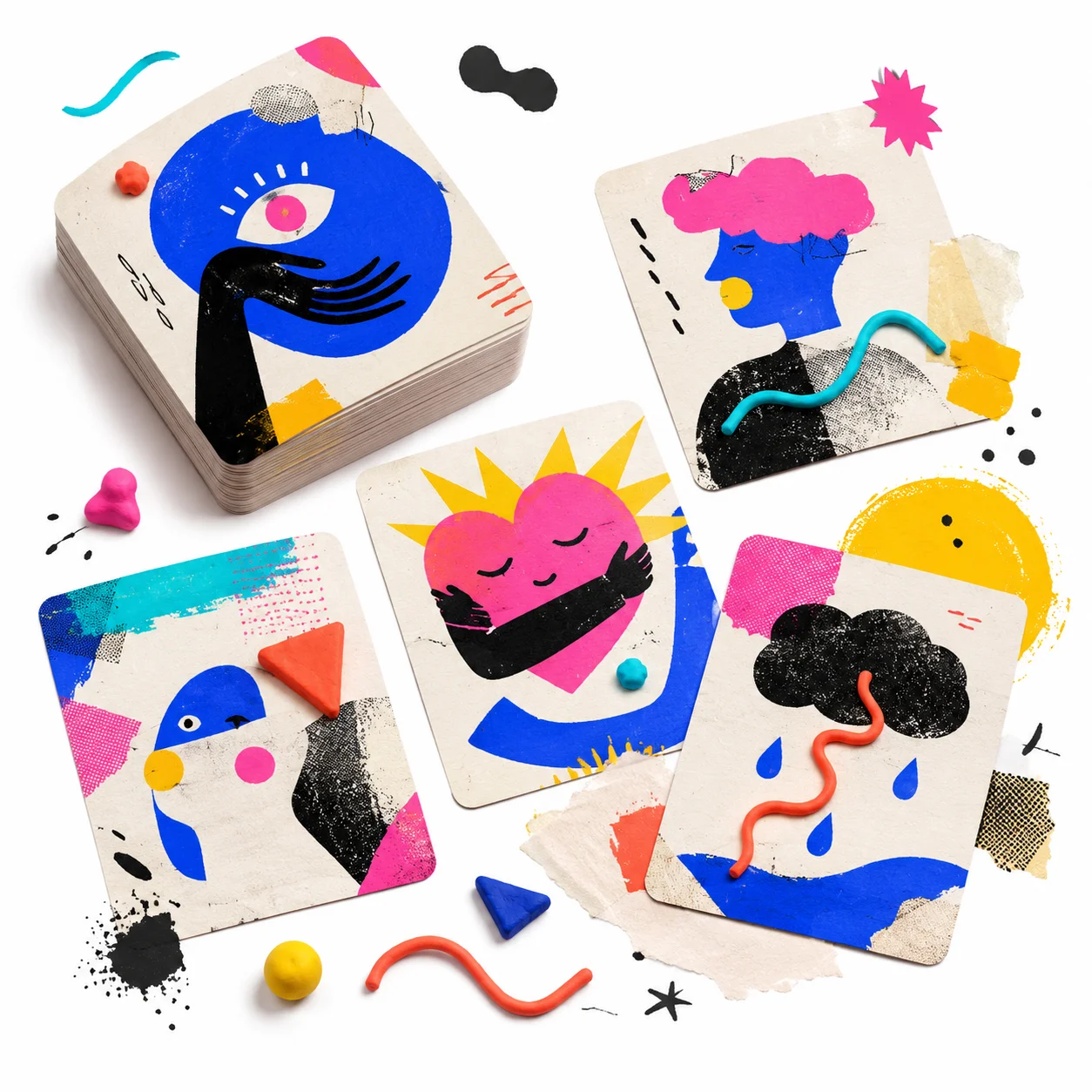
The emotions deck is a direct tool for broadening that vocabulary: cards with illustrated emotions that students can use to identify how they feel, compare with what others feel, or explore hypothetical situations (“how would a character in this situation feel?”).
Four strategies for integrating emotional intelligence in class
Dedicating 3-5 minutes at the start of class to asking the group how they are is not "wasting time" — it is pedagogical diagnosis. A teacher who knows the group arrives agitated, anxious or distracted can adjust the class dynamics accordingly. A teacher who ignores that baseline state and starts explaining complex content will encounter resistance without understanding why.
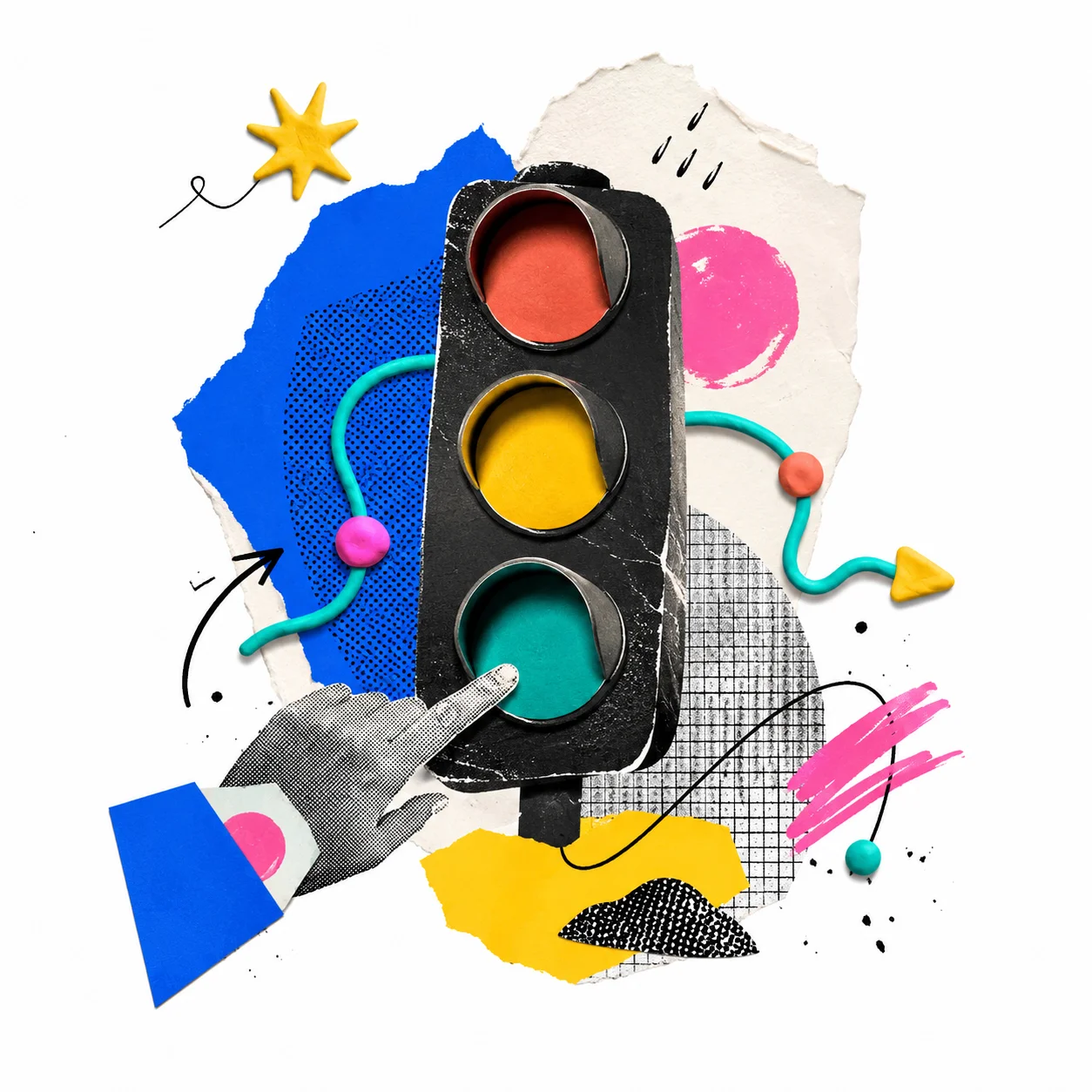
The comprehension stoplight can be adapted to an emotional check-in: "How do you arrive today?" Green = good and with energy, Yellow = so-so, Red = something is weighing on me today. In 30 seconds the teacher has a reading of the group without anyone needing to explain anything aloud.
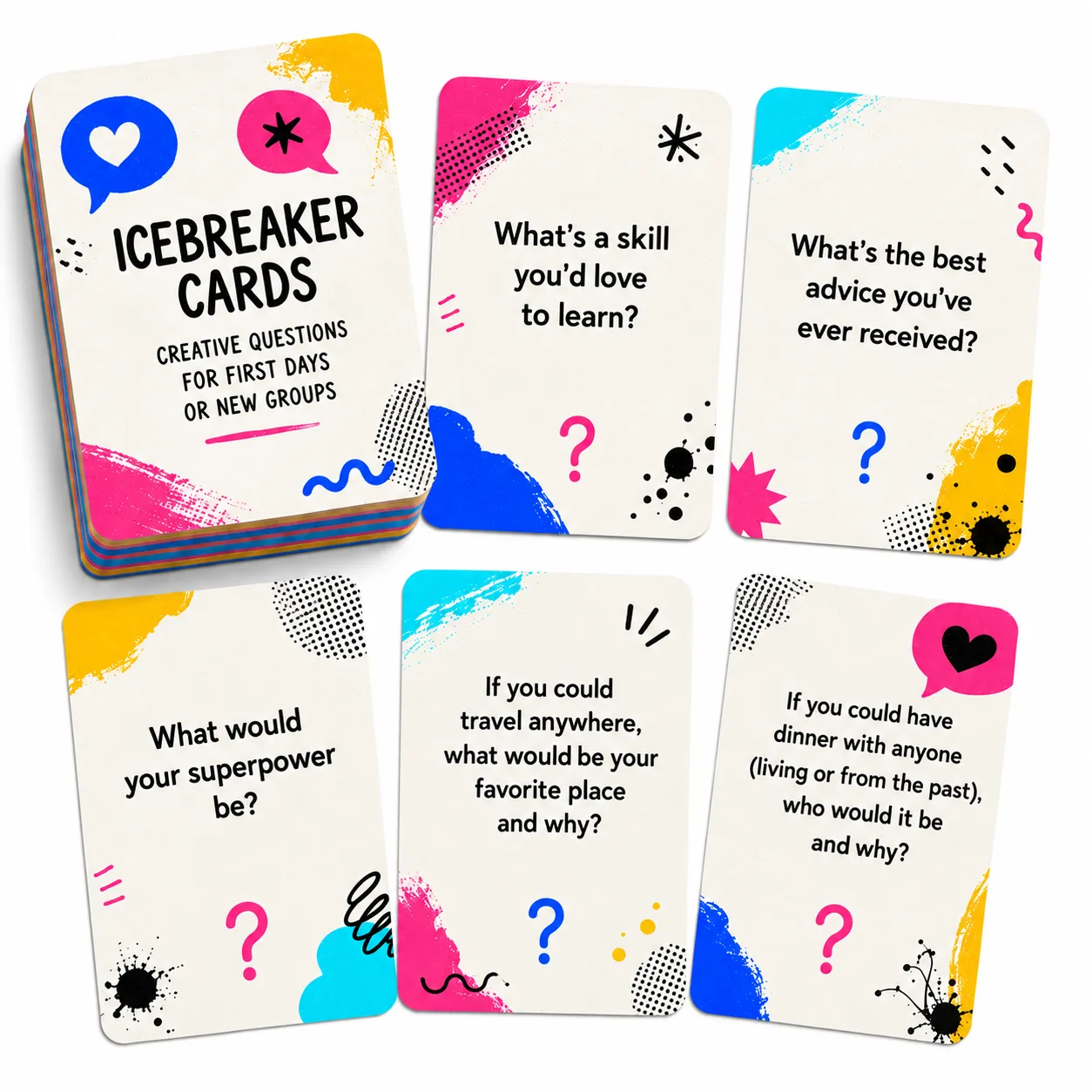
For groups with more confidence, icebreaker cards generate a brief welcome conversation that activates peer connection and reduces the tension that sometimes blocks participation.
When a student is angry, frustrated or anxious, the first useful response is not logic or correction — it is recognition. "I can see this is costing you a lot" or "it makes sense that this is difficult" activates the feeling of being seen and understood, which reduces stress activation and opens the possibility of moving forward.
This principle also applies to conflicts between students: mediation that begins with "how did each person feel?" before "who is right?" reaches more lasting resolutions because it addresses the emotional dimension before the logical one.
Emotional regulation is not taught by telling students to "calm down" or "don't get like that." It is taught with concrete practices:
Conscious breathing: Three slow breaths (inhale 4 seconds, hold 2, exhale 6) activate the parasympathetic nervous system and reduce the stress response. Can be integrated as a starting ritual or as an interruption when the group is very activated.
Pause before reacting: In conflict or frustration situations, teaching students to identify the emotion before acting ("what am I feeling right now? what is this emotion telling me?") is an emotional metacognition practice that reduces impulsive reactions.
The "inner thermometer": Asking students to locate their activation level on a scale before a difficult task ("from 1 to 5, how nervous/tense are you about this?") normalizes monitoring one's own emotional state and gives the teacher information for adjusting difficulty or support.
Empathy — the capacity to understand and share others' emotional states — develops with perspective-taking practice. Some concrete activities:
- Ask the group to imagine how a historical, literary or current events character feels at a key moment
- Use the collaborative ideas wall for students to share anonymously what they find difficult — and discover that their classmates have similar fears and difficulties
- In small groups, practice listening without interrupting and paraphrasing what the other said before responding
The classroom as an emotionally safe space
No emotional intelligence strategy works without a basic climate of safety. Students will not name their emotions, share their difficulties or practice vulnerability if they feel they will be judged or ridiculed.
Creating that climate is the teacher’s responsibility, not the students’. Some practices that build it:
Modeling one’s own emotional vulnerability: when the teacher says “I found this difficult to understand when I learned it” or “this topic generates uncertainty for me because there is a lot we don’t know,” they normalize difficulty and uncertainty as part of learning.
Treating error as information, not failure: a classroom where making a mistake implies shame or mockery is one where students learn to hide rather than take risks. Correction that separates the error from the person’s value (“that reasoning has a problem, let’s look at it together”) builds safety gradually.
Co-constructed group rules: establishing together with students the emotional coexistence norms of the space (“here we listen without interrupting,” “opinions are critiqued, not people”) creates a collective contract that the group can reference when someone breaks it.
Emotional intelligence and academic performance
The relationship between social-emotional skills and academic performance is well documented. The meta-analysis by Durlak and colleagues (2011), which reviewed 213 social-emotional learning programs in more than 270,000 students, found that effective programs produced:
- An average improvement of 11 percentiles in academic performance
- Significant reduction in problematic behaviors
- Improvement in classroom climate
- Greater engagement with learning
The most effective programs were those that integrated social-emotional skills into curricular content in a systematic way, not as isolated or extracurricular activities.
Free tools for working on it in class
Emotions Deck — for broadening emotional vocabulary
The emotions deck cards illustrate internal states with precise names. Students use them to identify how they feel, explore the emotions of characters in texts or historical situations, or describe states that would otherwise remain as “good” or “bad.” Broadening emotional vocabulary is the first step toward self-regulation.
Icebreaker Cards — for creating connection in the group
Icebreaker cards propose questions that invite sharing personal experiences in a safe climate. They generate connection between students, reduce tension at the start of class and build the sense of belonging that makes emotional learning possible. They are especially useful at the beginning of a new unit or with groups that do not yet know each other well.
Choice Board — for reducing participation anxiety
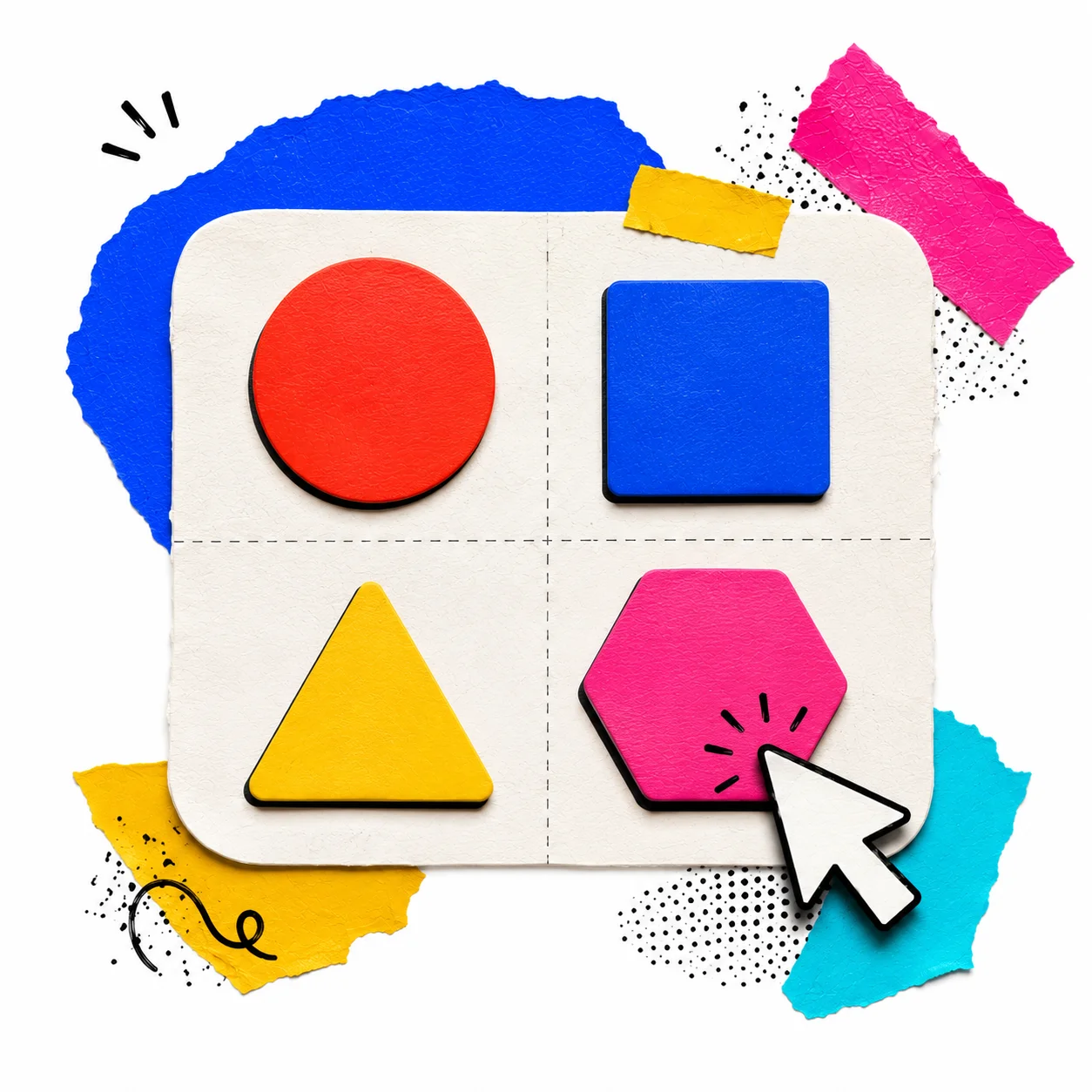
The choice board allows each student to decide how they want to participate in an activity. Offering options reduces anxiety in less confident students and activates everyone’s autonomy. In emotional work contexts, the possibility of choosing the level of exposure is especially important.
Comprehension Stoplight — for the emotional check-in
The comprehension stoplight can be adapted to an emotional check-in at the start of class: green (I arrive well and with energy), yellow (so-so), red (something is weighing on me today). In 30 seconds the teacher has a reading of the group without anyone needing to explain anything aloud.
I Used to Think, Now I Think — for recording emotional change
The I Used to Think, Now I Think tool allows students to record how their perception about a topic or situation changed after a learning experience. In emotional work, this routine makes conceptual change visible: “I used to think fear was bad; now I think it is telling me something important.”
Collaborative Ideas Wall — for anonymous participation
The collaborative ideas wall allows students to share what they feel or think about a topic anonymously. Anonymity reduces exposure and increases honesty — especially useful when the topic is sensitive and students are not ready to expose themselves aloud in front of the group.
Common mistakes
Treating emotional intelligence as a separate topic. Emotional skills do not develop in a “tutorial hour” per week — they develop when the teacher integrates emotional recognition, regulation and empathy practices into the daily dynamic of any subject.
Assuming students already know how to identify their emotions. The ability to name and differentiate emotional states develops — it is not innate. Students who only have “good/bad” in their emotional vocabulary need the teacher to actively broaden that range, with tools like the emotions deck and conversations that invite precision.
Forcing emotional exposure. Not all students are ready to share how they feel aloud in front of the group. The collaborative ideas wall with anonymous posting, the choice board and other tools that allow participating without direct exposure are important so that emotional learning does not become an additional source of anxiety.
What competencies it develops
- When students learn to identify and name their emotions with precision, they are developing self-awareness — the capacity to understand one’s own internal states and how they affect behavior.
- When they practice pausing before reacting and choosing a response instead of being carried away by impulse, they are working on emotional regulation.
- When they do the exercise of putting themselves in another’s position and understanding a perspective different from their own, they are developing empathy as a concrete relational skill.
- When they face frustrations in learning and work through them instead of avoiding them, they are building frustration tolerance — one of the foundations of perseverance.
How to start
Incorporate a brief emotional check-in at the start of class three times per week. The stoplight adapted to emotional state takes 2 minutes and gives valuable information. Nobody needs to explain — just register.
Use the emotions deck in small groups to explore the emotions of characters from a reading, historical moments or situations in the school context. The discussion about what each character feels and why activates empathy without requiring personal exposure.
Introduce the routine "How did I arrive? How do I leave?" at the start and close of each class. Students briefly record their emotional state (with the deck, the stoplight or on paper). Within a few weeks, the group develops the habit of monitoring their own state — a solid foundation for regulation.