Maker Education
Learning by building things with your hands: prototypes, models, circuits, art, functional objects.
What is it?
Maker Education is a pedagogical movement born from the maker culture — the global community of people who design, build, and share what they create. In the classroom, it means students learn by making: constructing prototypes, assembling circuits, programming, designing objects, building physical structures. Knowledge is not passively received; it is created through making.
Dale Dougherty, founder of Make Magazine and creator of the Maker Faire movement, coined the term in the early 2000s. His central idea: everyone is a maker, and the joy of creation is a fundamental human impulse. Sylvia Martinez and Gary Stager brought the approach into schools with their book Invent to Learn (2013), arguing that building things with your hands and tools develops skills no worksheet can replicate.
What distinguishes Maker Education from traditional crafts or technology class is the combination of three elements: real tools (not toys), student-directed design (the student decides what to build and why), and the culture of showing and sharing (what is built is shown to others, which raises the standard of work). The learning happens in the doing, the failing, the fixing, and the improving.
The best learning happens when students are making something they care about, for an audience that matters to them.
— Sylvia MartinezWhat does it look like in class?
A 4th grade teacher sets up a 'making corner' in the classroom: cardboard, scissors, hot glue, recycled materials. The challenge: design a structure that holds 10 books without falling. No instructions — students plan, build, test, and rebuild. The debrief focuses on why some structures held and others didn't. Physics and engineering emerge from the making.
Secondary students learn basic electronics with Arduino: a small board that controls lights, sensors, and motors. Groups choose a project — a lamp that turns on when it gets dark, an alarm when a door opens, a plant watering system. They learn by reading circuit diagrams, making mistakes, connecting and reconnecting. At the end, every group has something that actually works.
A language teacher proposes 'bookmaking': students write, design, and physically assemble a short book. They decide the format, cut the pages, sew or staple the binding, illustrate the cover. The physical artifact changes the relationship with the text — they are not submitting a document, they are building an object that will exist in the world.
A middle school runs a Makerspace with 3D printers, laser cutters, sewing machines, and electronics tools. Once a week, students have free-choice making time. They propose projects, get feedback from the teacher, prototype, fail, refine. Some projects go on to compete in local fairs — but the goal is not the competition; it is the process of designing something that didn't exist before.
Signs it works
- Students ask to keep working past the class time — they are genuinely engaged
- Failure is treated as information, not defeat — students ask 'why did it break?' not 'what did I do wrong?'
- Students explain their design decisions using conceptual language — they know why they chose that approach
- Students help each other without the teacher prompting it — sharing expertise is part of maker culture
- What students build has meaning beyond the grade — they share it, use it, or give it to someone
Common mistakes
Reducing Maker Education to craft time: building without a design challenge and reflection is art class, not maker education
Choosing only digital tools: cardboard, string, and glue develop spatial reasoning and problem-solving as well as any software
Evaluating the final product only: the iterations, the failures, and the design decisions are the real learning
Not giving enough time: complex making projects need multiple sessions; one class period is rarely enough
Neglecting the debrief: what did you build? How did you decide? What would you change? These questions turn making into learning
Key thinkers
Founder of Make Magazine and creator of the Maker Faire movement. Coined the educational potential of maker culture and promoted the idea that making things is a fundamental form of human expression.
Educators and authors of Invent to Learn (2013). Brought the maker movement into classrooms and argued that building with real tools develops thinking skills no passive instruction can replicate.
Director of the Lifelong Kindergarten Group at MIT Media Lab and creator of Scratch. His research on the creative cycle — imagine, create, play, share, reflect — is the theoretical foundation that connects making with deep learning.
Dive deeper
The foundational book on Maker Education in schools. Practical, inspiring, and full of classroom examples from all levels.
WebsiteMake MagazineThe magazine that started the maker movement. Projects, tutorials, and community for educators and makers of all ages.
ESWebsiteSTEAM Education — Siemens StiftungPlatform with practical STEAM projects for teachers, including maker activities with accessible materials.
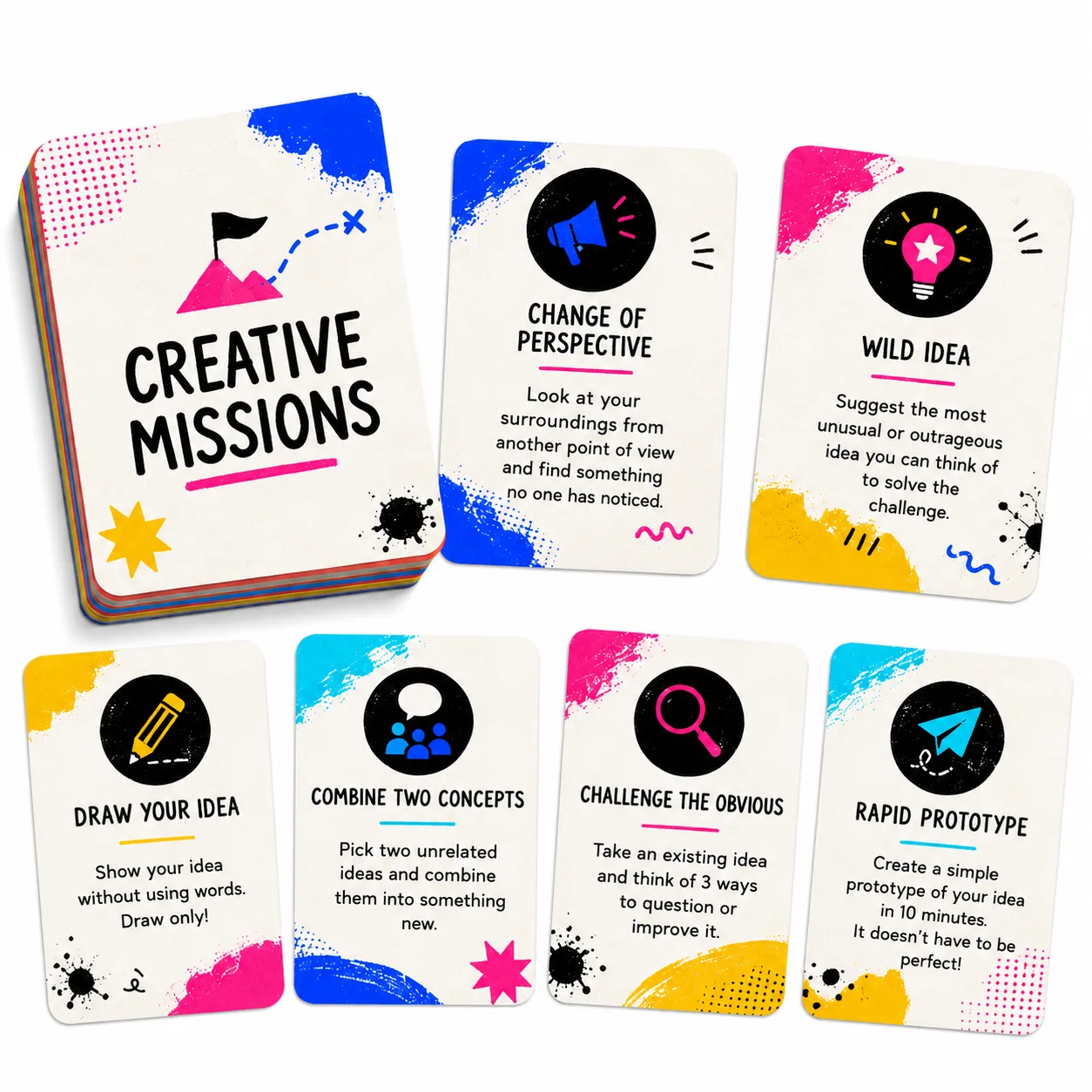 ToolCreative Mission Cards
 ToolKanban Board
 ToolCollaborative Ideas Wall
 ToolWork Gallery