Neuroeducation
What neuroscience shows about how brains learn and how to apply it in the classroom.
What is it?
Neuroeducation is the field that bridges neuroscience, psychology, and education. It does not seek to replace pedagogy with biology — it seeks to inform teaching decisions with what is known about how the brain learns, processes information, consolidates memory, regulates attention, and constructs meaning.
The most influential findings: emotion is a prerequisite for learning (Immordino-Yang), attention is the gateway to learning (Mora), sleep is when the brain consolidates what it learned (Walker), and interleaved practice and spaced repetition are far more effective than massed practice (Bjork). These are not metaphors: they are mechanisms with empirical evidence that have direct implications for how to design classes.
Neuroeducation is not about brain-based learning myths ('left brain / right brain', 'we use 10% of our brain') — these are widespread but have no scientific support. Real neuroeducation is evidence-based and distinguishes between established findings and speculations. Its power is making visible the conditions under which learning actually occurs in the brain.
Only curiosity and surprise, emotions themselves, make the learning of any content possible.
— Francisco MoraWhat does it look like in class?
The teacher starts each class with a 'hook': a surprising image, a provocative question, a puzzle without an answer. Curiosity activates the dopaminergic system (reward) and increases attention. Mora calls it 'the magic of the surprising.' The curriculum doesn't change — the order does: stimulate first, explain after.
Instead of studying 3 hours in one session, the teacher designs spaced review: new topic on Monday, brief review Thursday, new review the following Monday. The desirable difficulty is higher — but forgetting and retrieval consolidate memory much more deeply than re-reading.
A 6th grade math teacher uses interleaved practice: instead of 20 fraction problems, she mixes 7 fractions, 6 equations, and 7 geometry problems. Students hate it at first ('I don't know what to do'). But at the end of the semester, retention is significantly higher. The confusion is the learning.
Before a major exam, the teacher does not give one more explanation. She gives students 10 minutes to write everything they remember without looking at their notes. The retrieval practice (testing effect) consolidates memory better than any re-reading. It feels harder — and it is more effective because of that.
Signs it works
- Students use spaced review strategies voluntarily — they understand why it works
- The teacher uses emotional openings and provocations before explaining, not only before big units
- Tests and quizzes are understood as learning tools, not only as evaluation instruments
- Students can explain in their own words why sleep, movement, or emotional state affects their learning
- The teacher designs classes with the 'attention cycle' in mind: varied activity every 10-15 minutes to avoid sustained attention drops
Common mistakes
Using neuromyths as if they were science ('visual/auditory/kinesthetic learning styles' — there is no solid neurological evidence for these)
Applying neuroscience findings without context — 'sleep helps learning' does not mean napping in class
Confusing the 'brain-based learning' trend with real neuroeducation — many commercial products use neuroscience language without evidence
Ignoring the emotional factor — a student in a state of chronic stress (cortisol) is neurologically less able to consolidate long-term memory, regardless of how good the lesson design is
Key thinkers
Spanish neurologist, professor at the Complutense University of Madrid and the University of Iowa. Author of Neuroeducación. Only curiosity makes learning possible. Pioneer in bringing neuroscience to classrooms.
USC neuroscientist and researcher at the Brain and Creativity Institute. Her work on the neuroscience of emotion and learning demonstrates that emotions are biologically necessary for learning, not just distractions.
French cognitive neuroscientist, author of How We Learn. Has identified four pillars of learning from neuroscience: attention, active engagement, error feedback, and consolidation.
UCLA psychologist and creator of the concept of 'desirable difficulties.' His research on spacing effects, interleaved practice, and the testing effect has transformed how learning is designed.
Dive deeper
 BookNeuroeducation — Francisco Mora
The essential Spanish-language reference on neuroeducation. Mora translates neuroscientific findings into specific teaching recommendations. Required reading.
 BookHow We Learn — Stanislas Dehaene
Dehaene identifies the four pillars of learning from neuroscience: attention, active engagement, error feedback, and sleep consolidation. Accessible and rigorous.
 BookMake It Stick — Peter Brown, Henry Roediger, Mark McDaniel
The practical guide on the science of durable learning. Covers spaced repetition, interleaved practice, and the testing effect with concrete classroom applications.
 WebsiteNeuroeducation — DEXPA
Guide in Spanish on the applications of neuroeducation in learning experience design. Covers emotion, attention, and memory with practical examples.
PDFThe Science of Learning — American Psychological AssociationAPA document synthesizing the 20 most important psychological principles for learning. Free download, ideal as a practical reference.
WebsiteVisible Thinking — Project Zero (Harvard)The Visible Thinking project connects cognitive science and classroom teaching. Thinking routines make mental processes visible and trainable — directly applying neuroeducation principles.
 ToolVisual Timer
 ToolExit Ticket
 ToolComprehension Stoplight
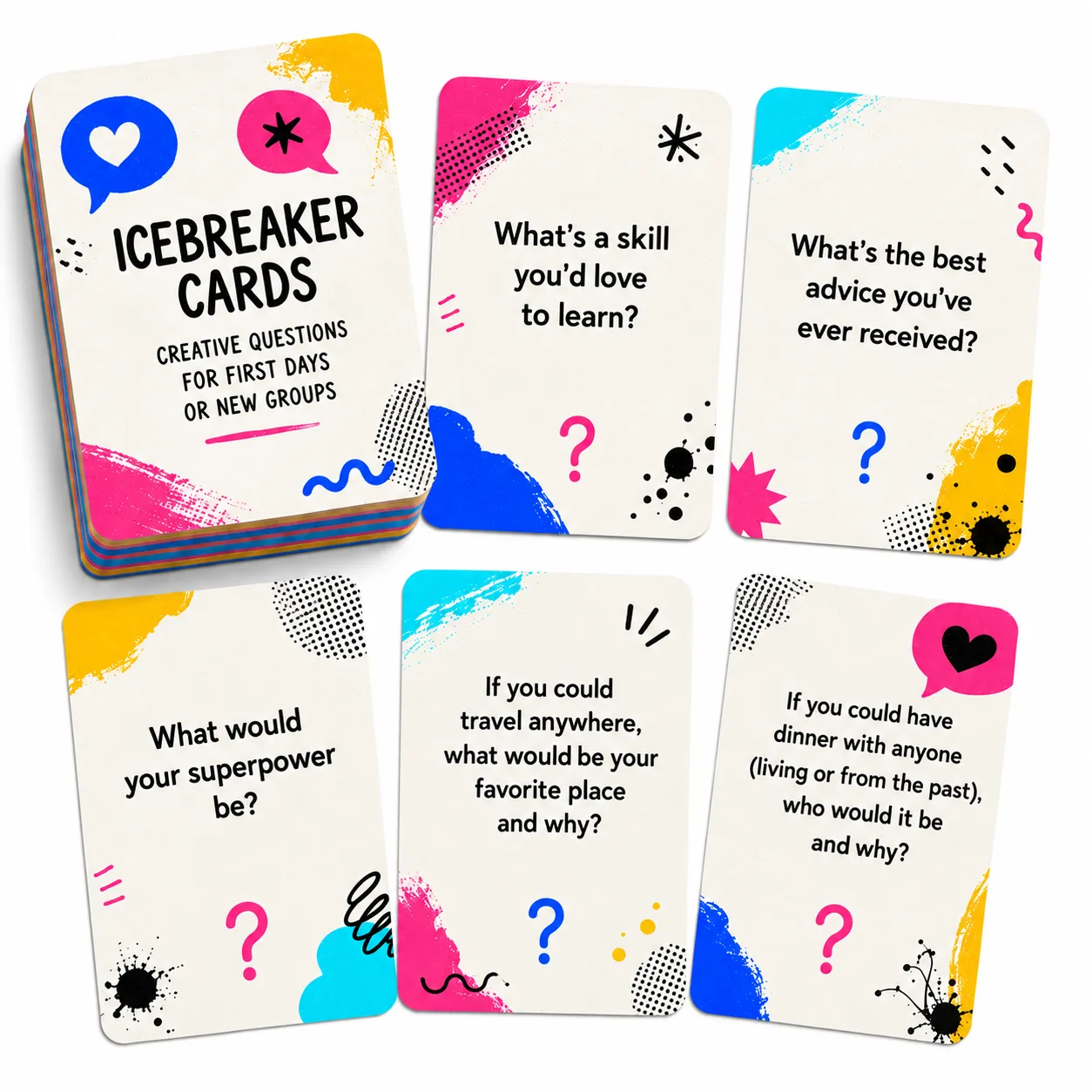 ToolIcebreaker Cards